The construction field is experiencing a shift that has been decades in the making. More women are entering construction careers than at any point in the past twenty years, drawn by strong earning potential, stable demand for skilled workers, and the opportunity to build a career without drowning in student loan debt. In 2024, women made up 11.2% of the construction workforce—1.34 million workers strong—a figure that continues to climb as labor shortages, major infrastructure investments, and a changing industry culture create new openings across the country.
What many people outside the industry do not realize is that construction is not a single job. It is an entire career ecosystem spanning hands-on trades, field leadership, technology-focused roles, and business support positions that keep complex projects on schedule and on budget. Whether you picture yourself wiring a commercial building, coordinating a multi-million-dollar project from the office, or implementing the latest construction technology on job sites, there is a path in this world that matches your strengths and goals.
The main career categories women pursue in construction include skilled trades, field leadership, office and project management, safety and quality, and construction technology. Each offers distinct advantages depending on what you value most—whether that is working with specialized tools, leading teams, solving problems behind the scenes, or shaping how buildings get built with new methods and systems. This article will break down each pathway with real examples so you can make an informed decision about your next step.
For women interested in hands-on work with strong long-term demand, ABC Southern California offers apprenticeship-style training programs in Electrical, Plumbing, Low Voltage, and Sheet Metal/HVAC. These programs combine paid on-the-job training with classroom instruction, giving you a practical entry point into a career that can grow with you for decades. If you have been considering a first career, a career change, or simply want to pursue work that pays well and offers genuine advancement, you are in the right place.
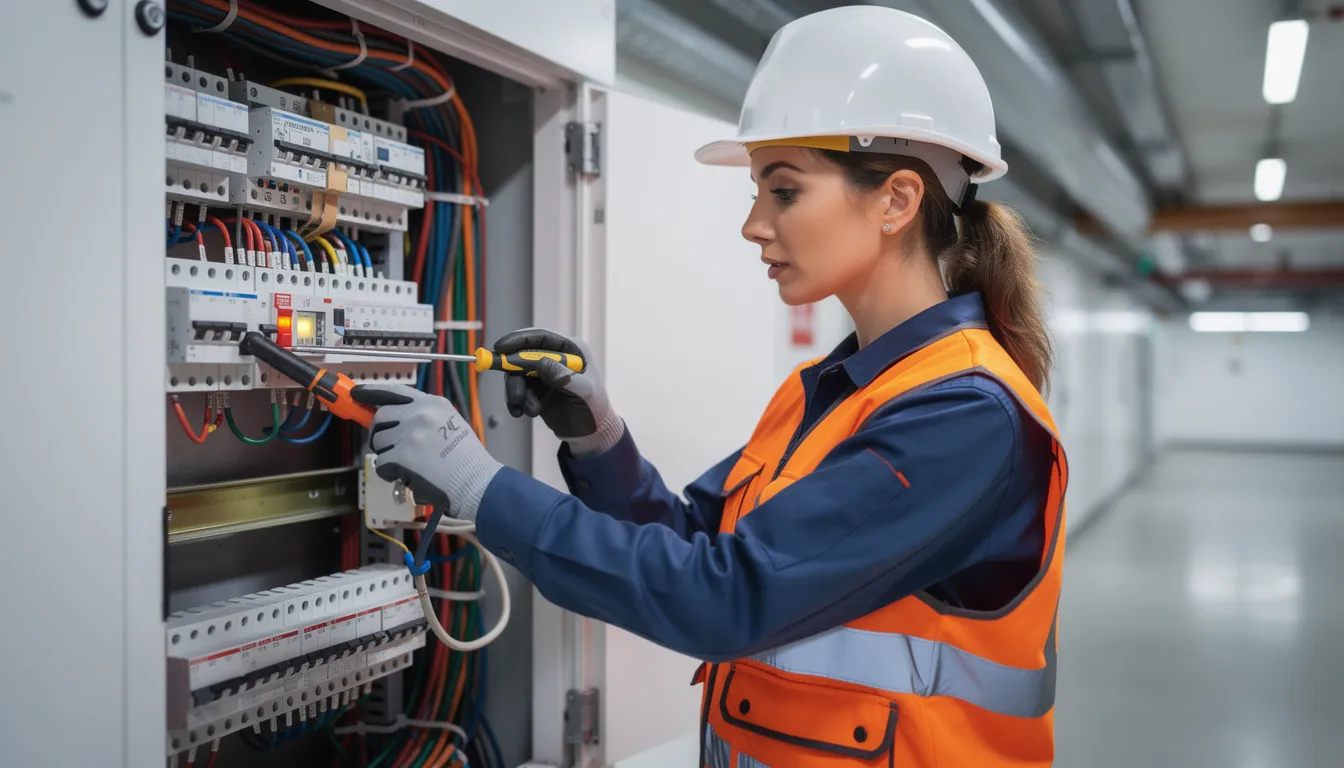
There is no single “best” construction career that fits every woman. The right choice depends on a combination of factors that you will need to weigh against your own priorities, lifestyle, and long-term ambitions. The careers that work brilliantly for one person may not suit another at all, and understanding this upfront will save you from chasing a path that does not align with who you are.
The key decision factors to consider when evaluating construction careers include:
| Factor | What to Consider |
|---|---|
| Earning Potential | Entry-level wages, journey-level pay, overtime opportunities, and long-term earning ceiling |
| Training Timeline | How quickly you can become employable—from months for certifications to 4-5 years for full apprenticeships |
| Physical Demands | Level of physical activity required, from active field work to primarily desk-based roles |
| Work Setting | Jobsite versus office, indoor versus outdoor, or a hybrid of both |
| Schedule & Travel | Early start times, shift work, overtime expectations, and travel requirements |
| Advancement Opportunities | Clear pathways to leadership, specialization, or transition into management |
How you weigh these factors often depends on your season of life. A young woman just out of high school might prioritize getting into the workforce quickly and earning while she learns, making an apprenticeship program an excellent fit. Someone making a mid-career change might focus more on work-life balance and transferable skills, perhaps leaning toward project coordination or safety roles that leverage existing organizational abilities.
Consider the difference between an electrician actively working in the field versus a project manager who splits time between the office and jobsite meetings. The electrician works directly with her hands, solving technical puzzles, pulling wire, and troubleshooting systems. She spends most of her day on her feet, collaborating with a crew, and sees the tangible results of her work in every completed installation. The project manager, meanwhile, spends significant time coordinating schedules, reviewing budgets, managing documentation, and communicating with owners and subcontractors. Both roles are essential to construction projects, both pay well, and both offer advancement—but they demand different skills and suit different personalities.
The path to success in construction comes from choosing work that fits your individual strengths, not from trying to match an outdated stereotype of what a construction worker looks like. Women thrive in this industry when they find roles where their natural abilities—whether those are technical problem-solving, communication, organization, or leadership—can shine. Women who work hard and show dedication are regularly promoted and recognized for their contributions.
Additionally, women in construction often find mentorship and support from other women in the industry to be invaluable for career growth and overcoming challenges.
Think of construction as an ecosystem where different career paths interconnect to bring projects from concept to completion. The main categories include skilled trades, field leadership, office and project management, safety and quality roles, and construction technology. Each serves a distinct function, but all are integral parts of how buildings actually get built.
On a typical commercial construction project, the relationship between these categories becomes clear. Tradespeople—electricians, plumbers, sheet metal workers, low voltage technicians—perform the hands-on work that makes buildings function. Field leaders, such as foremen and superintendents, coordinate these crews, sequence the work, and address daily problems. Project managers and their support teams handle budgets, schedules, contracts, and owner communication from the office while visiting the site regularly. Safety managers ensure everyone goes home healthy at the end of each day. And increasingly, technology staff support design coordination, data tracking, and digital workflows that make modern projects run more efficiently.
Many women move between these categories over time as their careers progress. A woman might start as an electrical apprentice, develop into a skilled journey-level electrician, move into a lead role, and eventually transition into estimating or project support—leveraging her field knowledge in a role with less physical demand and different challenges. The industry rewards this kind of progression, and employers genuinely care about developing people who show initiative and reliability.
There is room in construction for many personality types. If you love working with tools and seeing tangible results at the end of each day, the trades may call to you. If spreadsheets, coordination, and communication energize you, office and management careers could be your fit. If you are drawn to technology and problem-solving systems, the growing field of construction technology offers stable opportunities with strong growth potential. The key is understanding what drives you and matching that to the right path.
Skilled trades form the backbone of construction—the hands-on work that transforms blueprints into buildings people can use. These careers offer strong wages, portable skills that travel with you anywhere in the country, and clear apprenticeship pathways that let you earn while you learn without accumulating college debt. For women who enjoy working with their hands and want to develop a lifelong skill set, the trades offer some of the most accessible and rewarding construction careers.
Day-to-day life in the trades involves using specialized tools, reading construction drawings, measuring and laying out work with precision, collaborating with crew members, and following safety procedures every single day. You might start your morning reviewing the day’s tasks, gathering materials, and checking in with your foreman about priorities. The work requires focus, attention to detail, and the willingness to develop craftsmanship through practice and repetition.
Modern construction sites are professional environments where reliability, communication, and quality work matter far more than outdated stereotypes. Women working in the trades succeed by building skills systematically, showing up prepared, and earning respect through consistent performance. The industry is actively working to become more inclusive, and many construction companies now prioritize developing diverse teams.
ABC Southern California offers apprenticeship-style programs in four key trades that represent excellent starting points for women: Electrical, Plumbing, Low Voltage, and Sheet Metal/HVAC. Each combines paid on-the-job training with classroom instruction in safety, blueprint reading, and trade-specific skills. These programs provide the structured support, mentorship, and hands-on experience that build confidence and competence in professional construction environments.
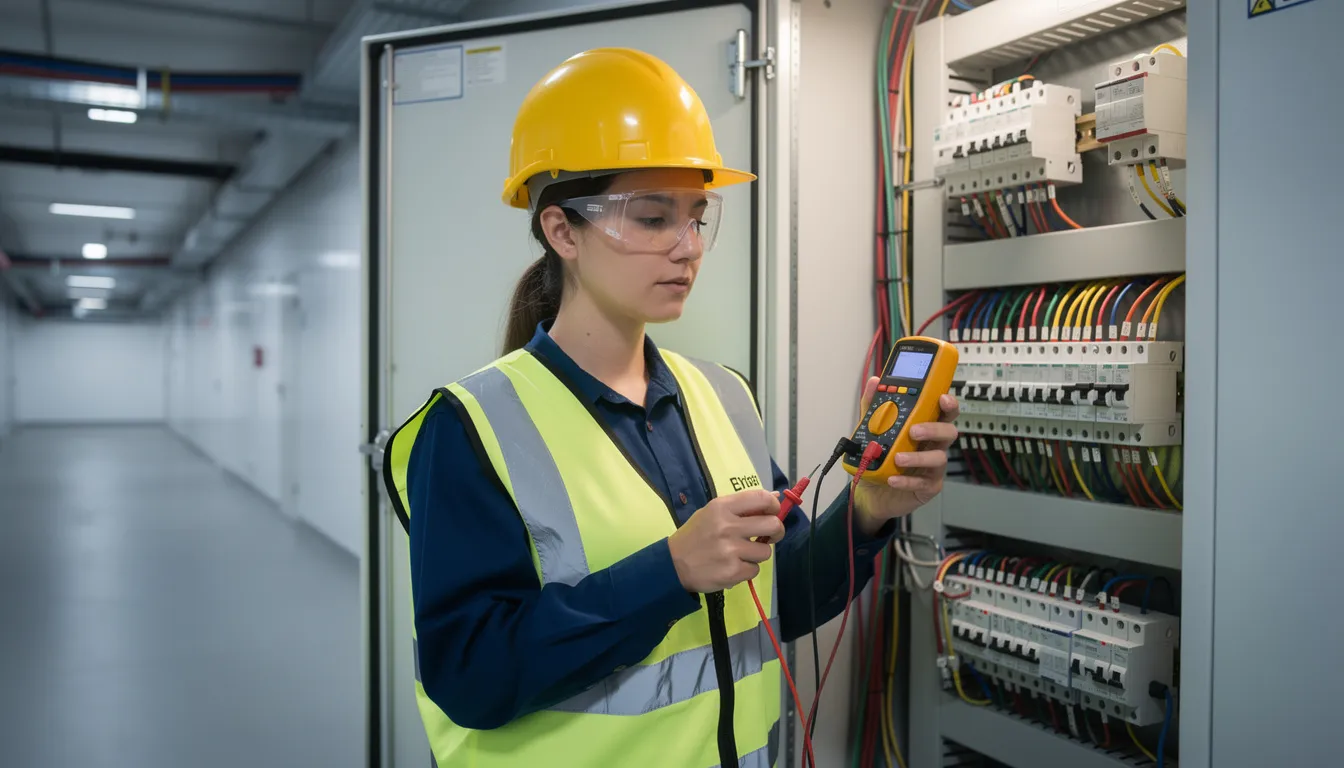
Electricians handle the power systems that make buildings function—from the wiring in walls to the panels, lighting, controls, and power distribution that every residential, commercial, and industrial building requires. The work involves installing new systems, upgrading existing infrastructure, integrating controls and automation, and troubleshooting faults when things do not work as expected. With the growth of solar installations, EV charging infrastructure, and smart building technology, demand for skilled electricians continues to surge.
A typical day might include interpreting electrical drawings, pulling cable through conduit runs, bending and installing conduit, making connections at panels and devices, and testing circuits with multimeters to verify proper operation. When a system does not behave as expected, electricians use their technical knowledge to diagnose the problem and implement solutions. This blend of precision work and problem-solving makes the trade appealing for women who enjoy technical challenges and learning how things work.
The electrical trade emphasizes technical knowledge and problem-solving rather than brute strength, making it accessible for women of various physical builds. California, in particular, has a strong and growing demand for electricians, driven by construction activity, renewable energy projects, and infrastructure investments. Career paths can lead from apprentice to journey-level electrician, then into specialized work such as controls or renewable energy systems, or into foreman, estimating, or project management roles.
Apprenticeship programs like those at ABC Southern California typically span four to five years, combining approximately 2,000 hours of on-the-job training annually with classroom instruction. Pay increases at defined milestones as competencies develop, and graduates emerge as journey-level electricians ready for independent work. The median wage for electricians nationally sits around $61,590, with higher earnings possible through specialization, leadership, or work in high-demand regions and sectors.
Plumbers install and maintain the water supply, drainage, gas piping, fixtures, and mechanical equipment connections that every building needs to function. This includes work in homes, commercial buildings like offices and retail spaces, and industrial facilities with specialized requirements. Plumbing is essential infrastructure—people always need clean water and functional sanitation, which gives the trade stability even during economic cycles when other construction work slows.
Day-to-day plumbing work involves reading blueprints to understand system layouts, cutting and joining pipes using various methods, installing fixtures such as sinks and toilets, testing systems for leaks and proper operation, and coordinating with other trades when space is tight. Plumbers use a range of tools, including pipe cutters and wrenches, as well as torches for soldering and brazing. The work requires hands-on skill, the ability to visualize three-dimensional systems from two-dimensional drawings, and attention to detail that ensures systems work correctly the first time.
Plumbing offers strong opportunities for women who enjoy hands-on diagnostics and take satisfaction in solving practical problems. The trade can grow into specializations like medical gas systems in hospitals, commercial service and repair, or high-rise systems that require additional expertise. Career paths can lead from apprentice to journey-level plumber, then into foreman positions directing crews, project coordination roles, estimating, or eventually running a small business.
ABC Southern California’s plumbing program provides structured training with clear standards, safety practices, and the hands-on experience that builds competence over time. Plumbers nationally earn a median wage of around $61,350, with regional variation based on cost of living and market demand. The combination of essential work, stable demand, and clear advancement makes plumbing one of the most reliable construction trades for building a long-term career.
Low-voltage work focuses on systems that carry data and controls rather than standard electrical power. This includes structured cabling for data networks, communications systems, security cameras and access control, fire alarm systems, and audio-visual installations. In an era of smart buildings, data centers, and connected devices, low-voltage technicians are increasingly critical to the operation of modern facilities.
Typical daily tasks include pulling and routing cable through buildings, terminating cables with appropriate connectors, labeling and testing lines to verify performance, installing devices such as card readers, cameras, and sensors, and coordinating with IT teams and other trades. The work requires attention to documentation, as low-voltage systems must be carefully mapped and tested. Many technicians find satisfaction in the blend of physical installation work and technology-focused problem-solving.
This trade can be especially appealing for women with an interest in technology and detailed work. Low-voltage systems are becoming more sophisticated, and technicians who develop expertise in areas like fiber optics, network infrastructure, or integrated building systems position themselves for strong long-term demand. The work typically takes place indoors, with lower physical demands than in some other trades, making it accessible to a range of body types and physical abilities.
Career growth in low voltage can lead to systems design support, commissioning, integration, or construction technology coordination. As buildings become smarter and more connected, the people who understand how these systems work gain value that transfers across project types and employers. ABC Southern California’s Low Voltage program provides the foundation for entering this growing field.
Sheet Metal and HVAC professionals fabricate and install the ductwork, heating equipment, cooling systems, and ventilation components that keep buildings comfortable and healthy. This work directly impacts indoor air quality, energy efficiency, and occupant comfort—concerns that have become increasingly important in recent years as standards have tightened and awareness of building performance has grown.
Day-to-day work includes reading mechanical plans, measuring and cutting sheet metal, assembling duct sections, installing registers and grilles, setting rooftop units with cranes, and commissioning systems to verify proper operation. The trade involves both shop fabrication work and field installation, providing variety in settings and tasks. For women who enjoy understanding how mechanical systems work and seeing components come together into functional systems, this trade offers genuine satisfaction.
Sheet metal and HVAC careers align closely with growing priorities in indoor air quality, ventilation standards, and energy efficiency. Schools, hospitals, offices, and industrial facilities all require sophisticated mechanical systems designed and installed by skilled workers. As building codes become more stringent and sustainability becomes increasingly important, demand for qualified HVAC professionals continues to grow.
Career paths can lead from apprentice to journey-level mechanic, then into controls and building automation, energy management, commissioning, or mechanical project management. Those who start in hands-on roles and build expertise position themselves for diverse opportunities as their careers develop. ABC Southern California’s Sheet Metal/HVAC program offers the foundation for entering this essential trade.
Many women who start in the trades eventually move into leadership roles that guide crews and entire projects. One key leadership position is the construction manager, who oversees projects, manages teams, and ensures the successful completion of residential, commercial, or industrial builds. This progression often significantly increases earning potential while shifting focus from individual production to broader planning, coordination, and problem-solving. Field leadership represents one of the strongest career accelerators in construction.
The typical progression moves from skilled journey-level worker to lead worker, then to foreman, and eventually to superintendent overseeing larger sections of a job or entire sites. Lead workers guide small tasks and mentor newer team members while continuing to perform hands-on work. Foremen plan daily activities, assign work, coordinate with other trades, and ensure their crews maintain safety and quality standards. Superintendents manage entire project sites, handling scheduling, subcontractor coordination, problem resolution, and communication with project managers and owners.
In 2025, women held 18% of management positions in construction, including roles such as project managers, site superintendents, and construction managers.
Day-to-day leadership work involves pre-task planning huddles, reviewing drawings and schedules, checking material availability, solving problems as they arise—from delivery delays to coordination conflicts—managing subcontractor activities, and reporting progress. The role becomes more strategic and less physically demanding as responsibilities grow, though field leaders still spend significant time walking job sites and staying connected to the work.
Specific skills help women excel in field leadership: clear communication, thorough preparation, attention to detail, conflict-resolution skills, and the ability to consistently enforce safety and quality standards. Women often bring strong organizational skills and communication abilities that translate directly into effective leadership. The industry has seen increasing numbers of women successfully advancing into superintendent roles, particularly on large infrastructure projects.
Building leadership experience in the field can later support transitions into project management, safety leadership, training, or operations roles within construction companies. Superintendents with strong track records earn between $90,000 and $140,000 or more after eight-plus years of experience, with earnings varying by project type, region, and employer.
Organizations like NAWIC provide leadership training and certifications to help women fast-track into management roles.
Some of the best construction careers for women blend office work with periodic site visits, allowing them to stay close to projects without doing full-time field labor. These roles leverage organizational strengths, communication skills, and the ability to manage complex information—abilities that many women bring from previous education or work experience.
Project engineers and assistant project managers support the project team by tracking documentation, processing RFIs (requests for information), managing subcontractor submittals, taking meeting minutes, coordinating with trade contractors, and helping track budgets. These entry-level positions provide exposure to how projects actually run and create pathways into project management.
Project managers oversee scope, schedule, and budget for entire projects or major portions of larger jobs. They lead coordination meetings, manage contracts and change orders, keep owners informed of progress and issues, and work closely with field superintendents to ensure projects succeed. Project managers nationally earn a median of around $104,900, with growth projected at approximately five percent as construction activity continues.
Estimators analyze plans, calculate quantities, and develop cost proposals that help construction companies win work. This role requires strong math skills, attention to detail, and the ability to understand construction methods well enough to predict costs accurately. Schedulers build and maintain project timelines using specialized software, incorporating input from the field about actual progress and adjusting as conditions change.
Additional roles include procurement coordinators who source and order materials, construction administrators who manage documentation and approvals, and contract administrators who ensure compliance with contract terms and handle paperwork that keeps projects running smoothly. All these positions reward organization, written and verbal communication, comfort with software and spreadsheets, ability to read construction drawings, and willingness to learn the terminology and workflows of the construction industry.
Safety and quality roles exist on nearly every sizable project and within most established construction companies, making them strong long-term career options for women who value protecting workers and ensuring work gets done correctly. These positions have grown in importance as regulations tighten and companies recognize the business value of strong safety records.
Safety coordinators and safety managers conduct site orientations for new workers, lead toolbox talks on specific hazards, conduct regular site inspections, document incidents and near-misses, investigate accidents, and help crews work in accordance with OSHA standards and company policies. They are the conscience of the job site, advocating for practices that ensure everyone goes home safely at the end of each shift.
Quality-focused roles, such as quality control technicians and field inspectors, check work against plans and specifications, conduct tests and measurements, document findings, and help resolve issues when work does not meet standards. These positions require attention to detail, the ability to read drawings, and comfort with documentation and reporting.
Women who care about protecting people and ensuring work is done right the first time often find deep satisfaction in safety and quality careers. The work combines site presence with documentation and training responsibilities, offering variety between field time and office tasks.
Common certifications and training for these careers include OSHA 30-hour courses, first aid and CPR certification, and specialized credentials such as the Certified Safety Professional (CSP) designation for those pursuing senior safety roles. These credentials demonstrate competence and commitment, helping women advance into leadership positions within safety departments.
Modern construction is increasingly digital. Three-dimensional models, coordination software, cloud-based documentation, and data tracking tools have become standard on many projects. This shift has created a range of construction technology careers that suit women who enjoy computers, data, and systems while staying connected to real-world projects and teams.
BIM (Building Information Modeling) support roles involve working with three-dimensional digital models to coordinate systems before construction begins. Specialists help identify clashes between electrical, mechanical, plumbing, and structural elements, update models based on field changes, and collaborate with design and construction teams to improve project outcomes. BIM specialists nationally earn between $68,000 and $115,000, depending on experience and location.
Project controls support focuses on tracking cost and schedule data, updating dashboards and reports, and helping project teams understand trends and risks. These roles use software tools to transform raw data into actionable insights that keep projects on track.
Construction software coordination and documentation systems roles maintain digital plan sets, manage document workflows, and help field teams use tablets and applications to log progress, track issues, and access current information. As construction companies adopt more sophisticated tools, the people who can implement and support these systems become increasingly valuable.
Field technology implementation roles support tools like laser scanners, total stations, drones, and layout equipment that improve precision and productivity on-site. Drone usage in construction has increased approximately 45% as companies recognize the value of aerial photography, site surveys, and progress documentation. Women who develop expertise in these emerging technologies position themselves for stable growth as the industry continues its digital transformation.
Pay levels in construction vary significantly by location, trade, employer type, experience, and certifications. No article can guarantee specific wages, and you should research local conditions before making career decisions. That said, construction careers generally offer strong earning potential compared to jobs with similar education requirements.
Many entry-level trade apprenticeships in regions like Southern California allow women to earn while they learn. Pay typically starts at a defined percentage of journey-level wages and increases at milestones as competencies and classroom requirements are met. By the time you complete a four or five-year apprenticeship, you are earning full journey-level wages while carrying no educational debt.
| Career Path | Typical Starting Range | Experienced/Advanced Range |
|---|---|---|
| Trade Apprentice | $35,000 – $45,000 | N/A (progresses to journey) |
| Journey-Level Trades | $50,000 – $75,000 | $75,000 – $100,000+ |
| Foreman | $65,000 – $85,000 | $85,000 – $110,000 |
| Superintendent | $80,000 – $100,000 | $100,000 – $140,000+ |
| Project Engineer | $55,000 – $70,000 | N/A (progresses to PM) |
| Project Manager | $75,000 – $95,000 | $100,000 – $135,000+ |
| Safety Manager | $65,000 – $85,000 | $90,000 – $120,000 |
| BIM Specialist | $55,000 – $75,000 | $85,000 – $115,000 |
Note: Ranges are approximate and vary significantly by region, employer, and market conditions. Metropolitan areas and union employment often pay 20-30% higher than these ranges.
Research local wage data using resources like state labor departments and Bureau of Labor Statistics tables. Talk directly with training programs and employers to understand what to expect in your area. The biggest financial advantage of construction careers remains the ability to build a well-paying profession without taking on large student loans for a four-year degree.
Three common entry points lead women into construction careers. Apprenticeship programs offer the most structured path, combining paid on-the-job training under supervision with scheduled classroom instruction and clearly defined progression milestones. Employer-based on-the-job training offers another route, where companies hire and develop workers internally. Entry-level roles such as helper, laborer, or office assistant can also lead to promotions as you demonstrate reliability and learn the business.
A structured apprenticeship typically spans three to five years, depending on the trade. You work during the day under the supervision of experienced journey-level workers, then attend classes on evenings or designated days to learn theory, codes, and safety requirements. Pay increases at defined milestones, and you graduate as a fully qualified journey-level worker ready for independent employment. This model has trained skilled workers for generations and remains one of the most reliable paths into well-paying trades.
When evaluating training programs, look for a strong safety emphasis from day one, hands-on learning that accounts for the majority of your time, clear expectations for attendance and performance, supportive instructors who invest in student success, connections to real employers who hire graduates, and support for understanding long-term career paths beyond the immediate training.
Ask specific questions when contacting programs: How long is the program? What does the class schedule look like? What are the costs, and is financial aid available? What entry requirements apply? What kinds of employers typically hire graduates, and what do placement rates look like?
ABC Southern California can walk prospective students through their Electrical, Plumbing, Low Voltage, and Sheet Metal/HVAC options. Their team explains the enrollment process, program requirements, and the first step for women ready to explore these career opportunities.

The best construction career for you depends on an honest self-assessment of your preferences, abilities, and life circumstances. Take time to reflect on whether you enjoy working with your hands, solving technical puzzles, spending time outdoors, focusing on details and paperwork, or exploring new technology. Your answers will point toward different paths.
Consider these questions as you think through your options: Do you find yourself fixing things around the house or getting curious about how things work? Do you enjoy math, diagrams, and spatial reasoning? Would you prefer a fast-paced job site where every day looks different, or a more structured office environment with predictable routines? Do you want to work independently on focused tasks, or do you thrive when collaborating closely with a team? Answering honestly will help narrow your focus.
Certain traits align naturally with specific roles. If you are hands-on and active, prefer variety, and want to see tangible results, the skilled trades may be your best fit. If you are highly organized, communicate well, and enjoy coordinating complex information, project management and office careers could leverage your strengths. If technology and analytical problem-solving excite you, BIM support, project controls, or field technology implementation offer growing opportunities.
Family responsibilities, commute preferences, and desired work hours also influence fit. Field-heavy trade work often starts early (sometimes by 6:00 or 7:00 AM) and may involve travel between job sites. Office-based roles sometimes offer more predictable schedules and occasional remote work options. Hybrid roles that combine site visits with office time provide a middle ground. Be realistic about what your life can accommodate.
Talk with other women currently in different construction roles before making major decisions. Many training programs, local associations like NAWIC (National Association of Women in Construction), and employer open houses provide opportunities to hear day-to-day perspectives from women who have walked these paths. When you connect, ask them about their favorite part of the job—this can give you valuable insight into what makes each role rewarding and help you decide which path might be the best fit for you.
Women entering construction sometimes worry about being the only woman on a crew, and this concern is valid—it can feel intimidating at first. However, many companies and training programs are actively working to build more inclusive teams, and the culture continues to shift as the next generation of workers enters the workforce. You may be surprised how quickly confidence grows when you focus on developing your skills and delivering quality work.
Evaluating workplace culture before accepting a position matters. Look for employers with clear safety rules, documented anti-harassment policies, structured onboarding for new workers, and visible women in various roles throughout the organization. Ask about training expectations and how the company supports new employees in the industry. Companies that genuinely care about their people demonstrate it through systems and support, not just words.
Building confidence on-site comes through preparation and practice. Review the day’s tasks before arriving, ask questions early rather than waiting until problems develop, and seek out mentors who can provide guidance. Focus on showing up consistently and doing high-quality work—respect in construction is earned through demonstrated competence and reliability, regardless of gender.
Work-life balance varies by role. Some positions require early start times, overnight travel, or significant overtime during busy project phases. Others—especially office-based or tech-focused roles—can offer more predictable schedules. Understand expectations clearly during the interview process and choose positions that align with your current priorities.
Be selective and proactive. Ask detailed questions about expectations during the interview. Look for training environments like ABC Southern California that actively support women entering the trades. Connect with networks, such as local NAWIC chapters, for community, resources, and mentorship from women who have built successful construction careers.
A woman might start as an Electrical, Plumbing, Low Voltage, or Sheet Metal/HVAC apprentice and, over five to ten years, progress through journey-level work, lead roles, and specialized positions. The path is not linear for everyone—some stay in hands-on work for entire careers and find it deeply satisfying, while others branch into supervision, project support, or technical specialization. Pursuing your passion in construction can lead to long-term satisfaction and significant career growth.
Transition from field to office happens frequently. Women who build strong technical knowledge and communication skills often move into project management support, estimating, scheduling, safety leadership, or training roles. Field experience becomes a major advantage in these positions because you understand what actually happens on job sites, not just what plans and schedules say should happen.
Construction rewards specific qualities: reliability, continuous learning, and teamwork. People who show up prepared, learn new systems willingly, and help solve problems are regularly tapped for advancement. This is a relationship-driven industry where reputation matters, and women who build track records of excellence find doors opening throughout their careers. The construction industry is also becoming more evenly divided between men and women, creating even more opportunities for advancement and leadership.
Formal education can complement field experience—certificates in project management, safety credentials, or specialized technical courses all add value. But many construction leaders built their careers primarily through progressive responsibility and on-the-job learning. You do not need a four-year degree to reach senior roles, though additional education can accelerate progress for those who pursue it.
Think long-term. Your first role is not the finish line—it is a starting point that can open multiple pathways over decades. Whether you eventually lead crews in the field, manage complex commercial projects from the office, oversee safety programs, or implement cutting-edge construction technology, the skills you build early create the foundation for everything that follows.
Construction offers what many industries cannot: meaningful work where you see tangible results, solid earning potential that grows with your skills, and multiple pathways—from tools-on trades to project management, safety, and technology—that you can grow into over time. The work you do matters. Buildings, roads, hospitals, schools, and homes exist because skilled people built them, and the industry needs talented workers now more than ever.
The “best” construction career is the one that aligns with your strengths, interests, and long-term goals. For some women, that means leading crews in the field and taking pride in hands-on craftsmanship. For others, it means managing complex projects from the office, ensuring safety standards are met, or implementing the digital tools that make modern construction possible. The industry has room for all of these contributions.
If you are ready to take the next step, explore ABC Southern California’s training programs in Electrical, Plumbing, Low Voltage, and Sheet Metal/HVAC. Attend an information session, speak with an advisor about enrollment, and ask what the process looks like for someone in your situation. The first step is often the hardest, but it opens the door to a career that can support you for a lifetime.
The construction industry genuinely needs more talented women—in the field, in the office, and in leadership. Your skills, perspectives, and commitment can shape the future of how we build. The best career path is waiting for you to claim it.

Do I need prior construction experience to join a trade like Electrical or Plumbing?
Most apprenticeship programs, including those at ABC Southern California, are designed specifically for beginners with no prior construction experience. What matters most is motivation, reliability, and a genuine willingness to learn. Programs provide the training you need—you bring the attitude and work ethic. Many successful tradespeople started with zero industry background and developed their skills entirely through their apprenticeship.
Can I switch from a field trade into an office role later in my career?
Absolutely. Many women do exactly this, using their field knowledge to move into estimating, project engineering, project management, or safety roles. Having a hands-on background is often a significant advantage in office positions because you understand how work actually gets done on-site. The technical knowledge and problem-solving skills you develop in the trades transfer directly into roles that require understanding construction processes.
Is construction safe for women, especially on large job sites?
Safety standards and expectations apply equally to all workers regardless of gender. A good employer trains everyone on hazards, enforces proper PPE use, and expects respectful professional behavior from all team members. Look for companies with strong safety records, documented policies, and a visible commitment to creating professional work environments. If a company cannot clearly explain its safety culture and harassment policies, consider that a warning sign.
How physically demanding are these roles, and what if I have concerns about lifting?
While many trade roles involve physical activity, modern construction relies more on technique, proper tools, and teamwork than on brute strength. Safe lifting practices, mechanical assists, and crew collaboration handle most heavy-lifting situations. Women of many body types succeed by working smart and following established safety practices. Office-based and technology-focused roles have much lower physical demands if that is a primary concern.
How long does it usually take to feel confident on a job site?
Most people need several months to a year to feel truly comfortable with basic tasks, terminology, and daily routines. This is completely normal. Consistent attendance, asking questions when you are unsure, and finding a mentor who can guide you will significantly speed up your confidence curve. Every skilled worker you see on site was once a beginner who did not know what they were doing—confidence comes through repetition and accumulated experience.
Engineering and architecture offer some of the most dynamic and impactful career opportunities for women in the construction industry. As the demand for innovative infrastructure and sustainable building solutions grows, women are increasingly stepping into roles that shape the future of our built environment. Whether you’re interested in designing buildings, managing complex construction projects, or solving technical challenges, careers in construction management, project management, engineering, and architecture are all within reach.
Organizations like the National Association of Women in Construction (NAWIC) provide invaluable resources, mentorship, and support to help women succeed in these traditionally male-dominated fields. With access to training programs, networking events, and industry research, women can build the skills and confidence needed to thrive as construction managers, architects, or engineers. Labor statistics show that the construction industry is on an upward trajectory, with more career opportunities opening up for women who want to make a difference.
Women in construction management and engineering play an integral part in every stage of a project, from initial design and planning to overseeing construction and ensuring quality. With the right training and support, women can pursue rewarding careers that allow them to lead teams, innovate, and leave a lasting mark on communities. As more women enter these fields, they are not only advancing their own careers but also helping to create a more inclusive and forward-thinking industry culture.
Construction companies are at the forefront of creating career opportunities and advancing women in the industry. Recognizing the value diversity brings to their teams, many companies are investing in training programs, mentorship initiatives, and clear career growth pathways. These efforts help women develop the skills needed for success in construction management, project management, engineering, and a wide range of other construction careers.
By partnering with organizations like the National Association of Women in Construction, construction companies provide access to resources, networking, and professional development tailored to women in the industry. Whether you’re just starting out or looking to advance into leadership roles, companies offer hands-on training, access to specialized tools, and ongoing support to help you reach your goals.
Women working in construction companies benefit from structured career development programs that encourage continuous learning and skill-building. From entry-level positions to senior management, companies are committed to helping women develop their talents, take on new challenges, and become leaders in the field. By fostering an inclusive environment and providing the right tools and resources, construction companies are helping women build successful, long-term careers in the industry.
Success in the construction industry often depends on mastering a range of specialized tools and equipment. For women working in construction careers, becoming comfortable with the latest technology and machinery is essential for both safety and efficiency on the job site. Construction companies and training programs are dedicated to providing women with the resources and hands-on training needed to operate everything from cranes and excavators to advanced power tools and digital measuring devices.
Learning to use specialized tools not only builds technical skills but also boosts confidence and opens doors to more challenging, rewarding roles on construction projects. Women are encouraged to develop their abilities with equipment such as drill presses, laser levels, and heavy machinery, all while following best practices for safety and teamwork. The ability to troubleshoot, adapt, and solve problems on site is highly valued, and women who excel in these areas quickly become integral members of their teams.
With the right training and support, women can overcome any initial uncertainty about using specialized tools and become experts in their field. This expertise not only contributes to the success of construction projects but also helps women advance in their careers, take on leadership roles, and inspire the next generation of women in construction.
Building a strong network and sense of community is crucial for women pursuing construction careers, especially in a male-dominated field. Connecting with other women in construction through organizations like the National Association of Women in Construction (NAWIC) provides access to mentorship, support, and valuable career resources. Industry events such as Construction Week offer opportunities to meet peers, share experiences, and learn from leaders who have paved the way.
Online communities and forums are also powerful tools for women to exchange ideas, seek advice, and celebrate successes. By engaging with these networks, women can find encouragement, practical tips, and inspiration to overcome challenges and achieve their goals. Participating in community outreach and volunteer programs not only strengthens professional connections but also helps promote the construction industry to young women, encouraging the next generation to pursue rewarding careers in construction.
Support from other women and allies in the industry can make a significant difference in navigating the unique challenges of construction work. By building relationships, sharing knowledge, and lifting each other up, women in construction are creating a more inclusive and supportive culture—one where everyone has the opportunity to succeed and thrive.