
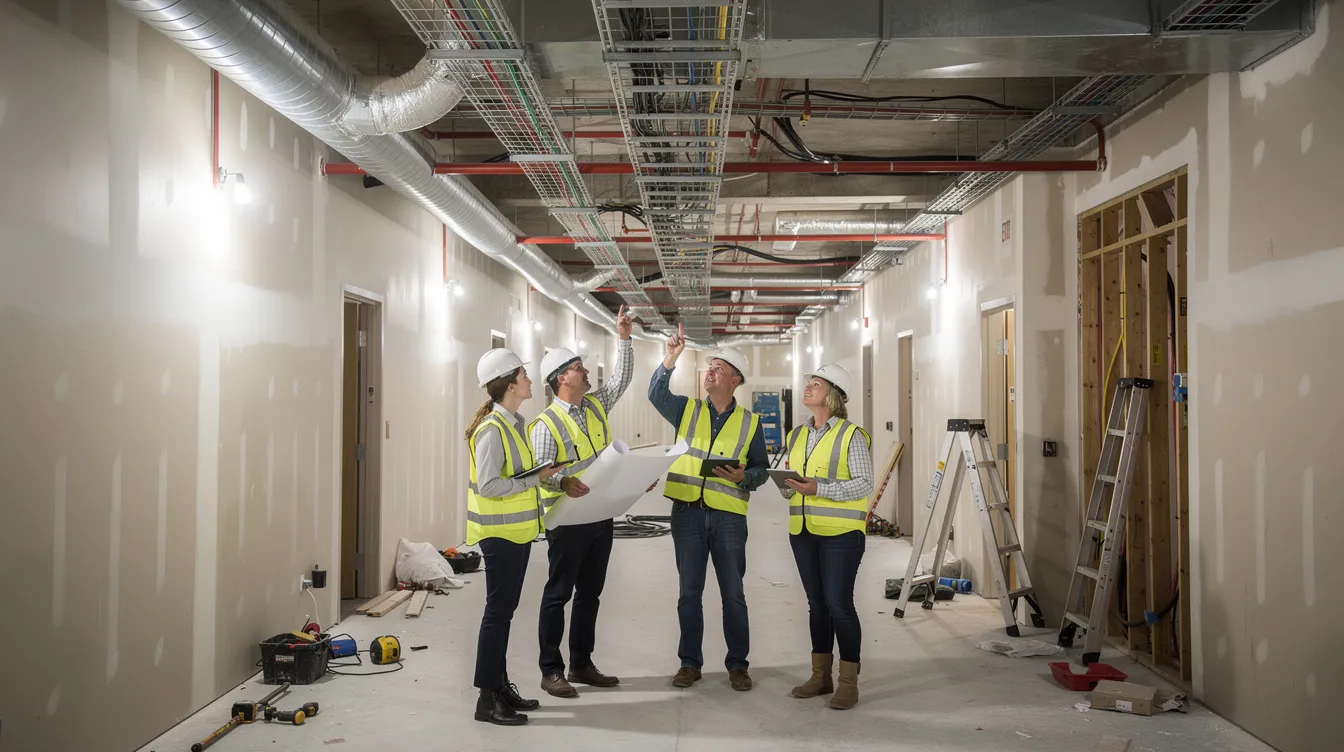
Picture a 2026 commercial tenant improvement in Orange County. The BIM model is clash-free. Every trade’s routing has been reviewed. Three weeks into overhead rough-in, a mechanical contractor’s duct bank conflicts with an electrical conduit run in a corridor ceiling because the crew installed from an older PDF section instead of the current coordinated model. The corridor gets opened back up and rebuilt, burning time the schedule didn’t account for.
This scenario repeats across Southern California jobsites because the real failure is often not in the software. As Construction Executive recently noted in its coverage of the model-to-field gap, teams can end up with a coordinated model in the office while the field installs something different. Autodesk’s model coordination guidance likewise focuses on reviewing and detecting clashes between current 3D project models before construction begins. Those tools matter, but they do not solve the handoff problem by themselves.
BIM coordination can identify conflicts digitally before they become field conflicts. What it cannot do on its own is make sure coordination decisions reach the superintendent, the foreman, and the crew at the point of installation. Last-minute revisions, informal field adjustments, limited on-site model access, and unclear ownership of updates all widen the gap between the coordinated model and actual construction.
On Southern California projects with tight TI schedules, seismic bracing requirements, and congested MEP spaces, even small deviations from the coordinated model can snowball into demolition, resequencing, and stale as-builts. The rest of this article focuses on practical behaviors that close that gap for contractors and project teams.
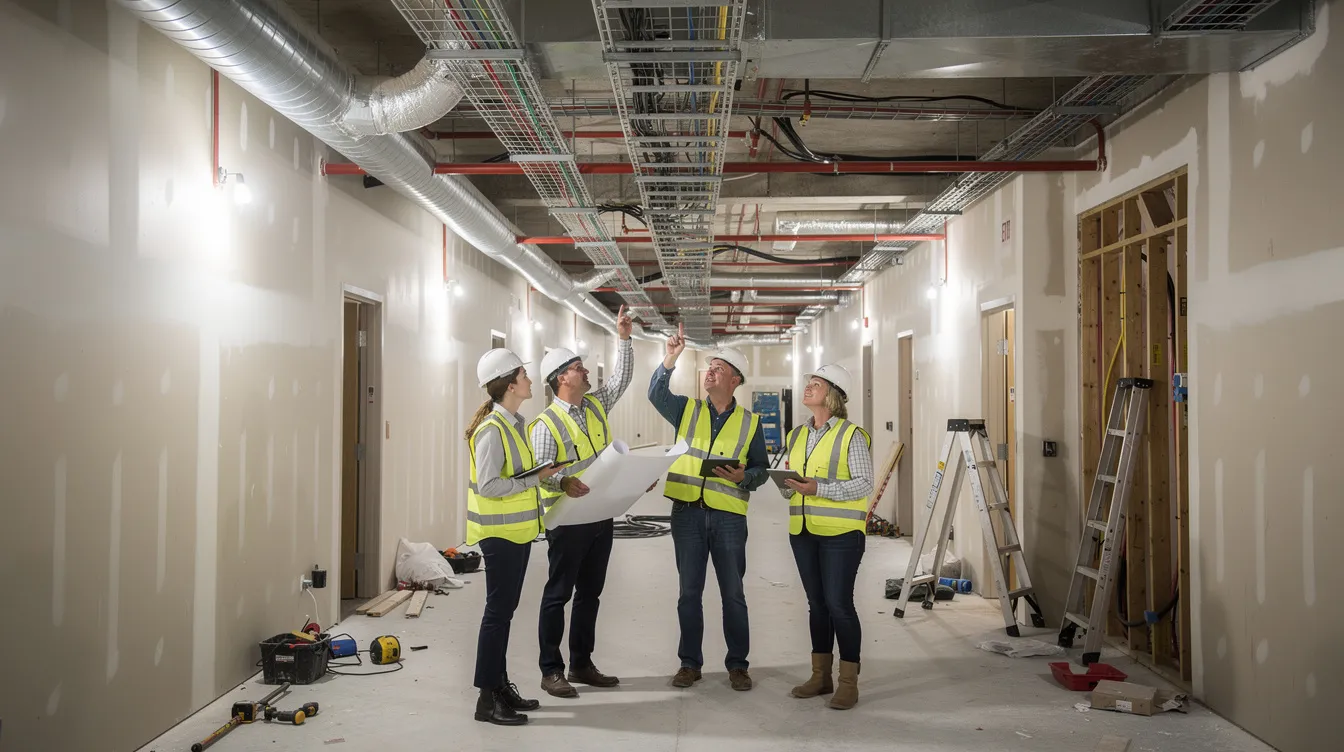
VDC teams and the BIM coordinator often drive clash detection and model updates from design through preconstruction. Superintendents and foremen may join late or only receive summaries after decisions are already made.
Common failure points in that handoff include:
Clash detection software is valuable, but it is only as useful as the models and update practices behind it. If the model is incomplete, outdated, or disconnected from field decisions, the clash report can give a false sense of confidence.
On fast-track Southern California interiors, healthcare upgrades, and other stacked-trade environments, overlapping shifts and compressed communication windows make this worse. The handoff from VDC to the field should be treated as its own scope of work, with clear owners, milestones, and verification steps, not just an email with a link to the model.
The BIM coordinator cannot be the only gatekeeper. Superintendents and key foremen need to understand the coordinated constraints before they commit to layout and installation.
A pre-install review should cover, at minimum:
This review should happen before major milestones: pouring decks with embedded items, roughing in overhead runs, and closing walls or ceilings. Each affected trade and the superintendent should sign off with a date.
Field leaders should also challenge coordination assumptions. If a coordinated route is blocked by an actual field obstruction or creates a practical installation problem, the issue should be resolved in the model rather than patched informally in the field. Screenshots of congested zones, color-coded by trade, can help foremen explain routing decisions to crews in a way that a meeting recap cannot.
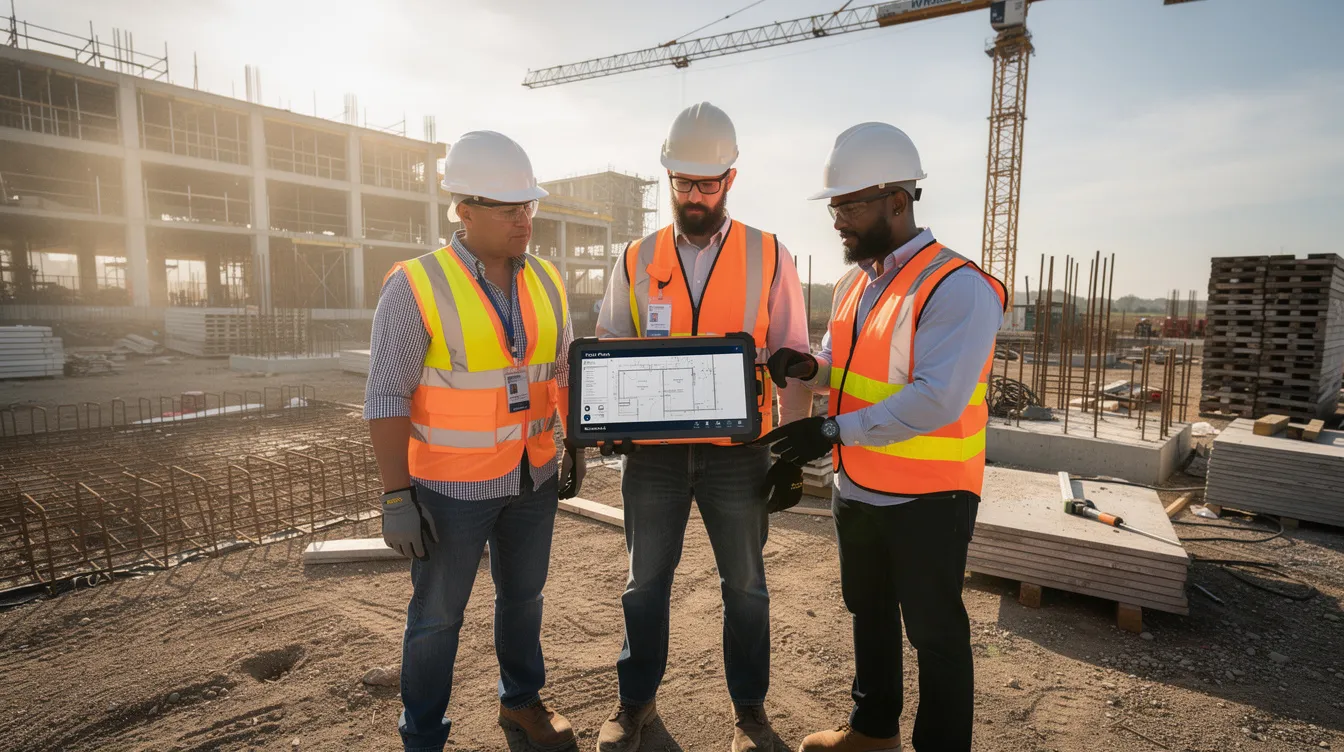
The BIM coordinator’s role extends beyond running clash detection in the office. During construction, this person becomes a bridge between coordination decisions and the builders installing the work.
Specific responsibilities during the construction phase include:
On larger Southern California jobs such as hospitals, data centers, higher education buildings, and logistics facilities, zone-based model leads or trade-specific coordination leads may be necessary to keep response times short. One overloaded VDC specialist usually cannot manage every field question on a large active project.
Ownership for model updates must be explicit. When a field deviation is approved, assign one person to update the model within a defined timeframe. If no one owns that step, the model can drift behind actual construction and lose value as a field reference.
Field verification means systematically comparing installed work to the coordinated BIM model at agreed checkpoints, rather than waiting until the end of the project. Autodesk has described the value of comparing as-built and as-designed views as part of carrying BIM through turnover and operations. That same logic is useful much earlier, while work is still accessible and corrections are still manageable.
Verification should begin with layout and continue through rough-in, above-ceiling work, and pre-close inspections. Practical methods do not require exotic tools:
Verification is most valuable before covering trenches or sleeves, before concrete pours, before stacking systems in congested ceilings, and before insulation or drywall hides work from view.
On tight Southern California inspection schedules, catching a misaligned main, penetration, or duct bank early can save major disruption later. Verification logs with photos and short notes also support updated as-builts and a stronger project record at closeout.
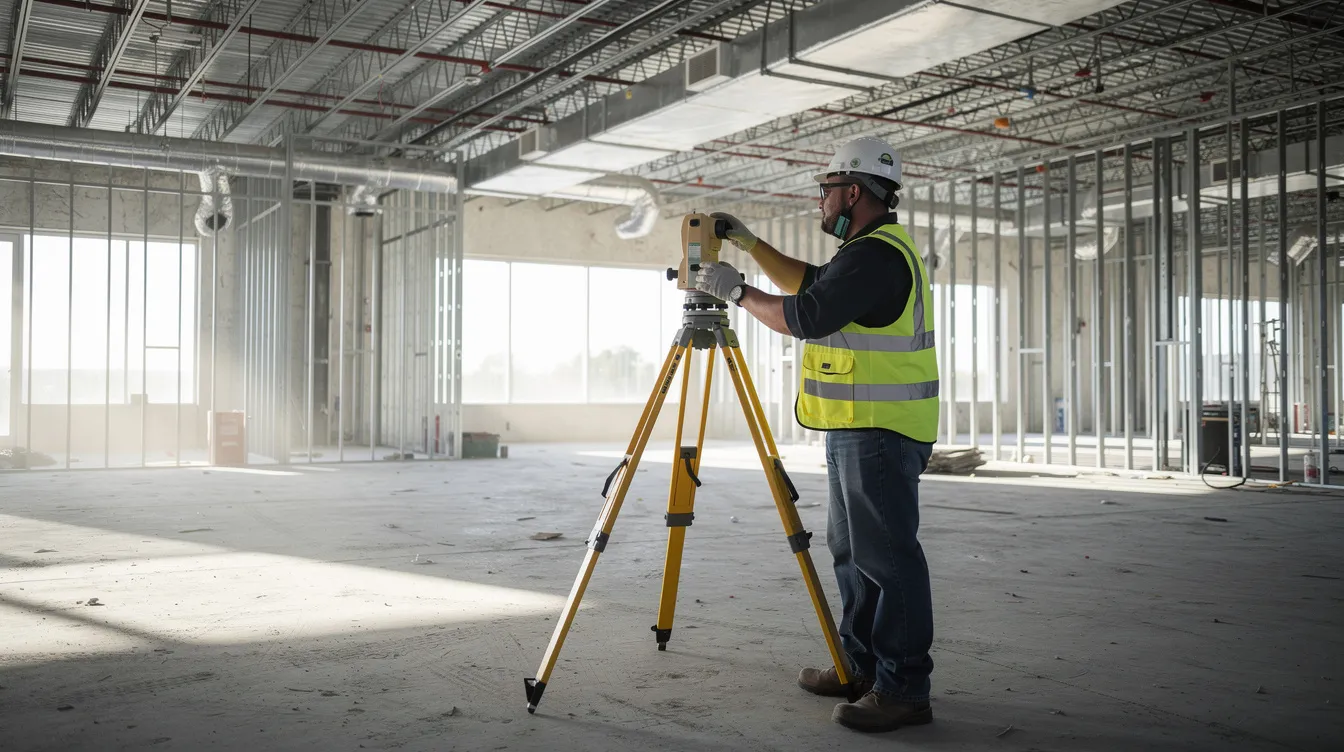
Field teams need quick, simple access to coordinated information without slowing production. A minimal, realistic toolset can include:
Superintendents and foremen should be able to pull up the latest coordinated model or annotated sheets at the point of work to confirm clearances, routes, and access needs before installation starts. In practice, that means scheduled model drops, clear version naming, and jobsite communication so crews know when newer information supersedes prior sheets.
Direct model access in the field may also reduce some routine information requests by letting crews answer straightforward coordination questions on site. Even partial model access, such as overhead coordination views for one floor, can provide value if the information is current and easy to use.
Contractors should standardize how they bring BIM to field teams across projects, aligning with a broader technology roadmap rather than reinventing the process every time.
Closing the BIM coordination gap requires a repeatable loop: coordinate, install, verify, update, and communicate. Many companies still treat coordination as a preconstruction exercise, but the field conditions that matter most keep changing during construction.
A practical cadence for Southern California projects can include:
Use simple, shared trackers that log what changed, why, who approved it, and when the model was updated. When teams weave coordination into existing production meetings and foreman huddles instead of treating it as a separate conversation, they are more likely to keep the model and the field aligned.
Measure whether the loop is working by tracking rework hours, clashes discovered after install, and time spent resolving recurring field questions. If your company already tracks broader performance measures, tie those observations back to existing construction KPIs rather than creating a completely separate reporting system.
Owners increasingly want digital records that are usable after turnover, whether for facility management, future renovations, or general record reliability. But a coordinated model only helps at closeout if it reflects what was actually built.
When field changes are not captured, as-builts can become a patchwork of redlined PDFs, memory, and incomplete markups. Disciplined field verification and model updates help turn the coordinated model into a more dependable closeout record.
A clean closeout flow looks like this:
For Southern California owners in healthcare, higher education, logistics, and commercial interiors, that kind of digital closeout can support smoother operations after handover. The key is to set expectations early in contracts and preconstruction about who owns each closeout component and how model-based as-builts will be assembled.
Many experienced superintendents and foremen learned their craft on paper plans. Asking them to rely on BIM models requires targeted training and respect for their field knowledge. The goal is not to turn every foreman into a modeler. It is to prepare field leaders for practical tasks: navigating a model to answer a question, confirming a dimension or elevation, and capturing a field change so it flows back to the VDC team.
For Southern California contractors, they can build this into apprenticeship pathways, craft training, continuing education, and supervisor development. Pairing tech-comfortable project engineers or trainees with veteran foremen is often an effective way to combine digital familiarity with field judgment.
ABC SoCal members that are already investing in workforce development can connect this topic to broader field-leadership growth and a longer-term construction career path for future supervisors and project managers.
You do not need to overhaul your technology stack to close the BIM coordination gap. Start with one disciplined process on the next job.
Pilot this on your next project:
BIM coordination is not just a preconstruction checkbox. It is a field-execution discipline that can reduce coordination-related surprises, support more predictable installations, and produce better digital records at closeout. The teams that treat coordination as a living process through construction put themselves in a stronger position to limit rework and deliver more reliable as-builts.

Below are answers to common questions about this topic.
Clash detection is one technical step where software flags physical conflicts between models. BIM coordination is the broader process of resolving those clashes, communicating the decisions, updating the model, involving field teams, and verifying that installation follows the coordinated plan. A project can have a clean clash report and still experience field rework if those steps break down after sign-off.
They do not need to become expert modelers. Most crews need simple visual access to the coordinated intent, such as curated 3D views, 2D exports from the model, and clear markups of critical areas. Start small with one zone or one high-risk scope and pair foremen with a project engineer or trainee who can help navigate the model.
Yes. Smaller Southern California tenant improvements and renovations with dense MEP conditions, such as restaurants, medical suites, and lab spaces, can benefit from lightweight coordination focused on the highest-risk ceilings, utility rooms, and penetrations. The goal is not to model everything. It is to coordinate the areas where field conflicts are most likely to get expensive.
Build verification into milestones you already have: pre-pour reviews, above-ceiling inspections, rough-in checkpoints, and pre-drywall walks. That approach usually works better than standalone meetings because it ties model checks directly to the work about to be covered or released.
The project’s BIM execution plan or coordination charter should make this responsibility explicit. Often, the BIM coordinator or a designated VDC specialist updates it based on documented input from the superintendent or project engineer. What matters most is assigning one owner and one turnaround expectation so the field can trust the model to represent current conditions.







