
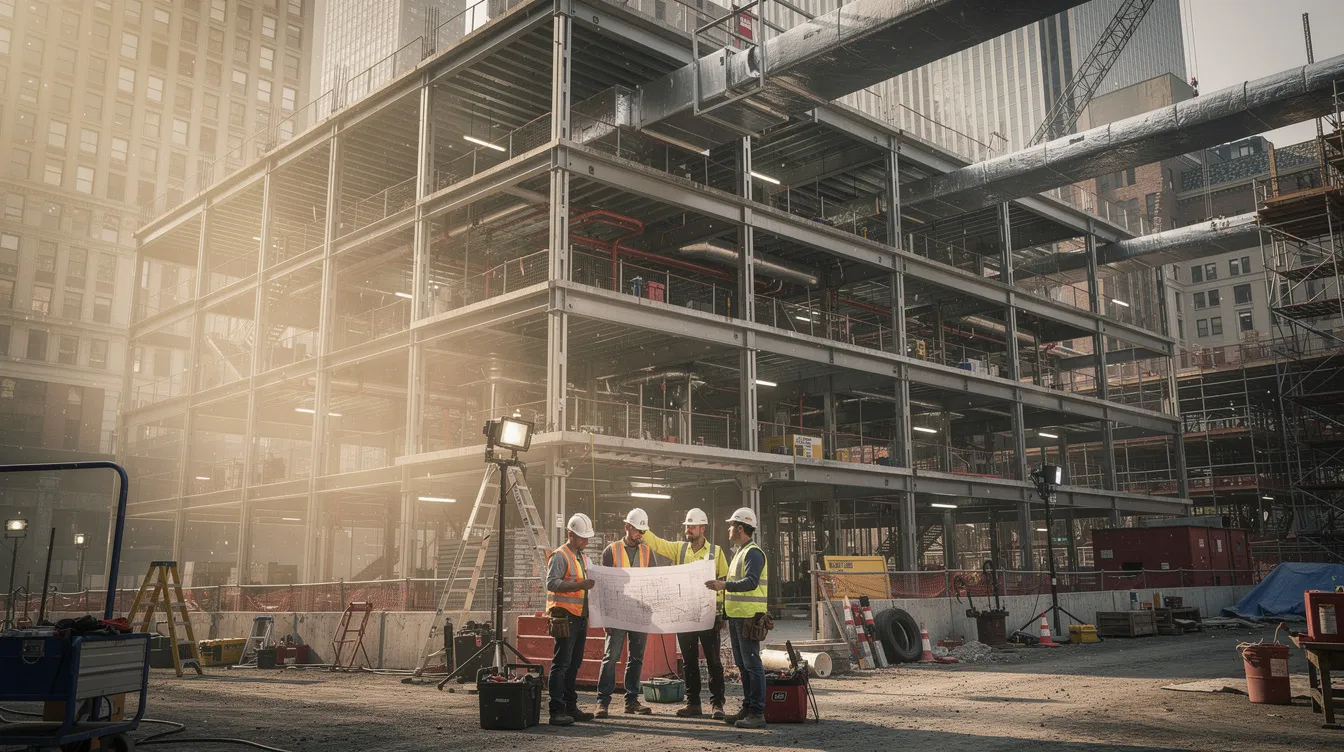
Rework on multi-trade commercial construction projects drains budgets, extends schedules, and frustrates field teams. For Southern California contractors managing dense jobsites from downtown Los Angeles to the Inland Empire, clash detection through BIM coordination offers a practical way to catch conflicts before they become field fixes.
Clash detection uses a coordinated 3D model to identify where building systems such as structural steel, ductwork, plumbing, fire protection, electrical, and low-voltage pathways physically conflict or create clearance problems before installation begins. For commercial construction projects across Los Angeles, Orange County, the Inland Empire, and Ventura County, it is one of the clearest ways to reduce avoidable rework.
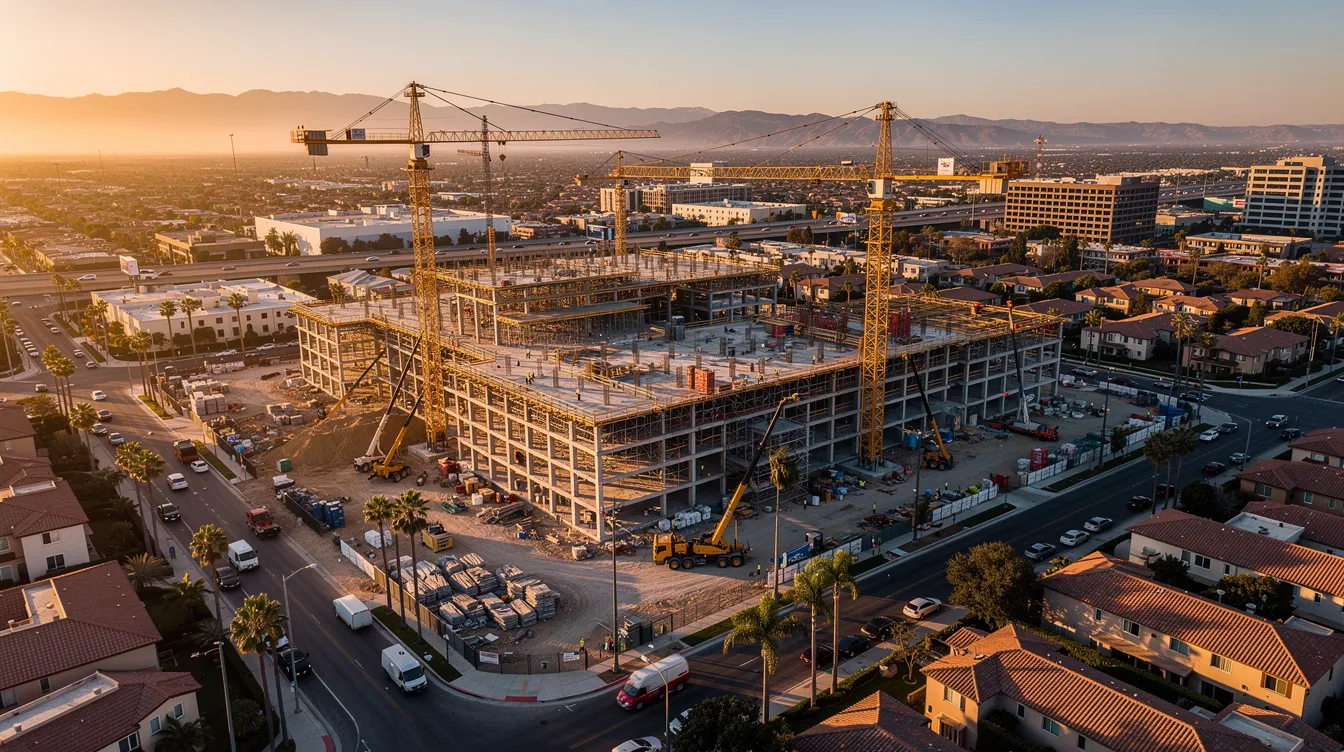
On complex commercial construction projects in Southern California, rework rarely arrives as one obvious failure. It usually appears as a chain reaction: ductwork that interferes with fire protection above a corridor, an equipment room that doesn’t preserve needed access, or a penetration that wasn’t fully resolved before layout. The result is familiar—lost time, changed sequences, extra labor, frustrated trade partners, and pressure on already tight project budgets.
Many of these problems start as coordination failures that could have been addressed before crews installed the work. Construction Executive’s recent reporting on BIM coordination centers on exactly that point: teams can bring models together, detect conflicts on screen, and resolve them earlier instead of treating field rework as unavoidable.
For Southern California contractors, that matters on projects with tight sites, stacked trades, aggressive schedules, and limited room for late adjustments. Clash detection is not about making every project more complicated. It is about using model-based coordination where it has the strongest operational value: reducing preventable surprises before fabrication, layout, and installation move ahead.
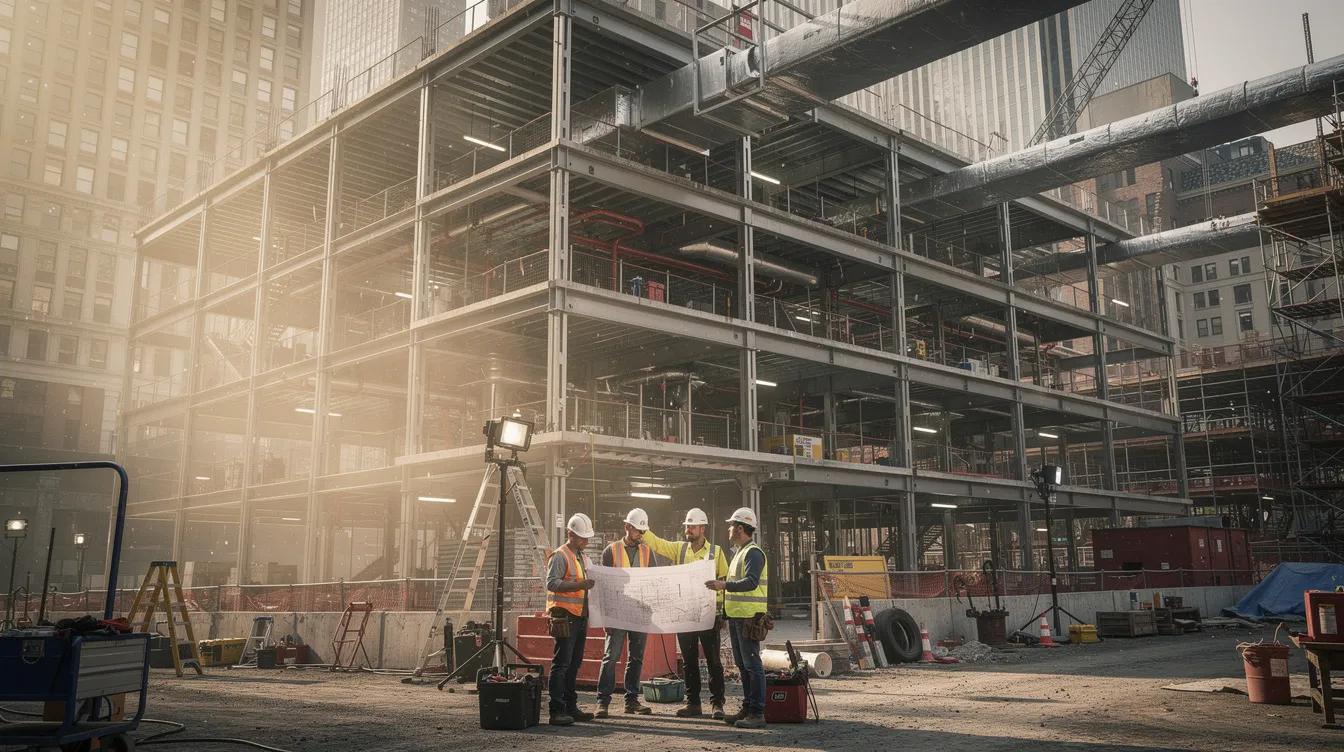
Clash detection is the process of using a coordinated 3D model to find where two or more systems occupy the same space or create a clearance problem before anything is built. In practice, that can include steel conflicting with ductwork, piping running through a beam zone, cable tray interfering with access, or equipment locations that leave inadequate room for service and inspection.
It sits within the broader BIM coordination process. Teams combine models from different disciplines into a shared view, review the overlaps, and work through what has to change before fabrication or installation proceeds. Compared with checking separate 2D drawings one sheet at a time, a coordinated model makes those conflicts more visible and easier to discuss with the people responsible for solving them.
Clash detection works best when each participating trade models to an agreed standard and the team is clear about what the coordination model is meant to support. If the model is incomplete or inconsistent, reviews can either miss real conflicts or overwhelm the team with low-value noise.
It is also useful to think beyond simple object-to-object collisions. Some of the most important issues involve access, maintenance space, sequencing, or constructability. A model that looks clean from one angle can still create field problems if crews cannot install, inspect, brace, or maintain the system as designed.
Project managers, superintendents, and trade coordinators usually get the most value by separating clashes into a few practical categories.
Many teams focus first on hard clashes because they are easiest to see. But on real commercial jobs, soft and workflow clashes can be just as disruptive. That is especially true on hospitals, schools, tenant improvements, logistics facilities, and other projects where access, phasing, and inspections matter as much as physical fit.
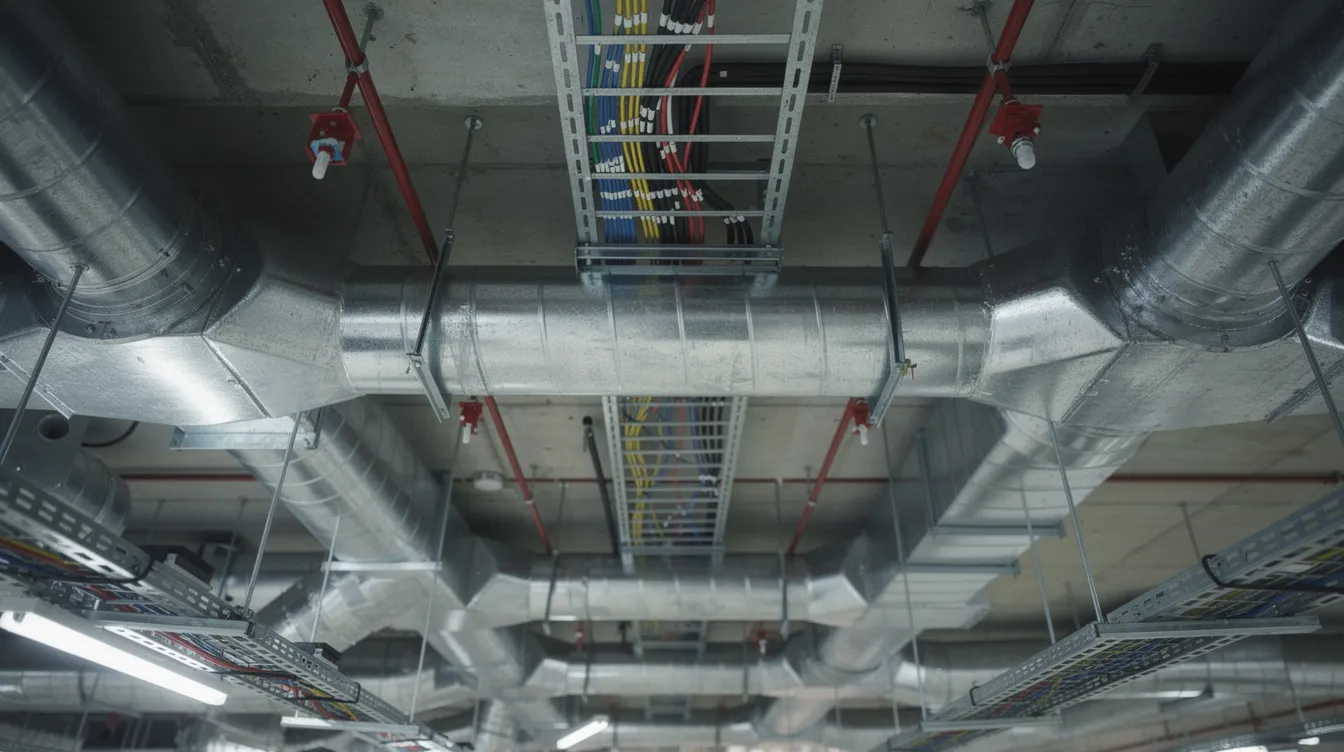
Southern California commercial construction creates plenty of conditions that make coordination failures expensive. Tight urban jobsites in Los Angeles and Long Beach limit staging and access. Healthcare and education projects in Orange County and the Inland Empire often involve dense MEP systems and strict inspection expectations. Industrial and logistics work in Riverside and San Bernardino Counties can involve long runs, equipment interfaces, and structural penetrations that are difficult to correct late.
In those environments, clash detection tends to deliver the biggest return in the parts of a project where multiple systems converge:
The value is not just avoiding one obvious collision. It reduces the cumulative friction from late RFIs, field improvisation, out-of-sequence work, and repeated adjustments by multiple trades.
Clash detection only reduces rework when it changes decisions early enough to matter. That requires a disciplined workflow.
Construction Executive’s recent article frames this well: the benefit is not only seeing clashes, but resolving them before they delay work onsite. That is the difference between coordination as a planning tool and coordination as a report no one uses.
Finding clashes in BIM is only half the job. The bigger challenge is making sure the coordinated decision actually changes what gets built in Anaheim, San Fernando, downtown Los Angeles, or anywhere else a crew is working.
A second recent Construction Executive article focused on this exact gap between BIM coordination and field installation. Its point is practical: contractors need better communication, early involvement from the people building the work, and ongoing verification so the model doesn’t drift from field reality.
That means project teams should translate coordination decisions into current installation drawings, updated shop information, and clear direction for superintendents and foremen. It also means field leaders should be included in key coordination conversations, especially in areas where site conditions, access, or installation sequence may make a theoretically clean model harder to build.
Where appropriate, contractors may also use field verification tools to compare installed conditions against the coordinated model. ABC’s field technology reporting notes that identifying discrepancies early is less disruptive and that digital comparison tools can help teams catch deviations before they multiply into downstream rework.
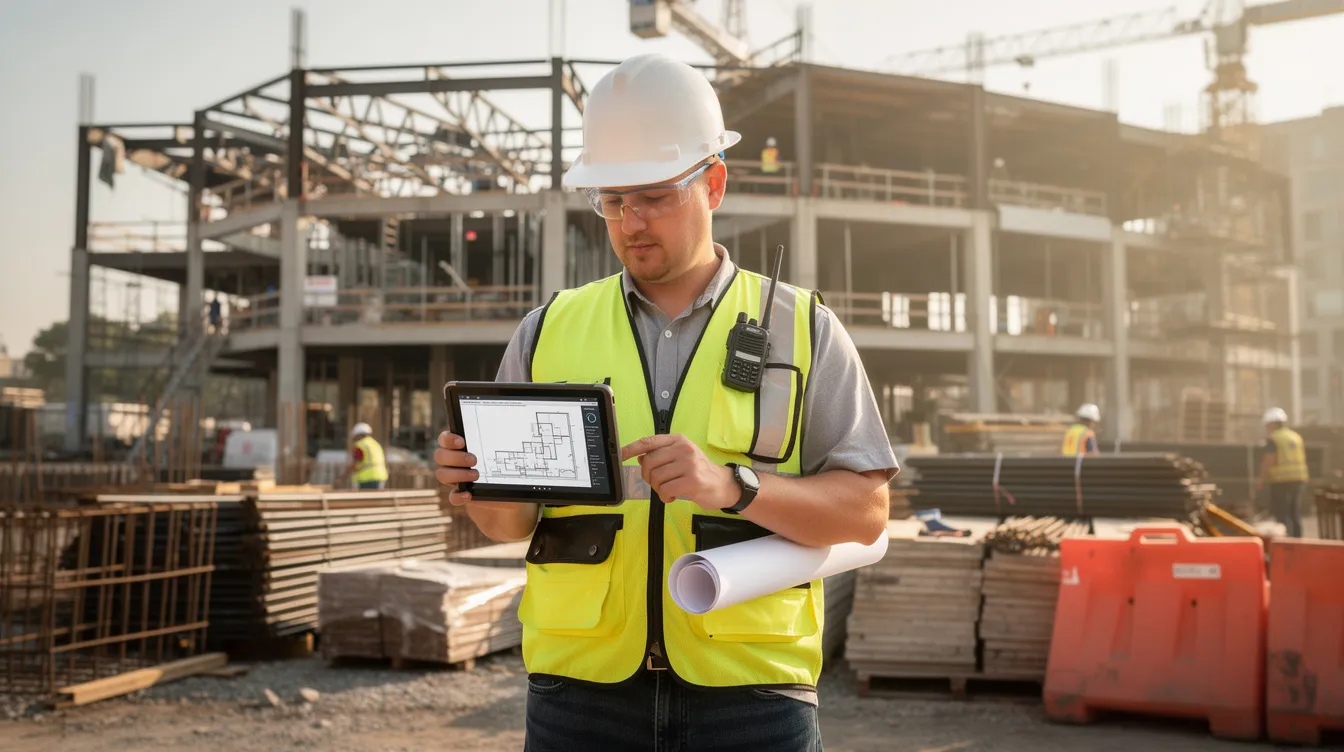
Clash detection is strongest when it is treated as part of pre-installation quality control rather than a separate digital initiative. For many contractors, that means tying it to existing project controls and QA processes.
This quality lens also aligns with broader safety thinking. NIOSH describes Prevention through Design as designing work to remove hazards, and OSHA recommends practices for construction to stress communication and coordination among employers on multiemployer worksites. Clash detection is not a substitute for safety planning, but early coordination can support safer, more orderly work by reducing improvisation, congestion, and last-minute field changes.
Not every team that runs clash reports gets the full benefit. Several common mistakes quickly reduce its value.
The practical answer is focus: coordinate the areas with the highest trade density and the biggest downstream consequences first, then keep the model current as project information changes.
A project manager or superintendent can use the checklist below to connect clash detection to real rework reduction on the next job.
Design and preconstruction
Before fabrication and release
Field readiness
Closeout and continuous improvement
ABC SoCal serves merit shop contractors across Southern California with apprenticeship, training, and member education that can support stronger project coordination habits. On clash detection specifically, the most useful support may be indirect but still important: better-prepared trade workers, stronger field leadership, and broader familiarity with practical construction technology workflows.
If your team is seeing repeat coordination problems in mechanical rooms, corridor ceilings, shafts, or other congested areas, a practical next step is to review one active project before the next major fabrication or installation release. Then explore whether ABC SoCal training and member education resources can help strengthen the coordination habits behind that work.
Below are answers to common questions about this topic.
Not necessarily. Many small and mid-sized contractors start by focusing coordination on the most congested spaces or by working closely with design teams, specialty contractors, or outside BIM support on selected scopes. The key is to use clash detection where the payoff is likely high, rather than trying to model everything at once.
It should begin once the major systems are defined enough to coordinate meaningfully, and it should continue as important design or scope changes occur. Starting too late reduces the team’s ability to solve conflicts before fabrication and installation decisions are already in motion.
Contractors can still use clash detection internally on high-risk systems or spaces to protect schedule, labor, and installation quality. Even limited coordination around shafts, overhead congestion, or equipment areas can be valuable when the alternative is relying entirely on separate 2D documents.
It can support safer planning by helping teams identify access problems, clearance concerns, and constructability issues early. NIOSH’s Prevention through Design guidance emphasizes removing hazards through design, and OSHA highlights the value of communication and coordination on multiemployer worksites. View clash detection as one planning tool within that broader effort.
Start with practical project measures: coordination-related RFIs, field changes tied to system conflicts, repeated issues in the same project zones, and whether highly coordinated spaces move into installation with fewer disruptions than comparable areas on past jobs. The goal is not a perfect metric on day one. The goal is to create a repeatable way to see whether early coordination reduces field friction and rework.







