

Construction Suicide Prevention Week 2026 runs September 14 through 18. For Southern California contractors, it is a practical opportunity to move beyond awareness posters and build a construction mental health safety program that works on active job sites all year.
This article focuses on implementation: what company leaders, safety teams, superintendents, and foremen can actually put in place now across Los Angeles, Orange, Riverside, San Bernardino, and Ventura County projects.
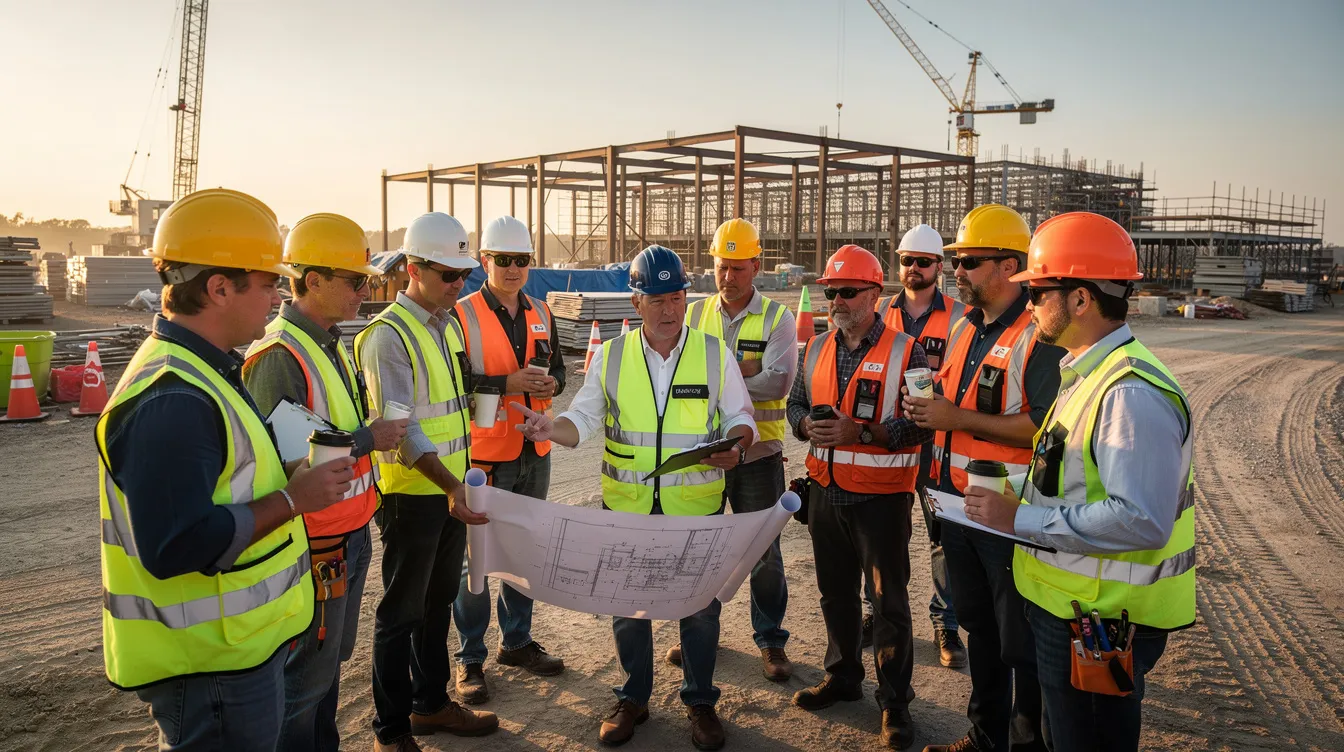
Construction Suicide Prevention Week 2026 is scheduled for September 14 through 18, and the 2026 theme is “Building on Progress,” according to the campaign website. For Southern California contractors, that message is most useful when it leads to a repeatable field system supervisors can use long after the week ends.
Public-health sources continue to identify construction as a high-risk sector. The CDC’s suicide-disparities page lists Construction among the top five industry groups with the highest suicide rates and Construction and Extraction as the top occupation group. In a separate 2026 CDC/NIOSH conference abstract, the agency said construction workers have the highest suicide rates among major occupational groups and called for focused workplace prevention strategies.
That does not mean every stressed worker is in crisis, and it does not turn foremen into clinicians. It does mean contractors should treat mental health support as part of the safety system: a practical structure for noticing concern, starting a respectful conversation, and connecting workers to appropriate help.
OSHA’s workplace stress guidance includes the 988 Suicide & Crisis Lifeline as a support resource employers can share. OSHA also maintains separate mental-health and suicide-prevention publications, including a construction-specific poster. Together, those resources give contractors a simple starting point for orientation packets, safety boards, and toolbox talks.
The biggest implementation mistake is treating mental health as a special campaign that changes from project to project. A stronger construction mental health safety program uses one standard process across sites so workers hear the same message everywhere.
That process should answer four practical questions:
If those answers vary by superintendent, trailer, or project, the program is still informal. Standardizing the response is usually more valuable than adding more slogans, longer policies, or another awareness event.
A construction mental health safety program is not a separate HR campaign competing with production meetings and safety agendas. It is a structured way to address psychological strain inside the systems contractors already use to manage risk.
In practice, that means written expectations, visible support resources, supervisor guidance, and a clear escalation path for situations that may require immediate help. The scope should stay realistic. Foremen and superintendents are not there to diagnose or provide treatment. Their role is to notice changes, ask respectfully, listen, and connect the worker to help.
Here is a simple responsibility map:
The most practical field tool is not a long policy. It is a short observation checklist based on changes a supervisor can actually see.
Possible signs that justify a private check-in can include:
These observations do not prove a cause. They are simply cues to check in privately instead of ignoring the change or turning it into a discipline issue too quickly.
Supervisors need a simple response they can remember under pressure. This four-step framework keeps the role practical and non-clinical:
Supervisors should not diagnose a condition, act as counselors, or promise secrecy if there is an immediate safety risk. If a worker expresses suicidal thoughts, describes a plan to harm themselves, or appears to be in immediate danger, follow company emergency procedures and contact emergency services right away. In a crisis, 988 is also an available support option.
Workers are more likely to use resources they can find quickly and understand immediately. That is why a construction mental health safety program should start with a short, consistent list of support options rather than a long directory few people will remember.
At minimum, most job sites should communicate:
Keep the language plain. A worker under stress should not have to decode wellness jargon. Put the information where crews already look: break areas, trailers, safety boards, orientation packets, wallet cards, or paycheck inserts. For many Southern California workforces, bilingual English-Spanish materials are essential.
Consider a hypothetical contractor running three active projects in the Inland Empire and Los Angeles County. One site posts 988 in English only. Another relies on a supervisor’s phone contacts. A third has EAP information buried in onboarding paperwork. All three technically offer support, but workers experience three different systems.
A better approach would be to standardize the basics across every site: the same bilingual posting, the same short toolbox reminder, the same supervisor response steps, and the same escalation path. That hypothetical example shows that the real decision isn’t whether the company cares. It is whether the process is consistent enough to work in the field.
Use the week of September 14 through 18, 2026 as a launch window for field implementation, not as the whole program.
This sequence works because it uses routines contractors already control. It does not require a new department or a complicated rollout to begin.
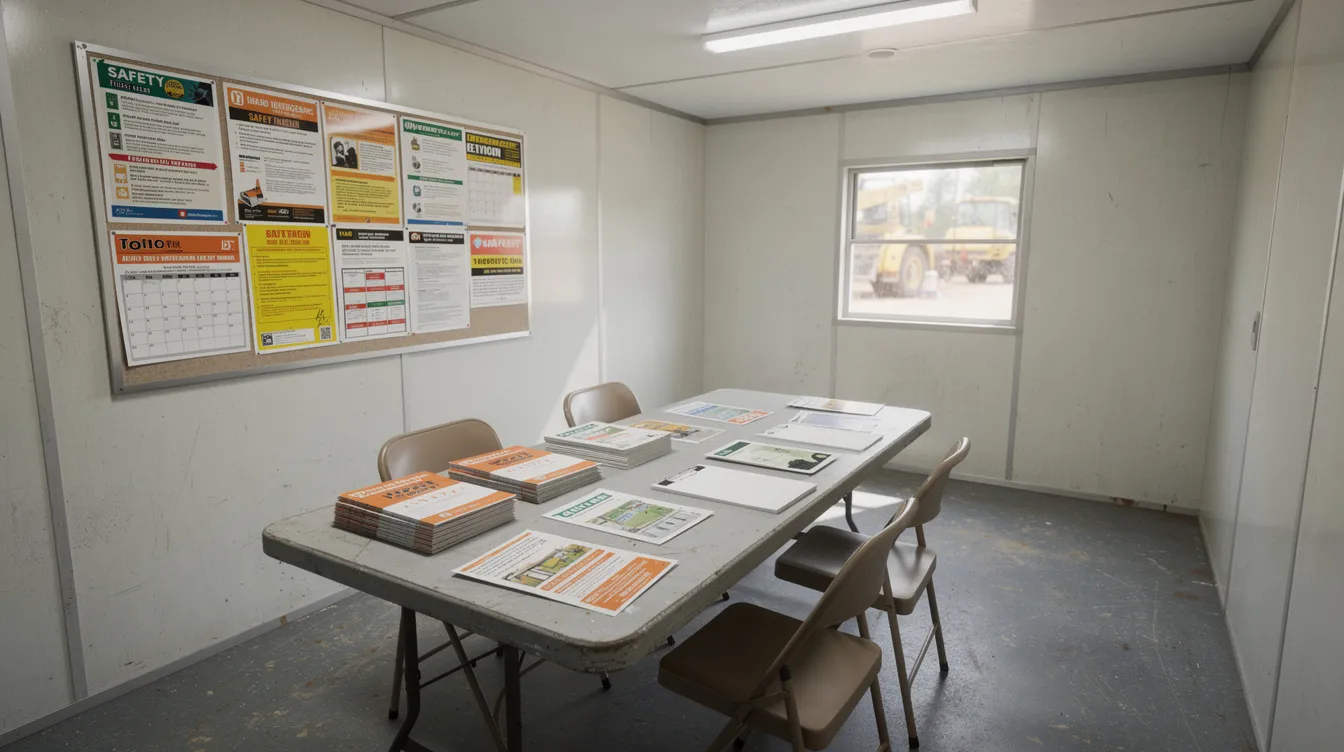
The fastest way to lose momentum is to treat mental health as another standalone initiative. Contractors already have operating systems for jobsite communication. The better move is to use those systems.
| Week | Focus | Key tasks |
|---|---|---|
| Week 1 | Set ownership | Assign an internal lead, choose the standard resource list, and decide where to post and distribute support information. |
| Week 2 | Train supervisors | Brief foremen, superintendents, and project leaders on the notice-ask-listen-connect framework and the company’s escalation process. |
| Week 3 | Standardize field routines | Update orientations, toolbox talk calendars, safety boards, and morning huddle prompts across active projects. |
| Week 4 | Verify execution | Walk sites, confirm postings are visible, ask supervisors to explain the response path, and correct inconsistencies between projects. |
A contractor does not need perfect maturity on day one. The practical objective is to move from good intentions to repeatable habits.
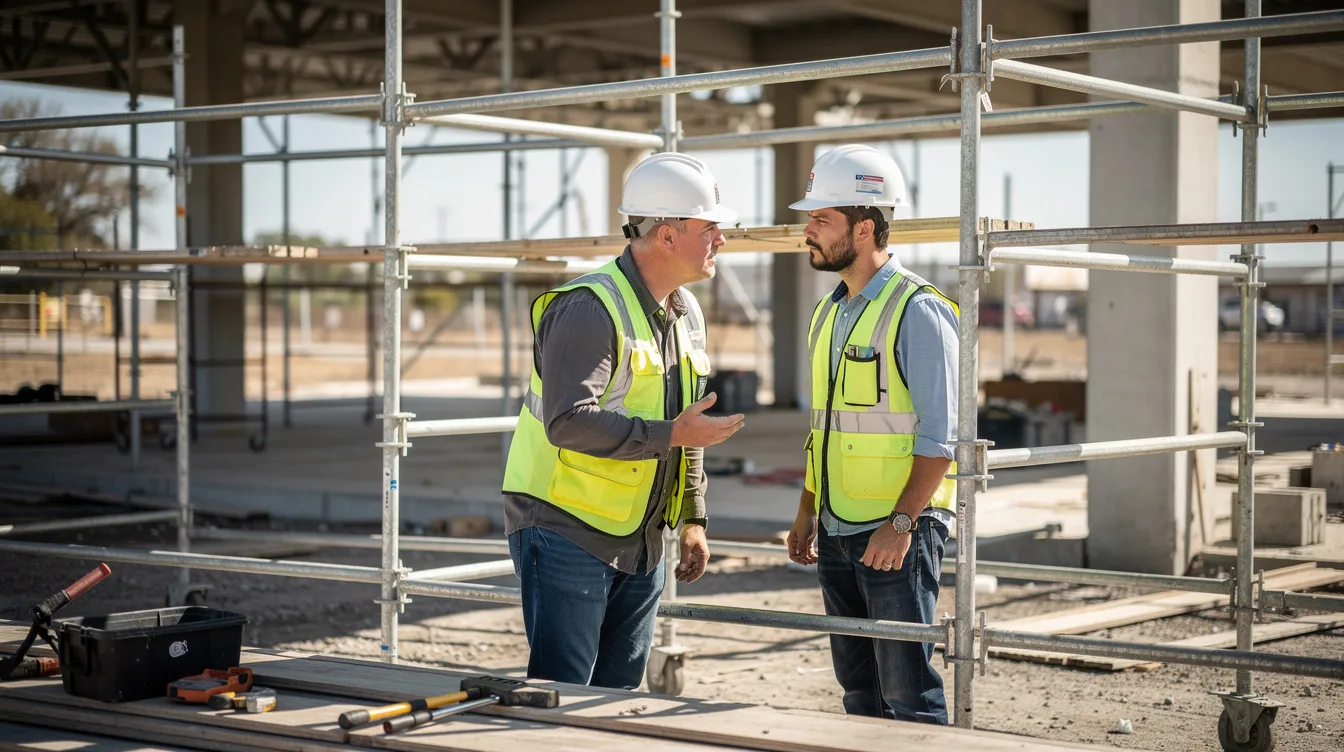
Use this quick scorecard across your active job sites:
If the answer to several of these is no, the gap is probably not awareness. It is execution.
ABC SoCal serves merit shop contractors across Orange, Riverside, San Bernardino, Los Angeles, and Ventura Counties. For companies building a stronger construction mental health safety program, the chapter offers relevant safety education, leadership development, and related mental health resources contractors can adapt for field use.
That includes related reading on mental health in construction, worker-focused guidance in Mental Health Steps for Construction Workers, and broader safety content such as safety on construction sites.
A practical next step is to review current site communications, confirm foremen know the response path, and fold mental health support into existing safety routines rather than waiting for the next awareness campaign.
Below are answers to common questions about this topic.
An EAP is typically one support option employees can use. A construction mental health safety program is broader. It includes jobsite communication, supervisor response guidance, visible resources, and a process for connecting workers to help.
Pull the worker aside privately, describe what you noticed, ask a calm open question, listen, and connect the worker to available support. If there is immediate danger, follow emergency procedures and use crisis resources such as 988.
Yes. Small contractors can start with a short resource list, visible postings, a simple supervisor response framework, and regular reminders in existing safety meetings.
This article follows public-health and workplace guidance that supports direct, respectful conversation and prompt connection to qualified help. Supervisors should stay within a non-clinical role and escalate urgent situations immediately.
Keep the same routines going. Continue short huddle prompts, maintain visible resources, revisit supervisor guidance, and confirm every active site uses the same basic process.







