

Construction mentorship is usually discussed as a way to transfer skills, develop field leaders, and retain talent. Those outcomes still matter. But in construction, mentorship can also support a broader suicide-prevention effort when leaders treat mental health as a real safety issue instead of a private matter workers are expected to handle alone.
CDC reporting shows Construction and Extraction is among the occupational groups with the highest suicide rates in the United States. In a separate CDC/NIOSH conference abstract published in 2026, the agency said construction workers have the highest suicide rates among major occupational groups and called for focused workplace prevention strategies. For contractors managing crews across Los Angeles, Orange, Riverside, San Bernardino, and Ventura Counties, that is not an abstract HR topic. It is a field leadership issue.
The pressure points are familiar: long hours, physically demanding work, chronic pain, inconsistent schedules, long commutes, transient crews, and a culture that can still reward silence. ABC SoCal’s existing safety coverage already treats fatigue management and mental health in construction as jobsite priorities. This article takes a narrower angle: how to make mentorship, foreman leadership, and supervisor routines more useful when a worker may be struggling.
OSHA workplace mental-health materials say employers can help reduce stigma by prioritizing mental health in workplace culture and supporting workers who ask for help. In a separate OSHA guidance document on workplace stress and mental health, the agency says employers can provide access to mental health resources and train managers and supervisors to recognize and talk about mental health and substance use concerns. That makes mentor relationships especially useful on construction projects. Workers often open up first to the person who sees them every day, not to a policy manual.
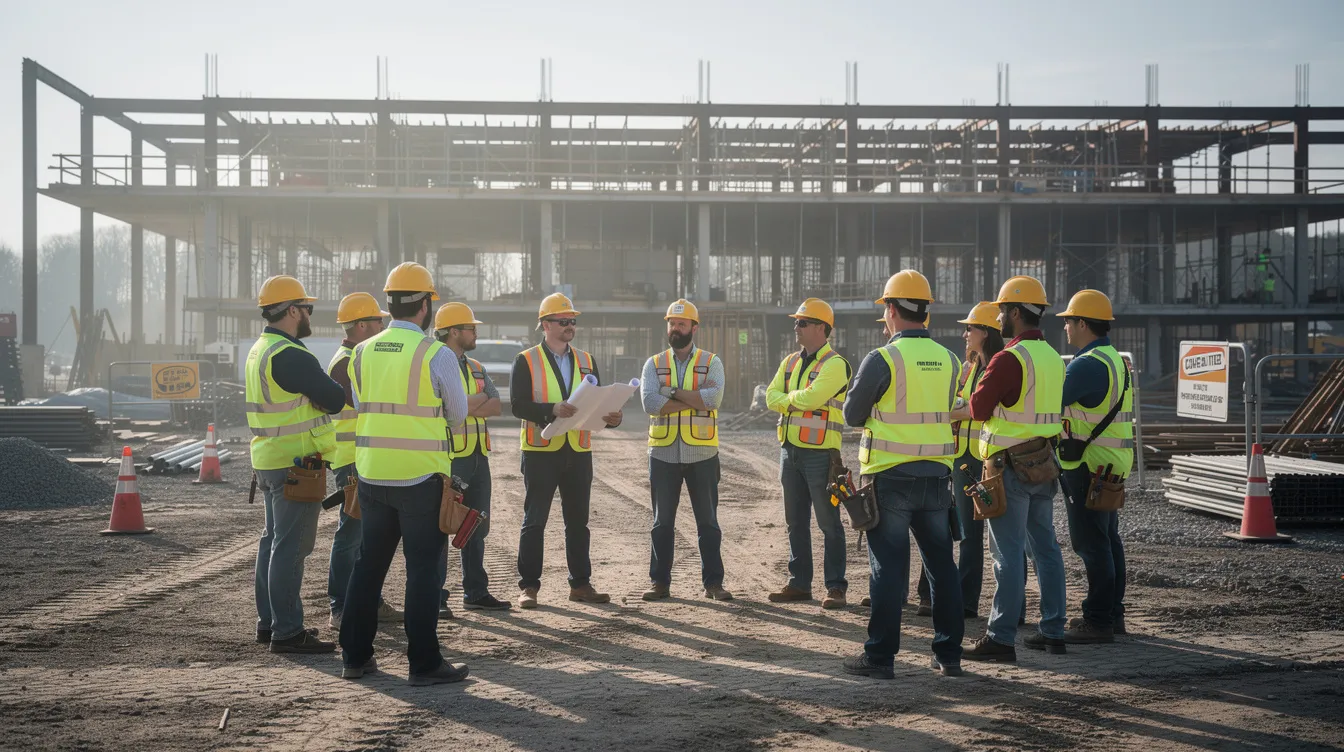
Posting a hotline number by itself is not a system. Leadership is what workers experience every day from the people directing the work.
On a Southern California project, that usually means:
This is where construction mentorship adds practical value. A mentor is not a therapist and should never be treated as one. But a mentor can listen, notice patterns, reduce isolation, and help a worker reach the right support faster.
Here, construction mentorship means more than teaching tasks or helping someone move toward promotion. It means pairing experienced workers and field leaders with newer workers in a way that builds trust, reinforces safe habits, and creates another point of contact when something is wrong.
That matters because many workers do not raise mental health concerns in formal settings. They may bring up sleep problems, family stress, substance use concerns, or burnout casually during a ride to the yard, a walk across the site, or a quick end-of-shift conversation. If the mentor is trained to respond calmly and route the worker to help, that interaction can become an early intervention point.
Mentorship is already embedded in much of construction culture through apprenticeship, field coaching, and foreman development. ABC SoCal’s Apprenticeship Program is built around learning from experienced professionals on active projects, and the chapter’s Foremanship Academy asks member companies to assign a mentor to enrolling members. That existing structure gives contractors a practical way to connect leadership development with worker support.
The more useful question is not whether mentorship is valuable. It is whether your current mentor relationship actually helps a worker get support when something is wrong.
Many companies say they value mentorship. Fewer can answer these questions clearly. Use this quick test across your active projects.
| Question | If the answer is yes | If the answer is no |
|---|---|---|
| Do mentors know the warning signs that should prompt a private check-in? | Workers are more likely to be noticed early. | Distress may be dismissed as attitude or performance only. |
| Do foremen and mentors know exactly who to contact when they are concerned? | Escalation is faster and more consistent. | Supervisors may freeze, overreact, or do nothing. |
| Are 988, EAP, and company support contacts visible on the project? | Workers have multiple ways to reach help. | Resources exist in theory but are hard to use in the moment. |
| Can a worker ask for help without fearing ridicule or lost opportunity? | Reporting is more likely before a crisis develops. | Silence becomes part of the jobsite culture. |
| Are mentor expectations written into training or leadership development? | Support is treated as part of the role. | Mentorship depends on personality, not company practice. |
If several answers are no, the gap is probably not intentional. It is system design.
To make this more practical, give mentors and foremen a simple response card they can remember under pressure.
| Situation | Helpful response | Next step |
|---|---|---|
| A worker seems quieter, more withdrawn, or unusually irritable. | “I noticed you seem different than usual this week. How are you doing?” | Move to a private setting, listen without arguing, and document or escalate according to company procedure if the concern continues. |
| A worker mentions stress, sleep problems, family strain, or feeling overwhelmed. | “Thanks for telling me. You do not have to handle it alone. Let’s talk about what support is available.” | Share the company support path, EAP if available, and the appropriate internal contact. |
| A worker says something that suggests hopelessness or possible self-harm. | Stay calm, take it seriously, and do not leave the person alone if there is an immediate safety concern. | Follow the emergency or crisis process immediately and use 988 or emergency services as appropriate. |
| A mentor is unsure whether the situation is serious enough to report. | “I am concerned, and I want to make sure we handle this the right way.” | Use the company escalation path. Do not rely on personal judgment alone for borderline situations. |
This kind of tool helps distinguish support from improvisation. It also reinforces an important boundary: mentors should not diagnose, promise secrecy they cannot keep, or try to solve a crisis by themselves.
Suicide prevention on a jobsite is usually built through repetition, not speeches. These routines are simple enough for most contractors to start quickly.
1. Add short mental health prompts to toolbox talks.
Not every talk needs to be about crisis response. A foreman can ask a brief question about fatigue, stress, or focus alongside the day’s physical hazards. That helps normalize the topic and signals that speaking up is allowed.
2. Use private one-on-one check-ins when something seems off.
A mentor or supervisor does not need a perfect script. A direct, respectful opener often works best: “I noticed you seem quieter than usual this week. How are you doing?” The goal is not diagnosis. The goal is to open the door and listen.
3. Repeat where help is available.
Workers under pressure may not remember a single announcement. Post and repeat the same support path: company contact, EAP if available, and 988 for immediate crisis support. OSHA materials also point workers to 988, and repeating that information in English and Spanish is a practical step in the field.
A company response path should answer one basic question: what happens next if a worker may need help?
Not every contractor needs the same structure, but the process should be clear enough that field leaders aren’t guessing. At minimum, define:
OSHA offers construction-specific suicide-prevention materials, including a construction poster and employer guidance that companies can incorporate into training and safety communication.
One rule should stay clear throughout the policy: supervisors and mentors are not clinicians. Their role is to notice, ask, stay with the worker if there is an immediate safety concern, and connect the person to qualified help.
Good intentions aren’t enough if leaders don’t know what to look for. Foremen, lead journeymen, and mentors are often the people most likely to spot early changes in behavior.
Common warning signs that should trigger a private conversation include:
In its workplace stress and mental-health guidance, OSHA says employers can train managers and supervisors to recognize and talk about mental health and substance use concerns. That training is more useful when it includes role-play, practical language, and escalation practice, not just awareness slides.
For Southern California contractors developing the next layer of field leadership, foreman development and mentorship training should connect here. The same leaders responsible for crew communication, production pressure, and daily safety expectations are often the first people workers read for signs of trust or stigma.
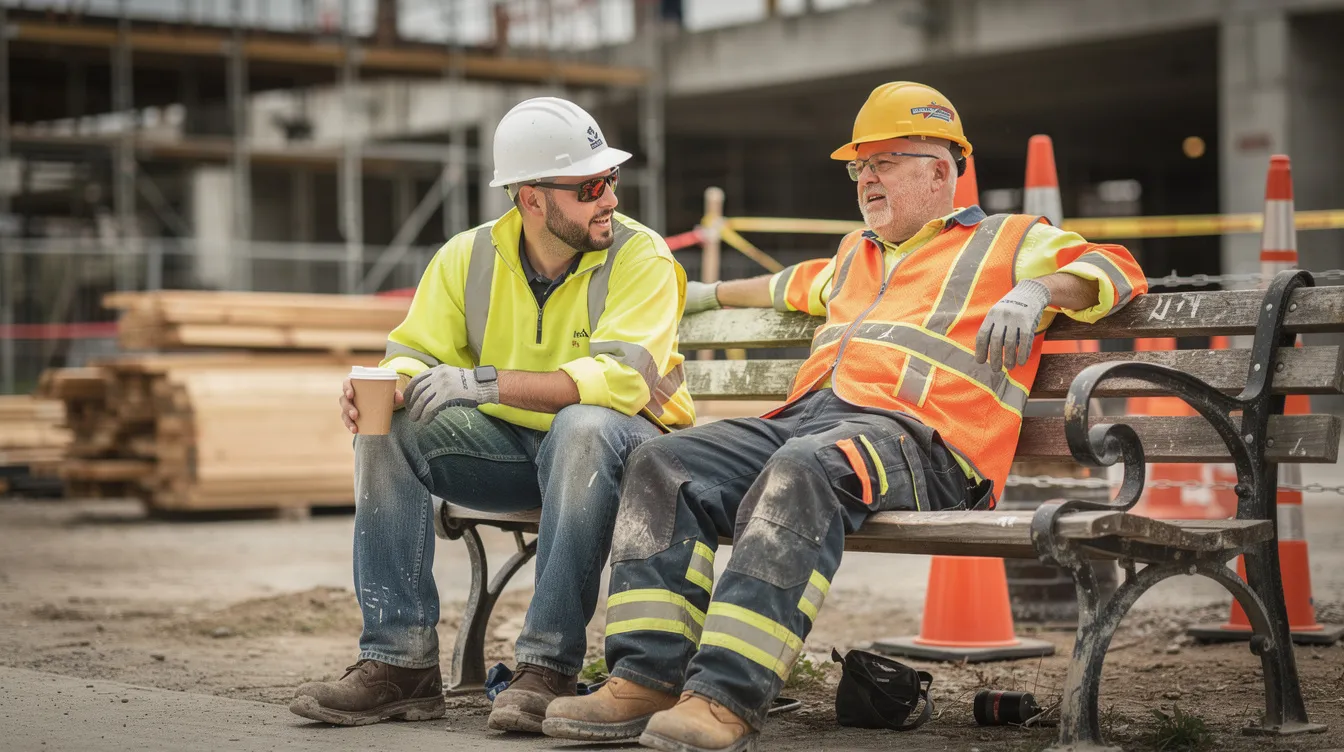
The mental health conversation becomes more practical when it reflects actual operating conditions. Southern California crews often deal with long commutes, heat, schedule compression, wildfire-related disruption, and physically demanding work across large geographic areas.
Those issues do not automatically create a mental health crisis, but they can compound fatigue and stress. That is why the topic overlaps with other field controls contractors already understand. A worker who is sleep-deprived, overheated, distracted by financial or family strain, and afraid to speak up is facing a layered risk, not a single issue.
For that reason, mental health support should not be isolated from the rest of the safety program. It fits naturally beside fatigue planning, heat illness prevention, respectful supervision, and violence-prevention awareness. Contractors that want a related operational resource can also review ABC SoCal’s article on heat illness prevention for Southern California construction.
Informal good intentions disappear quickly when projects get busy, or leaders change. If you want mentorship to support suicide prevention consistently, write the expectations down.
A practical company policy can include:
The goal is not to turn foremen into counselors. The goal is to remove uncertainty so field leaders know how to respond appropriately and workers know help is real.
Week 1: Review your current safety communication, orientation, and supervisor expectations. Identify your company support contacts, any EAP pathway, and how you’ll communicate 988 on active projects.
Week 2: Add one short mental health or fatigue prompt to regular toolbox talks. Post support information in break areas and on safety boards in the languages your crews actually use.
Week 3: Have foremen or mentors conduct brief one-on-one check-ins with crew members, especially newer workers and anyone showing unusual behavior changes.
Week 4: Test the response path. Ask supervisors and mentors who they would contact, what they would say, and where the support information is posted. Fix confusion before a real crisis exposes it.
This approach is intentionally practical. It gives leaders a way to move from awareness to repeatable field action without pretending the company can solve mental health challenges on its own.
ABC SoCal serves merit shop contractors across Orange, Riverside, San Bernardino, Los Angeles, and Ventura Counties with workforce development, safety education, and leadership training relevant to field operations.
For companies looking to strengthen construction mentorship, the chapter offers resources that already align with this work:
If your company wants to make mentorship more useful as a safety and support tool, the next step is straightforward: review whether your mentors and foremen know how to spot concern, start a conversation, and connect a worker to help.
Below are answers to common questions about this topic.
Pull the worker aside privately, describe what you noticed without judgment, and ask an open question. Listen first. If the concern continues or seems serious, follow the company’s escalation path and connect the worker to available support. If there is immediate concern about self-harm or safety, stay with the worker and use emergency or crisis resources, including 988.
A mentor’s role is not treatment. It is early support: noticing changes, building trust, starting a respectful conversation, and helping the worker reach qualified help or the right company contact.
There is no single required frequency for every company, but regular repetition is more useful than one-time campaigns. Many contractors can start by including a short mental health, fatigue, or stress prompt at least weekly and increasing emphasis during demanding project phases.
Yes. Small firms can still define a response path, train foremen to recognize concern, repeat 988 and company support information, and use simple check-ins. The key is clarity and consistency, not bureaucracy.
Because workers often talk first to the people they trust on the jobsite. When mentorship is well structured, it can reduce isolation and help concerns surface earlier, making it easier to connect someone to real support.







