

Choosing the right construction safety communication tools can directly affect how quickly crews report hazards, respond to changing conditions, and coordinate work on busy Southern California projects. On commercial jobs across Los Angeles, Orange County, the Inland Empire, and Ventura County, contractors often manage multiple trades, large footprints, noisy work areas, and crews that do not all communicate the same way in the field.
That is why a recent Construction Executive article on two-way smart radios for every construction worker deserves ABC SoCal members’ attention. Its central point is not just that radios exist. It is that giving more workers at the crew level—not only supervisors—direct communication access can reduce relay delays, improve field coordination, and help hazards get reported faster.
This article keeps that worker-level smart-radio question at the center. It also looks at the supporting tools and protocols that make radios more effective in practice, from headsets and reporting apps to multilingual visual aids and clear channel rules. ABC Southern California supports member contractors with safety practices, training, and compliance resources that can help turn those tools into a working field system.
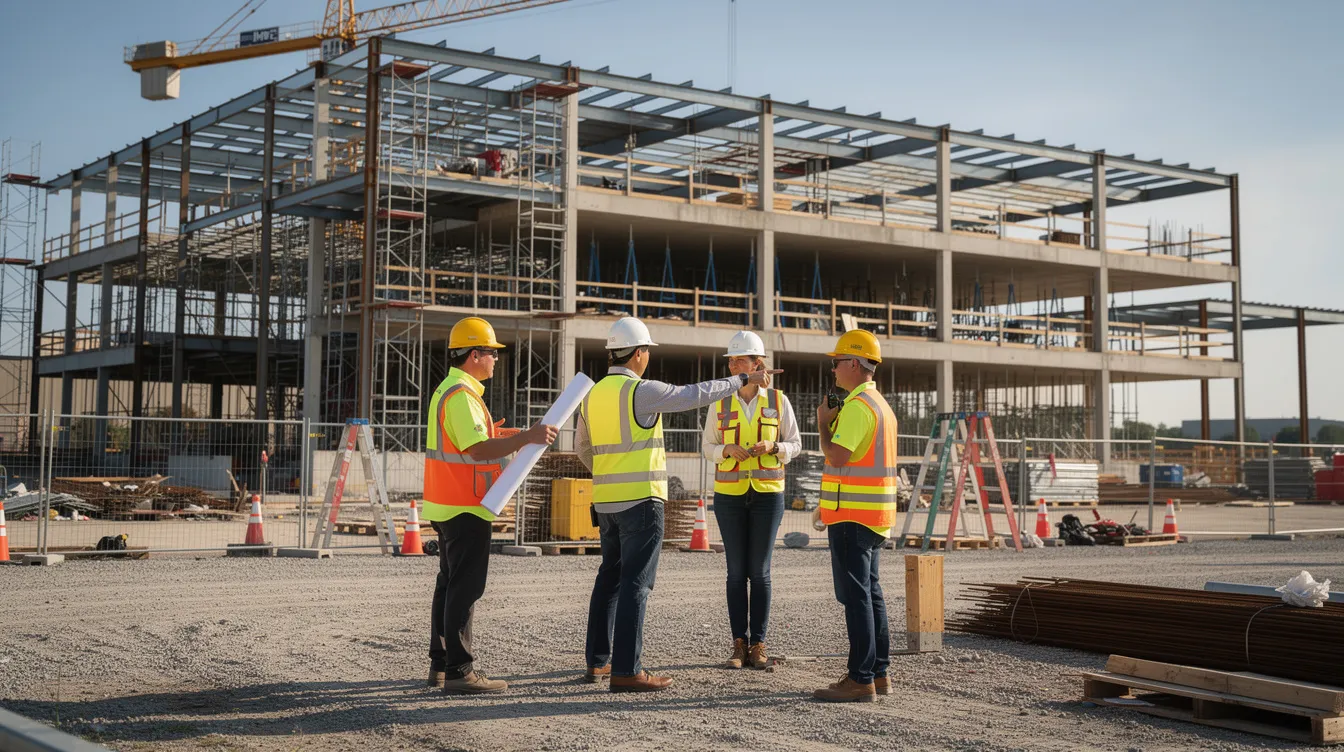
Construction Executive’s reporting focuses on a specific shift in jobsite communication: moving from radio access limited mainly to supervisors toward broader access for the workers who first see many field problems. That matters because the source isn’t generic advice about communication culture. It is a practical argument that direct, worker-level smart radio access can shorten communication chains, support multilingual crews, and improve both safety communication and productivity.
For Southern California contractors, that question is especially relevant on projects with vertical construction, spread-out work zones, loud equipment, or complex trade overlap. If a worker has to leave the work area, find a foreman, and then wait for the message to be passed again, the delay can affect both response time and production. If that worker can communicate directly through a dedicated device and established channel, the site may respond faster.
That does not mean radios replace supervision, pre-task planning, job hazard analysis, or Cal/OSHA compliance. It means they may improve the speed and clarity of field communication when they are deployed intentionally.
The criteria below reflect field conditions common on active Southern California projects, not vendor marketing claims.
Tools should help workers report hazards, receive urgent instructions, and communicate during changing site conditions. OSHA’s emergency preparedness guidance identifies radio as one acceptable method for alerting workers and communicating during emergencies, which makes basic reliability a meaningful part of any evaluation.
On many Southern California job sites, crews include workers with different language backgrounds and varying levels of digital comfort. The best tools are simple enough to learn during orientation, easy to use with gloves, and supported by clear communication protocols and visual reinforcement.
Dedicated devices and supporting systems should hold up under noise, dust, weather exposure, and long shifts. When comparing options, contractors should look at durability ratings, battery expectations, coverage limitations, and whether the tool depends on cellular, Wi-Fi, radio frequency, or a combination of networks.
The tool should fit how the contractor already handles incident reporting, emergency action plans, toolbox talks, and documentation. A good communication system supports the field process already in place instead of creating a second workflow no one uses consistently.
Total cost matters. That includes hardware, accessories, subscriptions, replacements, setup time, and administrative oversight. A communication tool that works on one project but becomes difficult to manage across multiple crews may not be the best long-term fit.
These seven categories are best understood as a system, not a shopping list. Worker-level smart two-way radios are the anchor because they are the tool most directly tied to the Construction Executive source’s main development. The remaining categories can strengthen that system.
Smart two-way radios are dedicated push-to-talk devices that may include talkgroups, GPS functions, emergency alerts, and connectivity through cellular or Wi-Fi networks. As reported by Construction Executive, broader radio access at the worker level can help reduce communication relays and give crews a more direct way to raise hazards or coordination issues.
The key advantage is directness. On a large or noisy site, a worker with a dedicated radio can communicate without relying on a supervisor to physically carry the message. That can matter during routine coordination, sudden hazard notification, or emergency response.
Full-duplex headsets allow users to talk and listen at the same time, often while also providing hearing protection.
They support continuous communication during lifts, equipment operation, concrete placement, or other tasks where hands-free, closed-loop communication matters. In loud environments, that may improve clarity compared with shouted instructions or intermittent radio use alone.
Push-to-talk apps and rugged handheld platforms combine voice communication with text, photos, and location data.
These tools can be useful when field teams also need to share images, short written updates, or location-stamped documentation. In some operations, they offer a practical bridge between field communication and office follow-up.
These tools complement real-time communication by capturing reports, corrective actions, and safety observations in a usable record.
Radios are good for urgency. Apps are better for documentation. Together, they can help move a near-miss or hazard report from immediate notification to trackable follow-up.
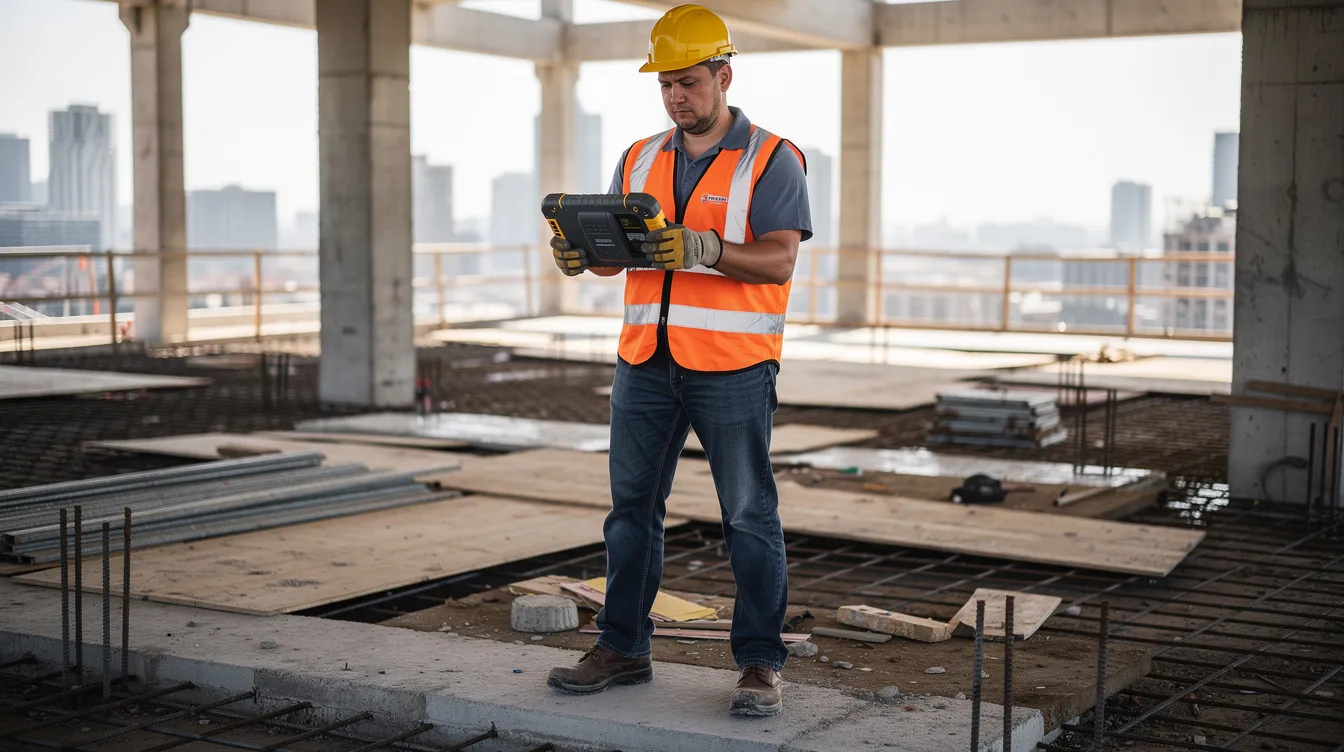
These platforms centralize drawings, records, notices, and project communication that field teams may need to reference before or after a live radio exchange.
They can serve as the document layer behind the communication system: current procedures, safety notices, plans, and logs in one place.
Pictogram signage, color-coded tags, maps, and multilingual quick-reference cards provide a non-audio backup to radios and apps.
These tools reinforce messages in noisy environments and support crews that benefit from visual communication alongside spoken instructions. On jobsites with mixed language use, they can reduce avoidable confusion when paired with training and verbal communication.
Protocol isn’t hardware, but it is still one of the most important communication tools on site.
Even a strong radio rollout can fail if no one knows which channel to use, how to escalate an emergency message, or how to confirm instructions. OSHA’s emergency-preparedness guidance supports training workers on communication methods and emergency procedures, which makes practice and clarity essential.
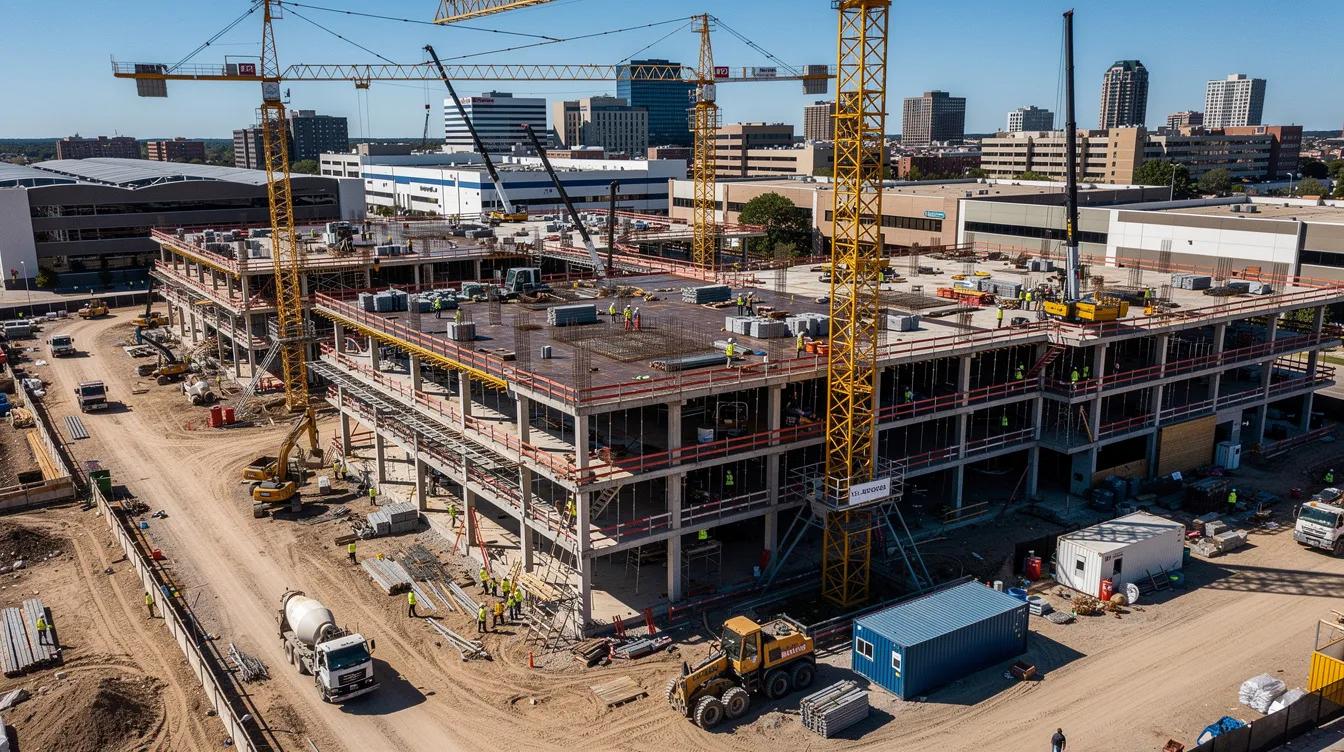
Because the source article centers on putting smart radios in more workers’ hands, the most useful decision for ABC SoCal members is not, “What communication tool exists?” It is, “Would broader radio access solve a real field problem on this project?”
Ask these questions on one active project:
If you answered yes to several of those questions, worker-level smart radios may deserve a pilot.
They’re most valuable where communication delay is a recurring operational problem: high-rise work, large industrial sites, spread-out campuses, heavy trade stacking, noisy concrete or steel operations, and jobs where field workers identify issues faster than supervisors can physically reach them.
Smaller renovations, compact sites, or crews already operating effectively with limited layers of supervision may get more value from lighter-touch solutions such as company devices, reporting apps, or stronger protocols. The point is not to force every project into the same model.
Before buying sitewide hardware, test the concept on one current project.
That approach keeps the article’s central source question intact. It does not assume radios are automatically right for every contractor. It helps leaders test whether worker-level access solves a verified field problem.
The most important takeaway from the Construction Executive source is straightforward: giving more construction workers direct access to smart two-way radios may improve communication and productivity by reducing the number of relays between the person who sees the issue and the person who needs the information.
For Southern California contractors, that idea is worth testing where project complexity, noise, and trade overlap make communication delays expensive or unsafe. The best construction safety communication tools are not necessarily the most advanced. They are the ones that fit the work, support emergency communication, and help crews share information clearly when timing matters.
ABC SoCal members looking to strengthen the broader safety system around these tools can review the chapter’s safety programs and safety compliance resources. A practical next step is to run the pilot exercise above on one active job this week and decide whether worker-level smart radios would materially improve communication on that site.







