

On October 15, 2026, ABC National became an official partner of Hensel Phelps’ Diverge Innovation Center, an event later reported by Construction Executive. For Southern California contractors trying to separate field-ready tools from expensive distractions, this construction technology partnership is notable because it points to a more disciplined model for evaluating new technology before buying, scaling, or standardizing it.
That is the real takeaway for contractors in Los Angeles, Orange County, the Inland Empire, Ventura County, and surrounding markets: innovation is becoming less about demos and more about structured testing, measurable value, and operational fit.
Construction Executive reported that ABC became an official partner of Hensel Phelps’ Diverge Innovation Center on October 15, 2026. Hensel Phelps describes Diverge as its innovation arm and venture capital platform focused on advancing construction through applied technology.
Hensel Phelps also says Diverge uses a structured approach to identify emerging technologies, test them through controlled pilots in the Innovation Center and on active jobsites, and determine whether they deliver measurable value in the field and the office. Separately, Hensel Phelps describes the Diverge Innovation Center as a purpose-built facility in Phoenix, Arizona, designed to test emerging construction technologies in a real-world environment.
That combination matters. It suggests a process in which tools are screened, challenged, refined, and only then considered for broader operational use. For contractors, that signal is more useful than a generic announcement about innovation.

This construction technology partnership isn’t about every contractor needing an innovation center. It is that the partnership highlights a stronger decision model for technology adoption.
Too often, a contractor encounters a promising tool through a conference demonstration, a sales meeting, or a peer recommendation, then has to decide quickly whether the tool belongs on an active project. The harder questions usually come later: Will crews actually use it? Does it solve a real field problem? Does it fit existing workflows? Will project leadership trust the output? Can the company support training, integration, and oversight after the purchase order is signed?
The ABC-Diverge relationship keeps those questions where they belong: near the front end of the evaluation process. For Southern California contractors, that is especially useful in a market where schedule pressure, site constraints, safety expectations, and coordination demands leave little room for experimentation without a plan.
Hensel Phelps’ description of Diverge centers on controlled pilots and measurable value. That is a practical framework contractors can borrow even if they never set foot in the Innovation Center.
A controlled pilot lets a contractor evaluate a tool against a defined problem rather than adopting it for its novelty. For example, if a team is reviewing a layout, documentation, robotics, or visualization tool, the question is not whether the product looks impressive. The question is whether it improves performance under actual project conditions.
That means setting a narrow use case, deciding what success looks like, involving the field team early, and documenting what happened. It also means giving equal attention to obstacles: training burden, compatibility with current systems, data ownership, supervision needs, and the possibility that the tool works in theory but adds friction in practice.
The disciplined part matters most. A pilot is valuable when it produces a decision: adopt, revise, limit, or walk away.
Southern California contractors can apply the same logic on a smaller scale before buying a technology. The goal is not to copy Diverge. The goal is to ask better questions earlier.
| Evaluation area | What to ask before you buy |
|---|---|
| Problem definition | What specific jobsite or project-management problem is this tool supposed to solve? |
| Pilot scope | Can we test it on one crew, one phase, or one project before scaling further? |
| Success measures | What evidence would show that the tool improved performance, safety, coordination, documentation, or decision-making? |
| Field acceptance | Have superintendents, foremen, and end users weighed in on whether the tool is workable in the field? |
| Training burden | How much training, support, and troubleshooting will crews and managers need? |
| Workflow fit | Does the tool fit current scheduling, BIM, inspection, documentation, or reporting processes? |
| Site constraints | Will site conditions, connectivity, access limits, terrain, or project rules affect performance? |
| Data risk | Who owns the data, where is it stored, and who can rely on it? |
| Scaling decision | If the pilot succeeds, what would standardization actually require across the company? |
This framework is especially relevant in Southern California, where deployment conditions can vary sharply from dense urban work in Los Angeles to logistics sites in the Inland Empire, institutional work in Orange County, or projects with difficult access and terrain elsewhere in the region. A tool that performs well in one environment may need a different rollout plan in another.
Contractors should also remember that project-specific legal, safety, labor, or owner requirements can affect how they use a technology. General education about innovation is not a substitute for project-specific compliance review.
One useful lesson from the Diverge model is that you should evaluate technology as part of project delivery, not apart from it.
Any new tool touches an existing system: planning, field supervision, coordination, documentation, safety management, procurement, or reporting. If a tool creates a new layer of work without improving one of those functions, the problem is not that crews “resist change.” The problem may be that the tool doesn’t solve a meaningful operational need.
That is why field input matters so much. Project teams are usually the first to see whether a platform improves visibility, speeds up handoffs, reduces uncertainty, or simply adds one more dashboard to maintain. A technology review that excludes the people expected to use the tool will often miss the most important implementation risks.
For Southern California contractors, this should sound familiar. Whether the issue is site logistics, documentation flow, supervision capacity, or safety coordination, tools succeed when they fit the work instead of forcing the work to bend around the tool.
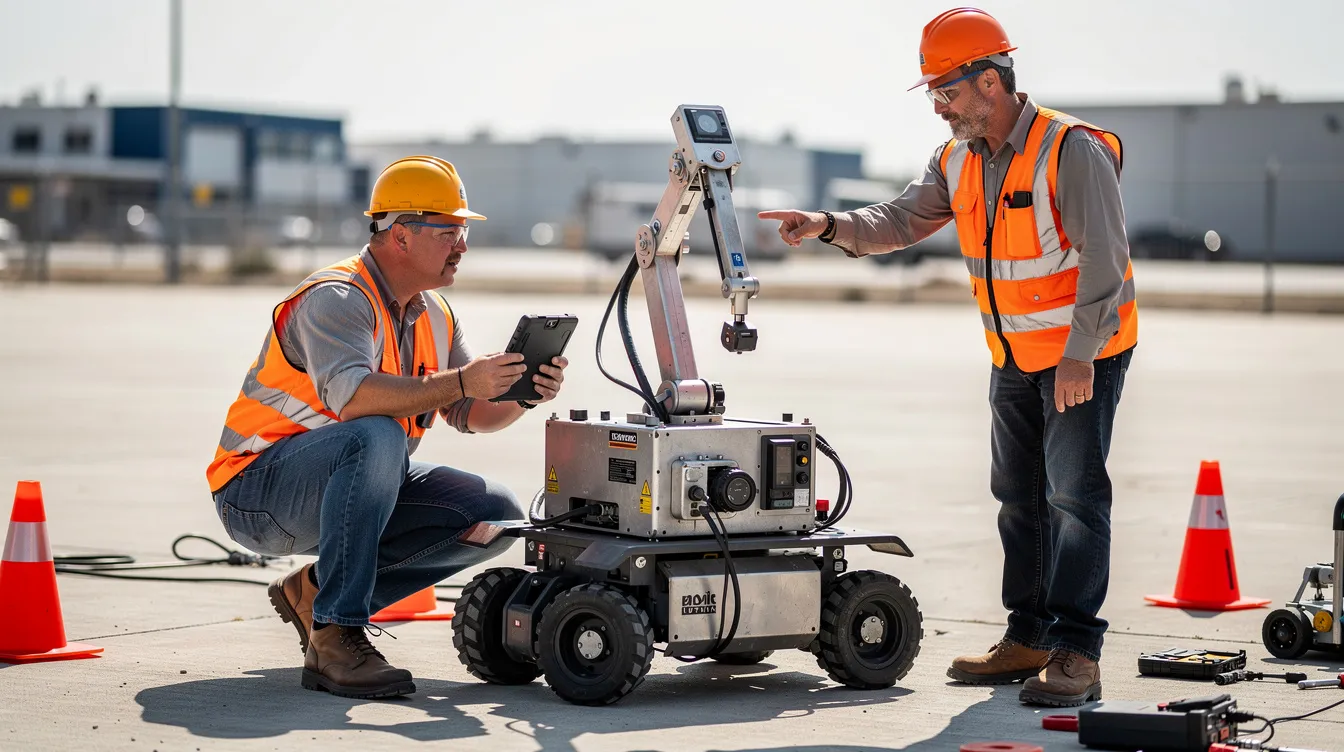
For ABC SoCal members, the most practical response to this construction technology partnership is not to chase every emerging product. Instead, bring more structure to the next evaluation already on your calendar.
Before your next technology purchase or vendor meeting, pick one tool your team is actively considering. Define the specific problem it is meant to solve. Limit the first test to a manageable scope. Decide in advance what outcomes would justify broader use. Then collect feedback from the people who will actually operate, supervise, or rely on it.
ABC SoCal members looking to strengthen their broader understanding of the association and its regional role can also review this overview of ABC SoCal. From there, contractors can explore training, workforce development, safety, and related chapter resources that support stronger operational decision-making.
The larger lesson from the ABC-Hensel Phelps-Diverge partnership is straightforward. Construction technology adoption works best when companies test carefully, measure honestly, and scale only after a tool proves it belongs in the field. For Southern California contractors, that mindset may be more valuable than any single device or software platform.







