
Southern California contractors face a practical question when evaluating construction wearables: will this device help control a specific jobsite risk, or will it add cost and complexity without improving protection? The best answer usually comes from matching the device to a defined hazard, checking how it fits with existing PPE and safety procedures, and testing it under real field conditions before wider adoption.
Wearables can support a more proactive safety program when they are used as one layer in a broader system that already includes hazard assessments, engineering controls, safe work practices, training, and supervision. This guide explains the wearable categories most relevant to construction, how they align with common Southern California jobsite conditions, what current Cal/OSHA and OSHA PPE fit rules mean, and how to run a disciplined pilot before making a larger investment.
Construction remains a high-risk industry, and many of the hazards contractors manage every day are hard to monitor continuously through observation alone. NIOSH has identified several construction-use wearable categories already being developed, tested, and used, including proximity detection systems, physiological monitors, environmental sensors, and exoskeletons. That does not mean every device belongs on every project. It does mean wearables deserve a serious look where the risk pattern is clear.
For ABC SoCal contractors, the regional context matters. Outdoor work in Los Angeles, Orange, Riverside, San Bernardino, and Ventura Counties can increase heat strain risk. Dense multi-trade sites can increase struck-by exposure around vehicles, equipment, and crane activity. Large-footprint sites can also make emergency accountability harder. In those settings, a well-chosen wearable may help a safety team spot conditions earlier or improve response speed. It should never replace core controls such as traffic planning, spotters, guardrails, ventilation, or competent supervision.
A construction wearable is a body-worn device that uses sensors, connectivity, or embedded electronics to support safety, health monitoring, communication, or situational awareness. The important distinction is that the device does more than passively protect. Some wearables monitor conditions, some issue alerts, and some provide data that helps a contractor evaluate exposure trends over time.
The main categories worth evaluating include:
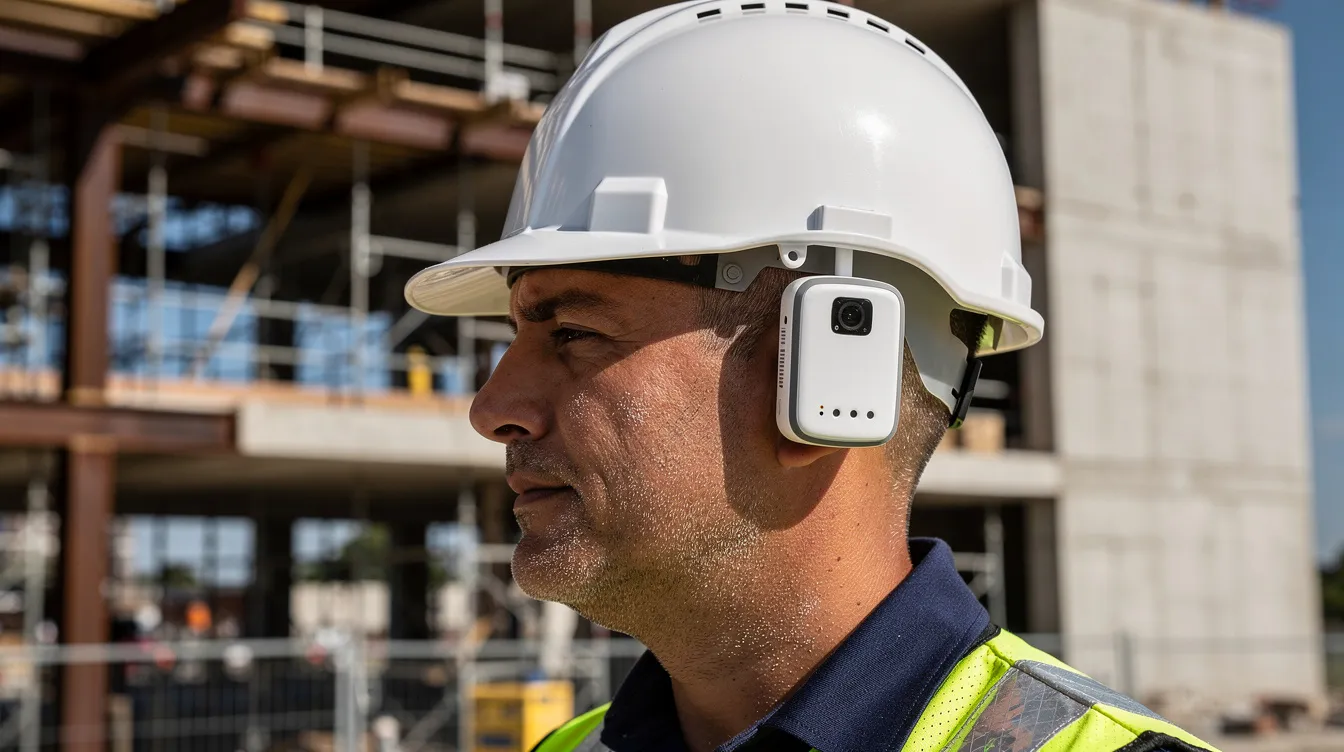
Some smart helmets and hard hats combine head protection with added features such as impact sensing, lighting, location tracking, communication, or environmental monitoring. For contractors, the first question is not feature count. It is whether the added technology interferes with the hard hat’s protective purpose.
Any sensor-equipped hard hat still needs to meet the applicable head-protection standard, and contractors should verify compatibility with eye protection, hearing protection, and respiratory protection when required. Weight distribution, ventilation, battery life, and charging logistics matter just as much as app features, especially on hot Southern California jobsites.
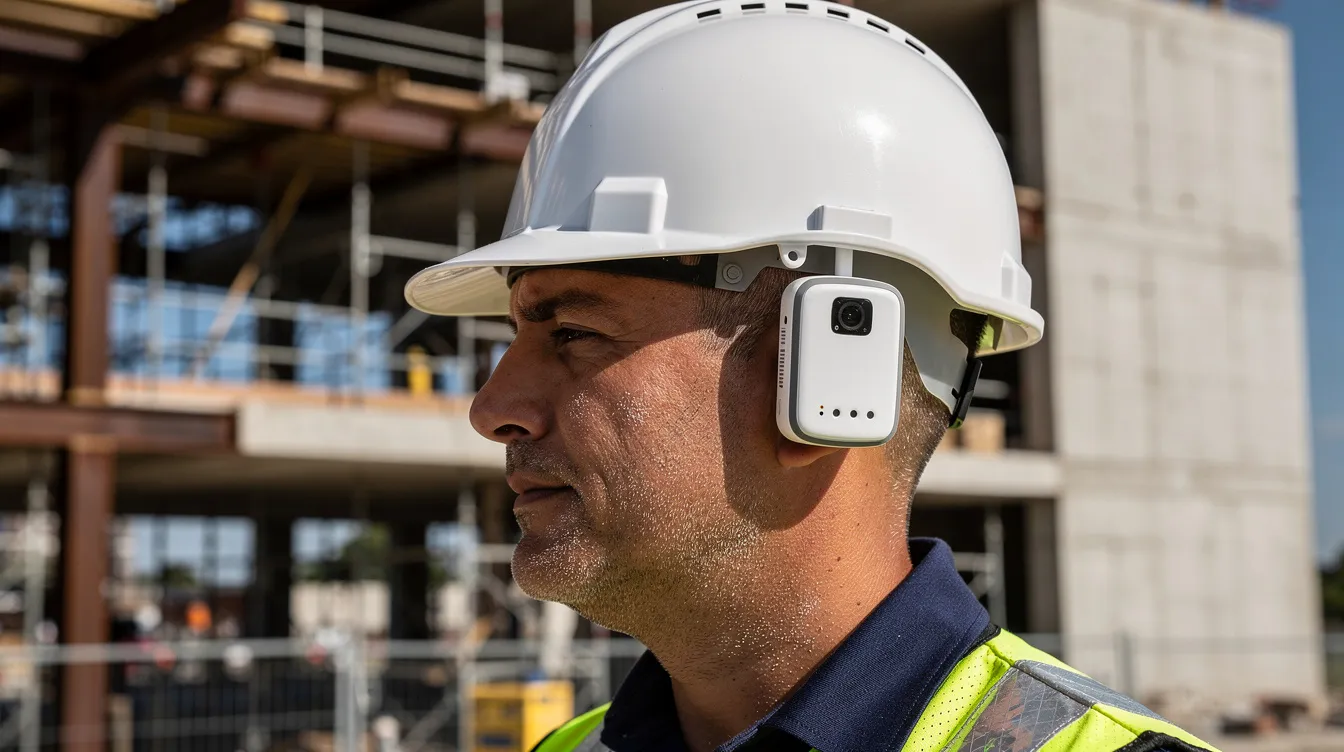
NIOSH has specifically identified proximity detection and alert systems as a wearable category relevant to construction. These systems typically use worker-worn tags with equipment-mounted receivers or site-based infrastructure to warn when a worker enters a defined danger area.
For Southern California contractors working around equipment congestion, delivery traffic, or tight urban staging conditions, proximity systems may be one of the most practical starting points. The important evaluation questions are straightforward: How consistently does the system detect workers in actual field conditions? How many nuisance alerts occur? Can the warning be noticed in noise, dust, and motion? Does the system fit with existing traffic-control planning?
NIOSH also identifies physiological status monitors as a construction-use wearable category. Some devices are designed to track indicators such as heart rate, temperature-related strain, or other signs associated with heat and exertion. On Southern California jobsites, that makes this category especially relevant for crews working outdoors, on roofs, on paving operations, or in other high-heat conditions.
Contractors should be cautious about assuming all physiological devices perform equally well in direct sun, sweat, dust, or heavy movement. Comfort, ruggedness, charging practices, and the usefulness of the alert threshold matter more than marketing language. The device should support existing heat-illness prevention procedures, not create a false sense of protection.
Some wearable systems use vests, clips, or tags to support location tracking, alerting, or emergency accountability. These can be useful on large sites where a contractor wants better personnel awareness during evacuations or wants to identify recurring exposure points.
If the technology is built into high-visibility gear, verify that the garment still meets the visibility and performance requirements relevant to the task. Also test signal performance around concrete, steel, and partially enclosed work areas. A tracking feature that works well in a product demo may perform very differently on an active commercial project.
Exoskeletons are one of the better-known construction wearables, especially for tasks involving overhead work, repetitive lifting, or sustained awkward posture. NIOSH has reported that exoskeletons may help mitigate work-related musculoskeletal strain, but broader deployment still requires careful research because these devices can also introduce limitations or new hazards if poorly matched to the task.
That makes field testing essential. Contractors should evaluate whether an exoskeleton restricts movement, changes balance, interferes with climbing or egress, creates snag points, or becomes impractical in hot conditions. This category may be useful for specific tasks, but it is not a plug-and-play solution.
Some wearables focus less on sensing and more on communication, remote guidance, or hands-free access to information. These may include push-to-talk modules, audio systems, or smart glasses used for instructions or remote support.
When considering these tools, the safety questions are basic but important: Can workers still hear warnings? Does the device interfere with hearing protection or respirator fit? Does the display or audio stream create distraction during high-risk tasks? A communications wearable is only useful if it strengthens coordination without introducing another hazard.
Not every project needs the same technology. A better approach is to start with the hazard that creates the clearest exposure or operational challenge.
| Hazard | Wearable Category to Evaluate | Common Southern California Example |
|---|---|---|
| Struck-by risk | Proximity tags or zone-detection systems | Dense urban sites with equipment and delivery traffic |
| Heat strain | Physiological monitors or environmental wearables | Roofing, paving, and other outdoor summer work |
| Repetitive strain or overhead work | Exoskeletons or body-support devices | Framing, drywall, or repetitive installation tasks |
| Emergency accountability | Location tags or smart vests | Large-footprint sites or projects with evacuation planning needs |
| High-noise coordination | Hands-free communication wearables | Multi-crew operations where radio use is constant |
This framing also helps distinguish a useful pilot from an unfocused technology rollout. If a contractor cannot identify the hazard first, the device selection is probably happening in the wrong order.
One of the main arguments for construction wearables is that some devices can provide real-time warnings or visibility into changing conditions. That potential is meaningful, but contractors should evaluate the alert system itself, not just the sensor.
Before wider deployment, test how alerts are delivered and who is expected to act on them. Questions to answer include:
The goal is not to collect more data for its own sake. It is to improve the quality and speed of safety decisions in a way the field team can actually use.
Contractors in California should treat wearables as a safety-program decision and a compliance question. Under Cal/OSHA Title 8, Section 1514, employers must ensure required personal protective devices comply with applicable standards, are maintained in a safe and sanitary condition, and fit each affected employee properly. The PPE fit language in Section 1514 became operative on October 1, 2025.
At the federal level, OSHA’s final rule revising 29 CFR 1926.95 requires employers to provide PPE that properly fits construction workers, effective January 13, 2025. For contractors evaluating sensor-equipped hard hats, smart vests, or wearable assemblies used with other PPE, the practical takeaway is simple: added technology cannot compromise fit, function, or protective performance.
That also means employers should review combination use carefully. If a headset, smart glasses setup, or other wearable could interfere with a respirator seal or other required protection, the employer should evaluate that interaction before field use. When a device’s compliance status is unclear, contractors should work through their safety leadership and, when needed, seek guidance from qualified compliance counsel or the relevant agency.
Wearables can be useful, but they also create adoption risks that teams should address upfront.
Trust is not a side issue. If workers believe wearable data will be used mainly for discipline rather than protection, adoption will likely suffer, and the pilot results may be misleading.
The safest way to evaluate construction wearables is to start small and measure what matters. A structured pilot can help a contractor decide whether the device deserves broader use.
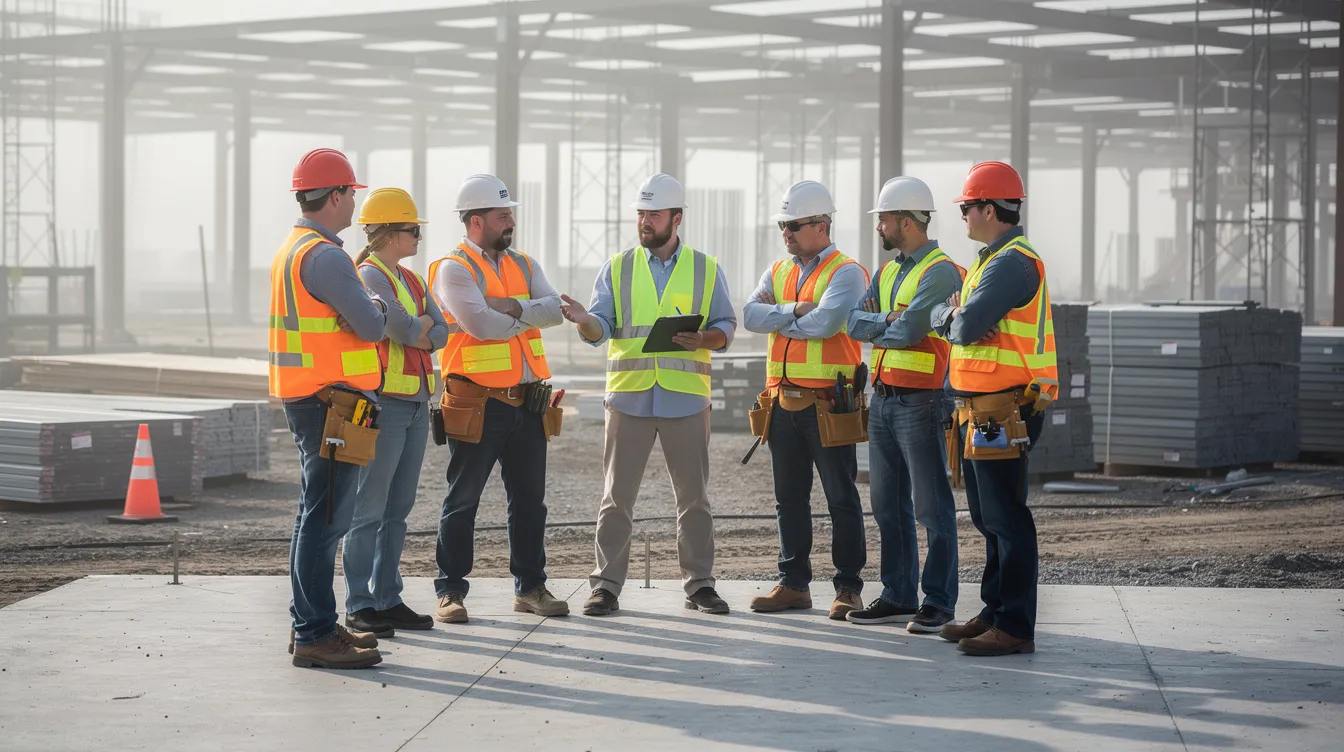
Even the best wearable will underperform if it is treated as an isolated gadget instead of part of the safety program. Contractors should integrate device use into existing toolbox talks, pre-task planning, and supervisor routines. If a wearable repeatedly highlights a real exposure pattern, the next step should be to improve the underlying control strategy, not just admire the dashboard.
For example, if a heat-monitoring pilot consistently shows afternoon strain spikes for one crew, the contractor can review scheduling, shade access, rest breaks, hydration practices, and supervisory attention during that period. If a proximity system reveals repeated conflict points near one access route, the more valuable fix may be to redesign traffic flow. The device should inform better decisions, not become the decision.
If your company is considering construction wearables, the next step is not to buy the device with the longest feature list. It is to identify the hazard creating the most operational concern on your jobsites, then test one device category against that problem in a controlled pilot.
ABC SoCal contractors looking to strengthen the broader safety framework around a wearable rollout can explore construction safety education and related safety resources. For additional context, contractors can also review ABC SoCal’s existing coverage of construction safety technology and wearable construction technology.
The most effective adoption path is usually narrow and deliberate: one hazard, one pilot, one honest review. That approach gives Southern California contractors a better chance to learn whether wearables belong in their safety system before budget, time, and worker trust are on the line.







