Key Takeaways
- Multiskilled construction workers can reduce idle time and improve workflow, but they do not change California public works apprenticeship, prevailing wage, or reporting obligations.
- On California public works, contractors performing apprenticeable work generally must notify the applicable apprenticeship committees, request apprentices when needed, maintain required apprentice utilization, and make training fund contributions.
- DAS 140 and DAS 142 compliance becomes more complicated when cross-trained workers move between crafts, because hours, classifications, wage rates, and apprentice planning must still match the work actually performed.
- Track, classify, and pay every hour a multiskilled worker spends in a different craft under the applicable prevailing wage determination for that craft and county.
- ABC SoCal offers labor-compliance resources and apprenticeship programs in Electrical, Plumbing, Sheet Metal, and Low Voltage to help Southern California contractors plan workforce flexibility without losing control of compliance risk.
Multiskilled Crews and DAS 140 and DAS 142 Requirements: Why This Matters Now
Southern California contractors are trying to solve two problems at once: persistent labor pressure and rising compliance complexity on California public works. Multiskilled crews can help with the first problem. They do not erase the second.
Construction Executive recently reported on Simplar Foundation research into multiskilled construction labor. In that reporting, researchers said they conducted 40 site visits across 36 projects in 24 states and found that multiskilled crews spent more time on direct construction work while sharply reducing idle and waiting time. That makes the concept worth serious attention for contractors trying to keep work moving across Los Angeles, Orange, Riverside, San Bernardino, and Ventura counties.
But on California public works, productivity gains only help if the staffing model still fits prevailing wage, apprentice utilization, DAS notice and dispatch rules, and certified payroll expectations. This article keeps the approved subject central: how multiskilled construction workers can help the jobsite, and where DAS 140 and DAS 142 requirements still set the boundaries on covered work.
What Multiskilled Construction Workers Change on the Jobsite
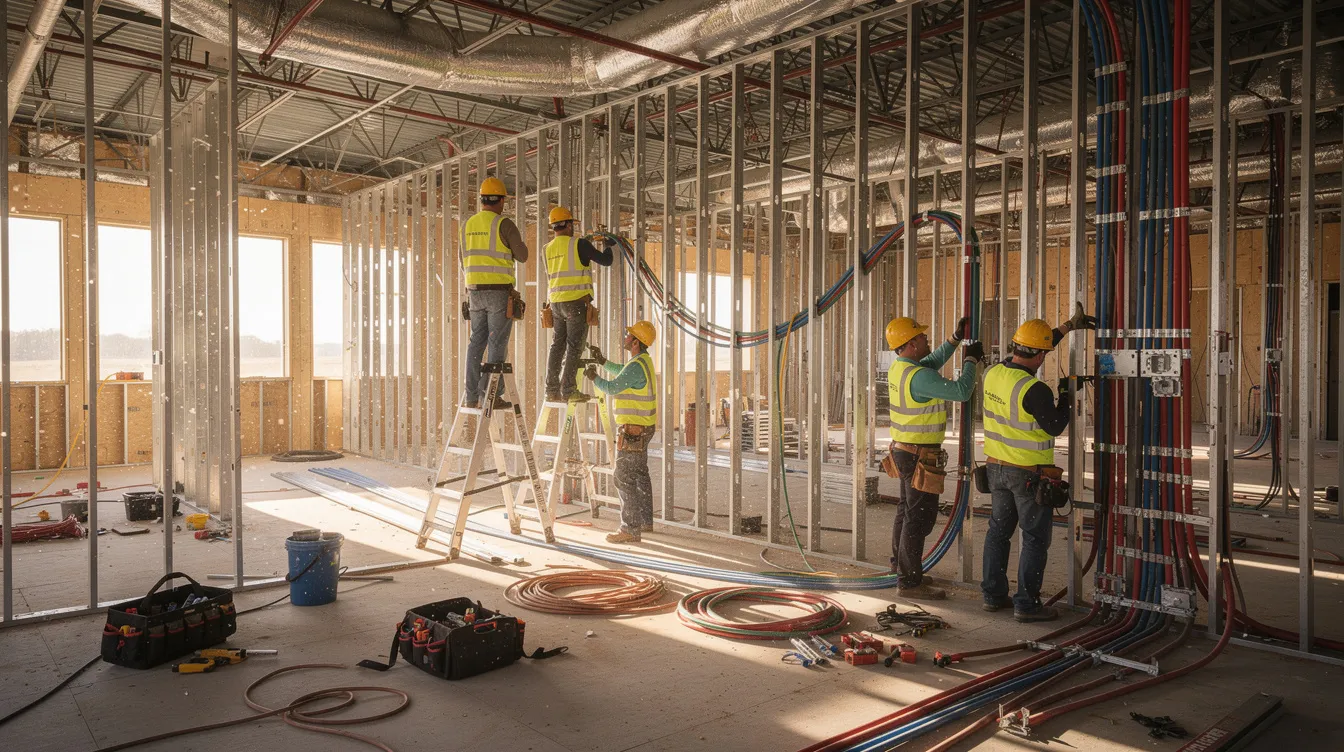
A multiskilled construction worker is trained to perform productive tasks across more than one area of work. On the jobsite, that can reduce downtime caused by repeated handoffs, remobilization, and waiting for another crew to enter the same space.
That operational benefit is easiest to see on scopes with tight sequencing. A cross-trained worker may be able to complete adjacent tasks in the same work area instead of forcing the project to stop and restart each time a different trade mobilizes. For small and mid-sized contractors dealing with thin labor availability, that flexibility can be valuable.
Construction Executive’s coverage of the Simplar research reported several findings that help explain the appeal:
- Researchers studied multiskilled work across 36 projects in 24 states.
- Multiskilled crews spent about 39% more of their crew time on direct construction work than the one-trade comparison.
- Idle and waiting time fell by roughly 68% during active work periods.
- The field analysis also suggested that restricting observed workers to a single trade would have required substantially more worker-equivalent capacity to complete the same work sequence.
For Southern California contractors, that does not mean every scope should be reorganized around multiskilling. It means the strategy may improve production where coordination losses are high. The important legal distinction is that multiskilling is a workforce and workflow strategy, not a separate California labor classification.
Where California Public Works Rules Set the Boundaries
California public works rules do not disappear just because a worker is cross-trained. On covered work, the legal questions remain familiar: what type of work is being performed, what wage determination applies, whether the craft is apprenticeable, and whether the contractor has met required DAS and apprenticeship obligations.
- California public works coverage depends on project facts, including whether the work is paid for in whole or in part out of public funds under Labor Code section 1720 and related rules.
- For public works apprenticeship purposes, DIR says public works contracts valued at $30,000 or more generally carry an obligation to hire apprentices unless the applicable prevailing wage determination indicates otherwise.
- Wage classification follows the work actually performed. A worker performing more than one craft may trigger more than one applicable wage classification over a day or project.
- For building and construction trades apprentices on public works, apprentice wage rates and employer benefit payments are tied to the applicable determination in the project’s geographic area.
- Enforcement and oversight can involve multiple DIR functions depending on the issue, including public works, apprenticeship, and labor standards administration. Contractors should not assume a productive crew plan is automatically compliant.
That is why multiskilled crews can increase compliance risk if the field, payroll, and compliance teams are not aligned. When a cross-trained worker moves between tasks, the company has to know how those hours were classified, paid, and reported.
DAS 140 and DAS 142: Core Apprenticeship Requirements
DAS forms are part of California’s public works apprenticeship system. For contractors using multiskilled crews on covered work, understanding the purpose and timing of these forms is essential.
- DAS 140 is the Public Works Contract Award Information form. DIR says contractors performing public works must notify the applicable apprenticeship committee or committees when they are awarded a public works project.
- DIR guidance states that contractors must send contract award information within 10 days of signing the contract or subcontract, but no later than the first day workers are employed on the public work.
- DAS 142 is the Request for Dispatch of an Apprentice form. Contractors who are not already employing enough registered apprentices to meet the required ratio must request dispatch from the applicable apprenticeship committees.
- California regulations require contractors to submit the DAS 142 request in writing at least 72 hours in advance, excluding Saturdays, Sundays, and holidays.
- DIR also states that contractors on covered public works generally must employ apprentices in the correct ratio and make training fund contributions in the amount established by the prevailing wage rate.
- These obligations apply to the contractor performing the apprenticeable work, not only to the prime contractor, so subcontractors should not assume the prime’s filings cover their separate duties.
For a more detailed procedural walkthrough, ABC SoCal’s DAS 140 and DAS 142 filing guide can help contractors understand the practical filing process.
How DAS 140 and DAS 142 Requirements Interact With Multiskilled Crews
Cross-trained workers can improve workflow, but they also make apprenticeship planning more exacting. From a compliance standpoint, the issue is not whether a worker has multiple skills. The issue is how much apprenticeable work in each craft is expected on the project and how the contractor will satisfy the rules tied to that work.
Before using multiskilled crews on covered public work, contractors should plan around questions like these:
- Which apprenticeable crafts are expected on the project?
- How many journeyman-level hours are likely in each craft or trade?
- Will cross-trained workers be moving between classifications that require separate tracking and wage treatment?
- Do DAS 140 notices reflect the crafts actually involved in the awarded scope?
- If additional apprenticeable crafts become active later, is there a process to update notices and request dispatch in time?
The main risk is operational confusion. A contractor may view a crew as one flexible labor unit, while DAS, payroll, and certified payroll reporting still depend on craft-specific facts. That mismatch can create problems if a worker is reported in one classification while performing higher-rated or different apprenticeable work in the field.
For that reason, DAS planning should be part of pre-bid and pre-mobilization staffing strategy, not a paperwork step left until after the crew mix has already been decided.
Prevailing Wage, Apprentice Utilization, and Certified Payroll With Multiskilled Workers
On California public works, the prevailing wage obligation follows the type of work performed and the project location. Multiskilled workers do not change that basic rule.
- Review applicable determinations and apprentice wage rates by county before finalizing staffing and pricing assumptions.
- If a multiskilled worker performs work in more than one classification, timekeeping should be detailed enough to support the wage treatment and reporting that follow.
- Certified payroll should reflect the work actually performed. Lumping all hours into one lower-paid craft can create underpayment and recordkeeping risk.
- DIR’s apprenticeship guidance says contractors should employ one hour of apprentice work for every five hours performed by a journeyman-level worker. Ratio application can involve important nuance depending on craft, standards, and whether the contractor is operating under a specific program standard or California Apprenticeship Council rules, so contractors should confirm how the ratio applies to the project and craft at issue.
- Daily field coding matters. When multiskilled workers move between tasks, weak time records can create downstream problems in apprentice utilization tracking and payroll support.
For Southern California contractors, productivity planning and compliance planning must meet here. A crew structure that saves time in the field may still fail if the company cannot support the classifications, apprentice utilization, and payroll records behind it.
Common Compliance Mistakes With DAS Forms and Multiskilled Crews
Contractors can reduce risk by watching for a few recurring mistakes:
- Treating multiskilled labor as one compliance category. Cross-trained workers still perform specific types of work that may carry different wage and apprenticeship consequences.
- Using loose DAS 140 timing. The safer practice is to follow DIR’s rule: submit contract award information within 10 days of signing the contract or subcontract and no later than the first day workers are employed on the public work.
- Submitting DAS 142 too late. If apprentices are needed, send written requests at least 72 hours in advance, excluding Saturdays, Sundays, and holidays.
- Assuming apprentice utilization is a simple headcount issue. It is an hours-based requirement, and ratio application can require project- and craft-specific review.
- Misclassifying hours in certified payroll. Productivity gains disappear quickly if the contractor cannot defend what work was performed and how it was paid.
- Poor record retention. Contractors should keep proof of DAS submissions, dispatch requests, time records, and craft-level support for payroll coding.
- Assuming one apprenticeship relationship solves every craft issue. Contractors should verify which apprenticeship committee or committees apply to the apprenticeable crafts actually involved in the work.
Practical Pre-Bid and Pre-Mobilization Checklist for Multiskilled Crews
Before bidding or staffing a California public works project with multiskilled workers, review the following:
- Confirm whether the project is covered public work and whether California public works apprenticeship rules are likely to apply.
- Identify the crafts and apprenticeable occupations expected on the project.
- Map anticipated journeyman and apprentice hours as carefully as possible before mobilization.
- Review the prevailing wage determination and county-specific apprentice wage information that may affect pricing and crew assignments.
- Decide where multiskilled workers may shift between classifications, and make sure field timekeeping can capture that movement accurately.
- Build DAS 140 timing into the award-to-mobilization process.
- Build DAS 142 timing into the staffing plan whenever dispatch requests may be needed.
- Assign someone to monitor apprentice utilization, craft coding, and coordination between field supervisors and payroll.
This article is educational, not legal advice. Confirm project-specific public works coverage, ratio questions, and wage-classification issues against current DIR guidance and, when necessary, with qualified labor-compliance or legal counsel.

How ABC SoCal Can Help Southern California Contractors
ABC Southern California supports merit shop contractors across Los Angeles, Orange, Riverside, San Bernardino, and Ventura counties with apprenticeship, education, safety, and labor-compliance resources.
For contractors evaluating multi-skilled staffing strategies, ABC SoCal can help with the practical side of planning:
- Labor-compliance resources that help contractors understand public works apprenticeship requirements and related reporting obligations.
- Apprenticeship programs in Electrical, Plumbing, Sheet Metal, and Low Voltage that support long-term workforce development.
- The Notice of Understanding for apprentices and related wage resources for contractors working across Southern California counties.
- Training and education that can help field leaders and office teams coordinate staffing, apprentice planning, and documentation more effectively.
If your company is considering a more aggressive multiskilled crew strategy on upcoming public works bids, a practical next step is to review the affected crafts, public works exposure, and DAS workflow before mobilization.
Conclusion: Use Multiskilled Crews, Not Shortcuts
Multiskilled construction workers can be a real productivity advantage. The available research suggests they can reduce waiting, keep work moving, and help contractors get more value from limited labor capacity.
But on California public works, that flexibility must be matched with discipline. DAS 140 and DAS 142 requirements, apprentice utilization rules, prevailing wage determinations, and certified payroll expectations still apply. Cross-training may change how you sequence work. It does not change the need to classify, pay, request, and document that work correctly.
The contractors most likely to benefit from multiskilling are the ones who treat compliance planning as part of the crew strategy from the start. For Southern California contractors, that means reviewing the public works facts early, confirming the craft and apprenticeship implications, and using available ABC SoCal resources before a promising staffing idea becomes a preventable compliance problem.
Frequently Asked Questions
Below are answers to common questions about this topic.
Can a multiskilled worker be paid one rate for the whole day on a California public works project?
Not automatically. On public works, wage obligations follow the work performed and the applicable determination. If a worker performs tasks under different classifications, contractors should ensure their timekeeping, pay practices, and reporting reflect what actually happened in the field.
Do DAS 140 and DAS 142 forms apply if my subcontract is under $30,000?
Do not assume the answer is automatically no or automatically yes. Public works coverage and apprenticeship duties can depend on project facts, the nature of the work, and the contractor’s role. Smaller subcontractors performing apprenticeable work on a covered project should review the project requirements carefully and confirm their obligations before proceeding.
How do multiskilled crews affect apprentice utilization planning?
They can complicate planning because journeyman-level hours may be spread across multiple crafts or types of work. Contractors should plan apprentice needs early, monitor actual hours carefully, and confirm how the ratio applies to the crafts and standards governing the project.
What happens if an apprenticeship program cannot dispatch apprentices after I submit a DAS 142?
Documentation matters. Contractors should keep clear records of timely written requests and any responses they receive. If apprentice dispatch is unavailable, the contractor may need that record to show that it followed the required request process. Review project-specific consequences against current DIR rules and, if needed, with qualified compliance counsel.
Is it worth cross-training apprentices too?
Registered apprentices still have to work within the standards and training structure of their approved program. Broader skill development can be useful, but it should not conflict with the apprentice’s program requirements, supervision rules, or wage treatment. Contractors should coordinate those questions carefully rather than assume cross-training works the same way for apprentices and journeymen.