

If you searched for data center construction jobs, you want to know three things: Is this a real career opportunity? What does it pay? And how do you get in? The answers are yes, six figures is within reach, and the entry path runs through apprenticeship programs that pay you from day one-no college debt required. Whether you are a career seeker weighing your options or a merit shop contractor scanning for the next growth market, this article lays out the numbers, the roles, and the action steps.

Data center construction is experiencing massive growth driven by artificial intelligence infrastructure needs. McKinsey projects global capital spending on data centers could reach $7 trillion by 2030. Nvidia CEO Jensen Huang has declared that electricians, plumbers, carpenters, and ironworkers will be needed “by the hundreds of thousands” to build all the factories and new facilities that AI demands.
What does that look like on a single construction project? A 250,000-square-foot data center can employ up to 1,500 construction workers during the build phase, many earning more than $100,000 plus overtime-without a college degree- while this work plays a key role in economic growth and community development. Over 120 data center projects valued at more than $3 billion have already been completed industry-wide, and the pipeline is accelerating.
In Southern California, the demand signal is amplified by converging forces: the LA 2028 Olympics buildout, housing production targets, and wildfire rebuilding efforts-all drawing on the same skilled tradespeople, with labor shortages adding pressure to that pipeline.
The most powerful validation for skilled trades careers is now coming from technology’s own leadership. Huang put it plainly: “If you’re an electrician, you’re a plumber, a carpenter-we’re going to need hundreds of thousands of them to build all of these factories.” He predicted the skilled craft segment of every economy will boom.
He is not alone. BlackRock CEO Larry Fink has warned that the U.S. risks running out of electricians to build AI data centers. Ford CEO Jim Farley has pointed to the widening gap between reshoring ambitions and the workforce able to deliver them. When three CEOs from unrelated industries converge on the same message, career seekers and parents should pay attention.
Labor shortages are delaying data center construction timelines nationwide and driving up project costs. The Infrastructure Investment and Jobs Act will create millions of additional jobs, intensifying the workforce need. Skilled trades are projected to see higher-than-average employment growth through the decade, and data center construction in Southern California sits at the center of that demand, highlighting contractors’ ability to deliver even under workforce pressure.
Data center projects are complex, mission-critical commercial projects dominated by mechanical, electrical, and plumbing systems. Data center construction relies on specialized project teams for architectural planning, civil work, and intricate MEP systems, and many roles work from building plans and technical drawings during each phase. Construction involves three phases: foundation, structure, and interior setup.
On a large hyperscale build, the workforce peaks at 1,000 to 1,500 tradespeople working simultaneously across trades. Once the construction site goes quiet, roughly 50 full-time workers handle system and operations maintenance, and each of those permanent jobs spurs approximately 3.5 additional jobs in the local community. The cycle from permitting to completion typically runs 12 to 36 months.
Data center construction requires experienced contractors and their ability to coordinate complex systems for successful integration. Mechanical, electrical, and plumbing systems can account for up to 60% of the total construction workload. Core crafts include:
For example, an electrician coordinates backup power connections so critical systems stay online.
Data center construction requires skilled labor for complex tasks. A safety manager enforces OSHA compliance and oversees site inspections and worker training on every data center construction project. These skilled trades jobs scale directly with AI-era demand-every new facility means another wave of hiring.
The entry-level construction career path is more accessible than most people realize. Many apprenticeship programs require no prior experience, and entry-level construction jobs can grow by 10% by 2024. Apprenticeships typically last three to five years and follow an earn-while-you-learn model: you work on actual job sites, get paid from day one, and attend classroom instruction at no tuition cost, including how to read building plans for job readiness.
State and federally approved programs in Southern California include:
America’s Workforce Academy and ABC SoCal provide merit shop pathways that are state-registered, offering the same credential quality and pay structure. An electrical trade school route paired with on-the-job hours creates a construction career path built on hands-on work and real-world expertise.
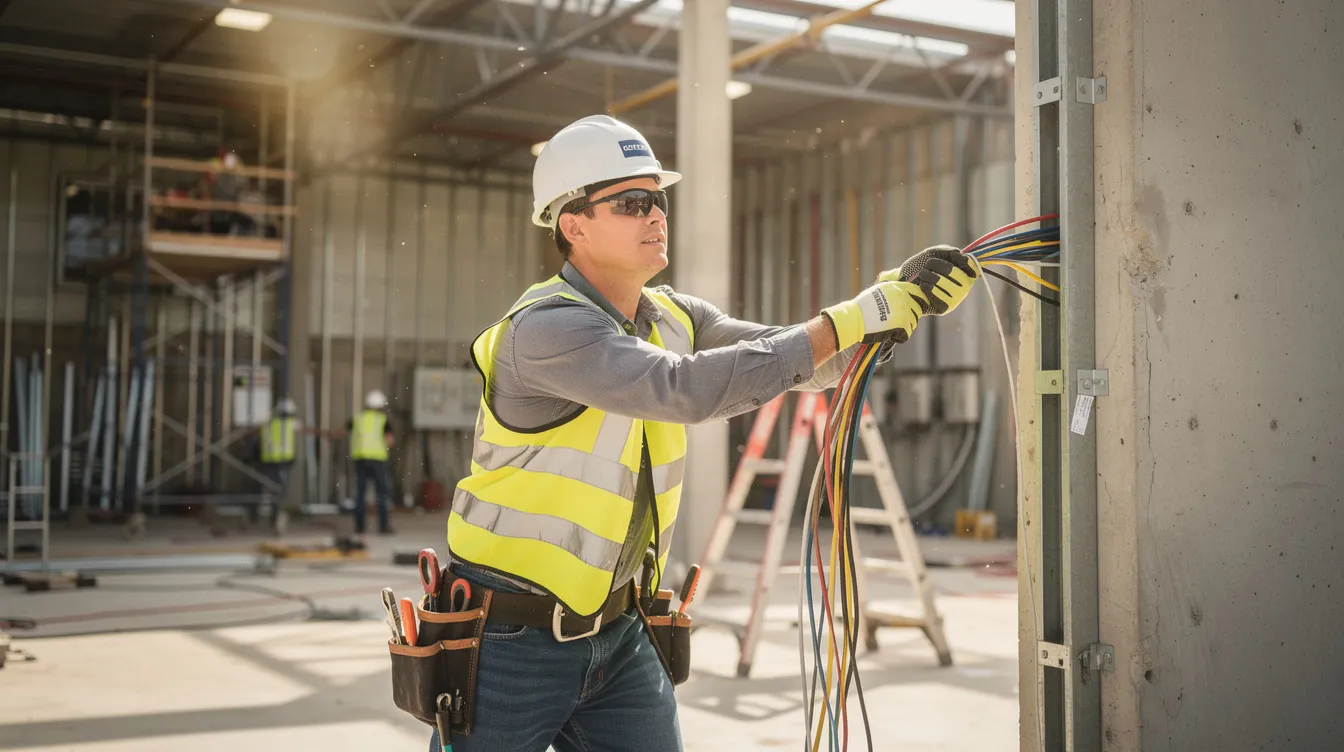
Here is what data center construction pay looks like in Southern California:
| Role | Apprentice Range | Journeyman Range | Notes |
|---|---|---|---|
| Electrician | $28–$38/hr | $50–$62/hr+ | Prevailing wage can push total comp above $98/hr |
| Plumber | $26–$36/hr | $48–$58/hr+ | Cooling system work adds premium |
| Sheet Metal/HVAC | $24–$34/hr | $45–$55/hr+ | Data center ductwork specialization |
| Low-Voltage Tech | $22–$30/hr | $44–$58/hr | Fiber splicers trending higher |
| Construction Manager | – | ~$128,000/yr | Project leadership role |
Entry-level construction jobs can grow by 10% by 2024, and the data center wave is accelerating that trajectory. Journeyman electricians on hyperscale projects routinely cross six figures when overtime, shift premiums, and per diem stack up. California’s prevailing wage determinations for inside wireman roles show total hourly compensation reaching $98 to $130 depending on shift and region. These are real six-figure outcomes without student debt, and strong pay paired with planning discipline supports long-term project success.
Data centers must meet extremely high reliability standards unlike typical commercial buildings. Electrical engineering is crucial in data centers, including responsibilities such as power distribution and redundancy. Data centers consume power ranging from several megawatts to over 100MW for hyperscale facilities, and power distribution constraints complicate every construction project.
Continuity of power, cooling, security, and network connectivity is critical in data center construction. Key data center infrastructure elements include:
Cooling systems are essential to manage heat generated by data center equipment. Data center design drives the skill set required of every trade on site. Commissioning is essential to project success because it confirms critical systems perform as intended before the facility goes live.
Construction workers must wear personal protective equipment at all times. Routine inspections and preventive maintenance help prevent dangerous mistakes on construction sites, while marking areas that need service and reporting issues support safer operations. Safety education is critical for preventing injuries on job sites, and proper signage is essential for maintaining safety across every zone. Training programs emphasize compliance with industry safety standards.
A recent survey found that 85% of young people see value in skilled trade careers. The math supports their instinct: a five-year electrical apprenticeship produces a journeyman earning $100,000-plus with zero student debt, while a four-year degree averages $37,000 in loans before the job search even starts.
Gen Z electricians are already proving the model-launching businesses, reaching six figures, and building wealth years ahead of college peers. Skilled trades careers for the AI era offer something rare: immediate income, structured training, physical labor that builds real technical skills, and a future anchored to infrastructure the economy cannot function without.
Your next step: apply to an ABC SoCal apprenticeship program now. The application window is open, and the demand wave is already here.

The data center construction market rewards contractors who invest in workforce capacity and prove their ability to staff projects before demand peaks. Cost overruns are a significant challenge in data center construction, and labor shortages increase bid risk while driving delays and cost overruns.
Evaluate your market fit by asking: Do you hold California C-10, C-20, or C-36 licenses? Can you document apprentice ratios? Are you positioned for prevailing wage compliance? Merit shop contractors who answer yes and invest in training gain a competitive edge on these high-value projects.
Retention depends on offering a visible future. Time management skills, communication, and leadership training keep your best people engaged and growing.
Efficiently repairing frameworks for damaged or non-conforming installations, paired with strong coordination during commissioning, supports overall project success.
California’s Skilled and Trained Workforce requirements mandate specific apprenticeship ratios on certain projects. Prevailing wage obligations affect how you bid, budget, and document every construction job. Building codes in California are among the most stringent in the country, and data center projects layer additional standards on top.
ABC SoCal offers state-registered apprenticeship programs in electrical, plumbing, sheet metal, and low-voltage trades. America’s Workforce Academy provides additional merit shop training pathways. No prior experience is needed to apply. Steps:
California hosts more than 200 active data centers. Current data center load accounts for roughly 1,000 MW of peak demand in CAISO territory, projected to reach 4,500 MW by 2040. Cloud providers continue evaluating SoCal for new facilities, and the region’s construction industry is also absorbing demand from LA 2028 Olympics venues, housing targets, and wildfire rebuilding.
For merit shop contractors, the play is clear: the same trades building data centers also build everything else Southern California needs. The critical components of workforce development-recruiting, training, retaining-apply across every project type. Monitor CEO signals and capital announcements; new technology investments by hyperscale operators translate directly into job opportunities for your crews.
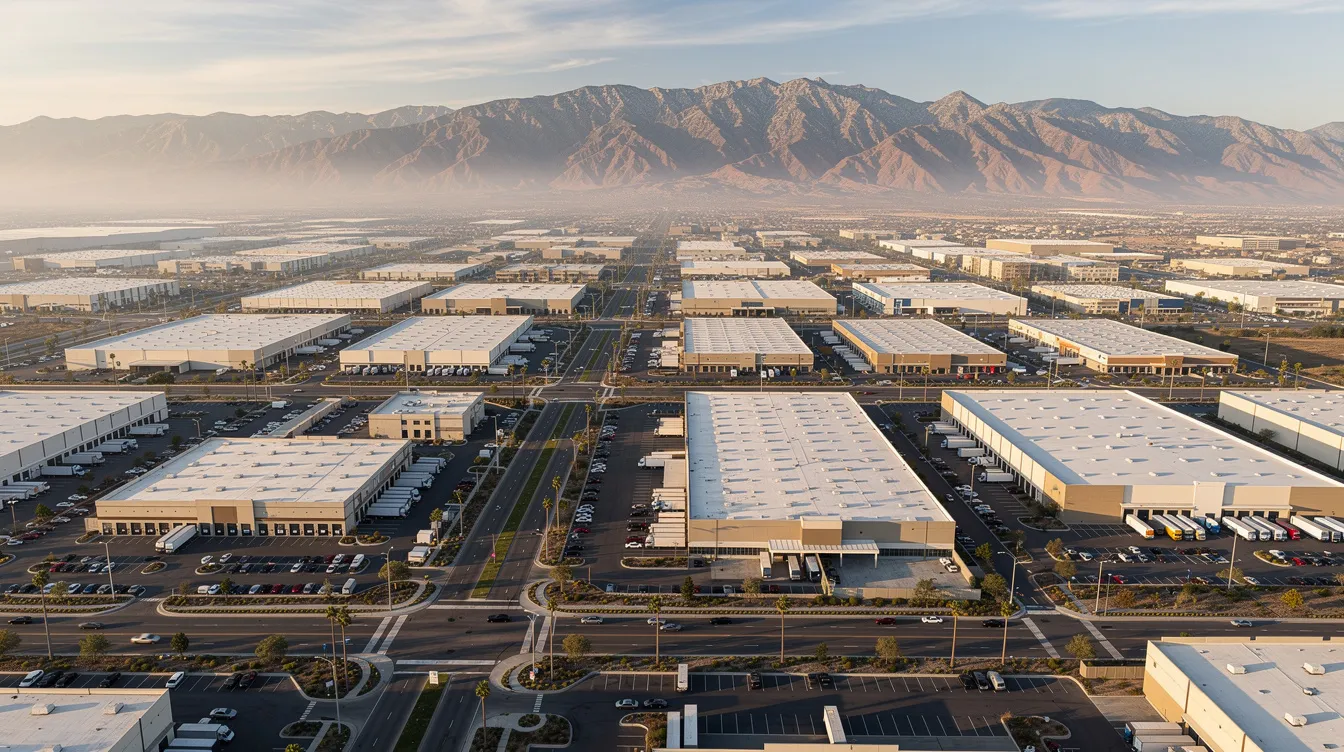
For young career seekers: You can earn $28–$38 per hour from day one in a data center construction apprenticeship-no college debt, no computer systems degree required. By year five, six figures is standard. The tools and resources you need are waiting at ABC SoCal.
For parents: Your child can enter a construction field with a structured career, full benefits, and earnings that outpace most bachelor’s-degree holders within five years. This is not a fallback-it is a strategic career built on demand that CEOs are calling the opportunity of the decade.
For contractors: ABC SoCal membership gives you access to apprenticeship pipelines, safety education, and compliance support that positions your firm to win data center and infrastructure work. Build capacity now or watch the opportunity pass.
The future of data center construction belongs to the people who act now. For career seekers: apply to an ABC SoCal apprenticeship today. For contractors: build your workforce capacity before the wave crests. The operations, materials, and expertise required to build the AI era’s critical infrastructure all flow through the skilled trades.
Measurable next steps:







