
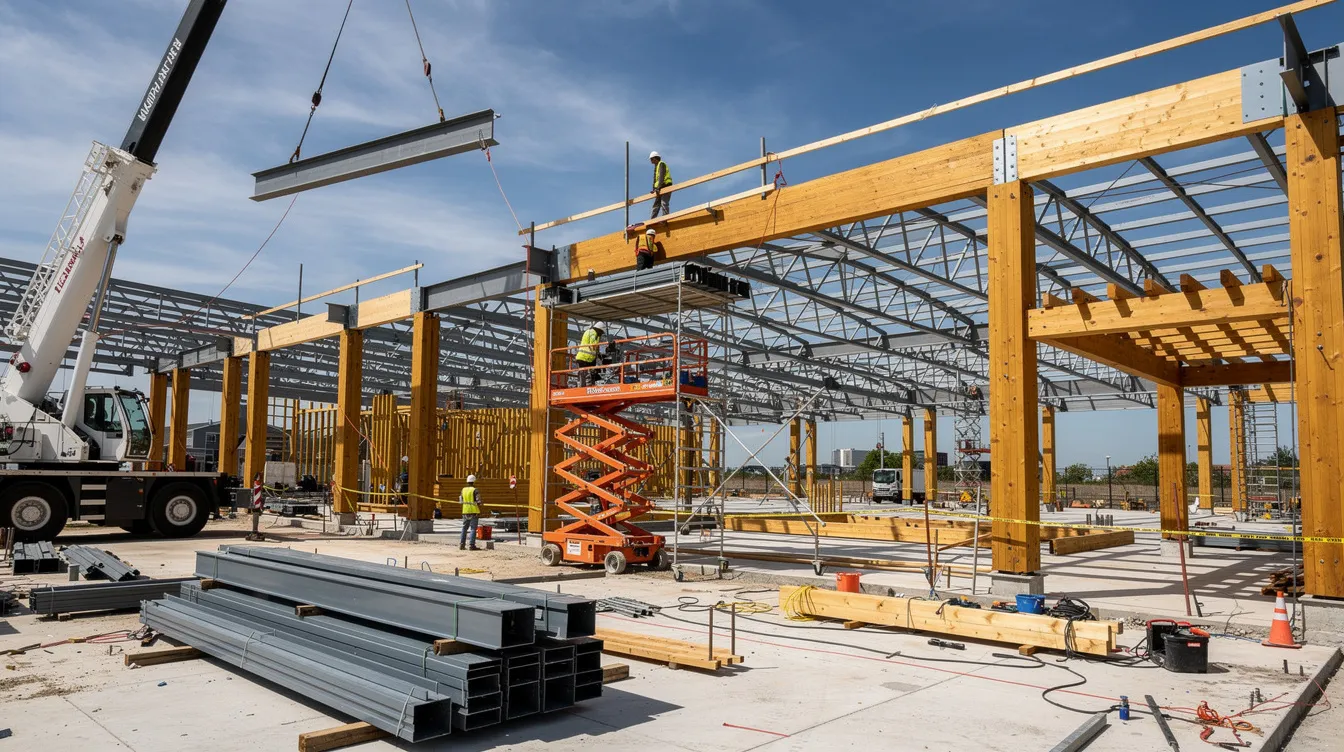
The Theodore Roosevelt Presidential Library opened on July 4, 2026, in Medora, North Dakota. For Southern California contractors, this project is useful not as a history lesson, but as a closeout lesson. In March 2026, the library announced an official July 4 opening, and in a February 2026 construction update, the Theodore Roosevelt Presidential Library said the project was more than 95% complete, and that exhibit spaces in the West Wing had been turned over to installation teams. That final stretch of work is where execution discipline becomes visible.
Construction Executive’s reporting on the project helped spotlight why contractors should pay attention. The building’s design and construction team pursued an unusually ambitious combination of mass timber, rammed-earth walls, a living roof, and Living Building Challenge goals. For contractors briefing field leaders on large civic construction project delivery, TRPL offers a practical case study in sequencing, handoff discipline, commissioning pressure, and public-facing accountability.
Some projects are valuable because they show how a team starts. Others are valuable because they show how a team finishes. TRPL falls into the second category.
By late winter 2026, the Theodore Roosevelt Presidential Library was described as more than 95% complete. Its updates also showed a project moving through visible milestone stages over time, from foundations and steel placement to later completion work. The library’s public materials describe a building designed by Snøhetta, built with partners including JE Dunn Construction, and shaped by sustainability goals that include mass timber, rammed-earth walls, a grass-covered living roof, and Living Building Challenge ambitions.
That combination matters because a large civic construction project becomes hardest to manage when major structural work is largely done but multiple specialty teams still need access to the same spaces. At that point, the challenge is no longer just building the structure. It is controlling turnover, protecting finished work, coordinating installations, and keeping the opening date realistic.
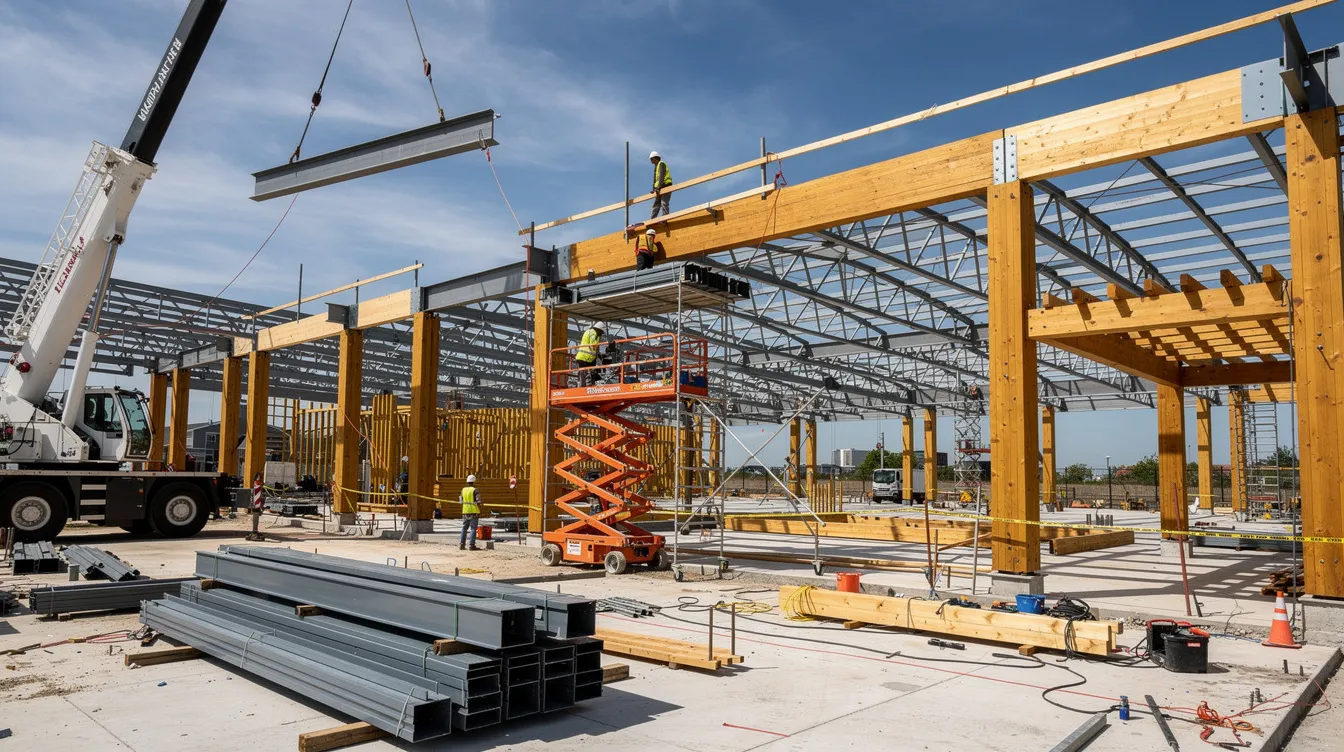
Late-stage sequencing is where project-management weaknesses become expensive. In its February 2026 update, TRPL said West Wing exhibit spaces had been turned over to installation teams while work continued elsewhere. That kind of overlap is common on public-facing cultural projects, and it creates risk fast. Exhibit installers, finish trades, AV teams, specialty fabricators, and mechanical crews may all need controlled access to adjacent or shared areas.
The practical lesson is straightforward: define turnover criteria before the final phase begins. Contractors should not rely on vague phrases like “almost ready” or “basically complete” when handing spaces to downstream teams.
For a large civic construction project, stronger closeout sequencing usually includes:
These are not abstract best practices. They are the controls that help keep one team’s progress from damaging another team’s finished work or delaying specialty installation.
TRPL also reinforces a simpler point: landmark projects do not finish well without enough experienced supervision in the field. The closer a project gets to opening, the more decisions shift from broad planning to minute-by-minute coordination. Someone has to resolve access conflicts, inspect readiness, protect completed areas, and keep crews aligned when schedule float is thin.
That is where contractor workforce depth matters. Apprenticeship builds long-term craft capacity, but closeout performance also depends on people who can lead crews, understand scope boundaries, and communicate clearly under pressure. A technically skilled worker does not automatically become a strong foreman. Large civic work exposes that gap quickly.
For Southern California contractors, the useful takeaway is operational rather than statistical: use late-stage project work as a training environment for future leaders, but don’t assume emerging supervisors can learn closeout management through improvisation alone. They need expectations, mentoring, and repeatable processes.
When several trades converge in tight areas, communication becomes a production issue. A foreman who can reset priorities, clarify sequence, and de-escalate friction protects both schedule and workmanship. A foreman who cannot do that often creates rework, confusion, or safety drift.
This is one reason leadership training belongs in project execution planning, not just HR planning. ABC SoCal’s Foremanship Academy is specifically built around field leadership skills such as communication, crew expectations, and the responsibilities of a foreman. For contractors preparing teams for a large civic construction project or another complex institutional closeout, that kind of training aligns more naturally with the real problem than generic management talk.
TRPL’s public updates point to a disciplined handoff mindset: spaces were turned over after preceding work had advanced far enough to support installation. That principle matters because final-phase damage and rework often begin when one team enters a space before the area is truly ready.
Closeout discipline works best when accountability is simple and visible. For contractors, that usually means:
On a public-facing destination project, closeout quality is not only a workmanship issue. It becomes a reputation issue. Delayed openings, unfinished details, and visible deficiencies are far harder to hide when the project has community attention.
TRPL also reminds us that sustainable design features add coordination value only if they are integrated successfully at the end of the job. The library’s public materials tie the project to Living Building Challenge goals and highlight elements such as low-carbon concrete, reclaimed regional wood, living-roof wetlands, and landscape restoration work. Its native plant project materials also describe installing native plugs on the roof and in bioswales.
For contractors, the lesson is not to chase a list of green features. Instead, recognize that sustainability systems often increase closeout complexity. Roofing, waterproofing, planting, drainage, envelope protection, irrigation or water-related systems, and commissioning activities can overlap in ways that demand tighter sequencing than a conventional finish phase.
That is especially relevant in Southern California, where many civic, education, healthcare, and destination projects now include higher-performance envelopes, electrification measures, specialty water systems, or technology-heavy controls packages. The closer a project gets to owner turnover, the less room there is for unclear responsibility between trades.
California contractors should avoid flattening compliance into one generic rule set. Prevailing wage, certified payroll, apprenticeship, and related labor requirements depend on project type, funding, jurisdiction, and the authority involved. A private institutional project does not automatically carry the same obligations as a California public works project. Likewise, safety duties may arise from different standards depending on the work being performed.
That matters here because the practical lesson from TRPL is execution readiness, not one-size-fits-all compliance. For Southern California firms preparing for a large civic construction project, the right move is to confirm labor and safety obligations early, based on the job’s actual procurement and funding structure, and to avoid assuming every civic-looking project follows the same California rules. On project-specific questions, contractors should work with qualified labor-compliance or legal professionals.
Contractors can also strengthen execution by pairing project controls with current resources on construction technology advancements and construction site safety innovations, especially when digital coordination, punch tracking, and high-risk finish work begin to overlap.
Before bidding, staffing, or entering the final phase of a comparable project, use this checklist:
| Category | Action |
|---|---|
| Turnover | Define written criteria for shell complete, finish ready, and install ready before closeout begins. |
| Staffing | Identify which field leaders will own each zone, not just each trade. |
| Scheduling | Shift to short-interval planning once specialty installers and finish trades begin overlapping. |
| Quality control | Require pre-turnover walkthroughs with deficiency tracking before handing off space. |
| Protection | Set rules for protecting completed finishes, specialty materials, and exhibit-adjacent areas. |
| Commissioning | Reserve time and access for testing, balancing, systems integration, and owner-readiness activities. |
| Compliance | Verify California labor and reporting obligations based on the project’s actual funding and jurisdiction. |
| Stakeholders | Use regular progress summaries during closeout so owners and partner teams understand readiness and risk. |
A checklist’s value isn’t paperwork. It is forcing alignment before final-phase congestion turns small coordination gaps into opening-day problems.
The Theodore Roosevelt Presidential Library is not a model because it is in North Dakota. It is a model because it shows what becomes difficult at the end of a high-visibility project: controlled turnover, overlapping specialty work, protection of finished areas, and leadership depth in the field.
That applies directly to the kinds of civic, museum, higher-education, healthcare, and destination projects Southern California contractors pursue. Whether the project is in Los Angeles, Orange County, the Inland Empire, or Ventura County, the same final-phase questions tend to surface:
Those questions separate a respectable build from a well-executed opening.
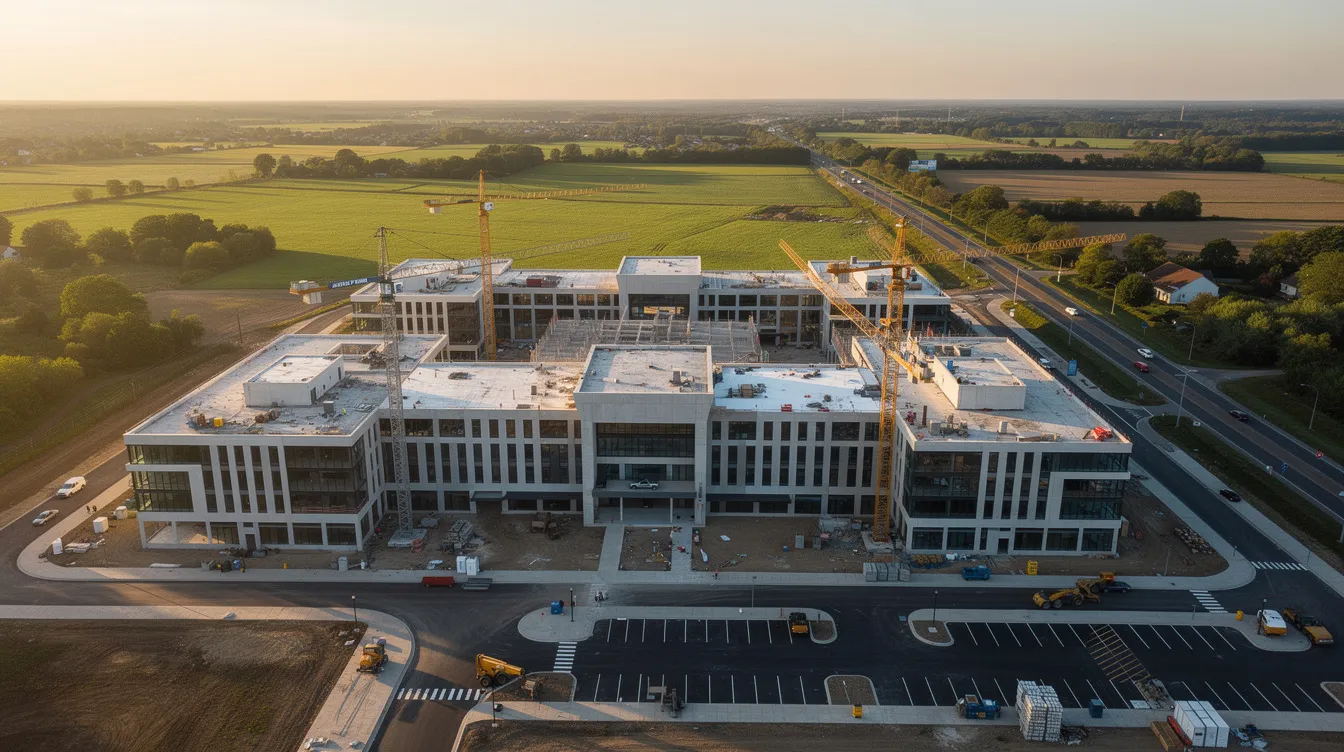
ABC SoCal can support contractors preparing for a large civic construction project by helping strengthen both workforce depth and field leadership. The chapter’s Apprenticeship Program supports long-term trade development in approved pathways, while the Foremanship Academy focuses directly on communication, expectations, and jobsite leadership responsibilities.
For firms navigating California-specific project obligations, ABC SoCal’s labor-compliance resources can also help teams prepare earlier instead of treating compliance review as a post-award scramble. That kind of readiness fits the main lesson from TRPL: complex public-facing projects are usually won or lost in the last stretch by how well contractors coordinate people, spaces, and decisions.
For additional chapter background, the ABC SoCal legacy page offers context on the organization’s long-standing training focus.
Theodore Roosevelt Presidential Library is a strong case study in late-stage project execution because the public timeline is clear: the library announced a July 4, 2026 opening, and months earlier it had already moved exhibit spaces into installation turnover while the job was still in its final construction push. That is exactly the phase where contractor discipline matters most.
If your company is preparing for a large civic construction project, take one concrete step now: review your current closeout process and identify whether turnover criteria, zone leadership, mock inspections, and commissioning access are defined early enough to hold under pressure. If they are not, fix that before the next landmark project reaches its final 5%.







