

Every serious injury on a construction site is preceded by warning signs. This Incident Prevention Corner walks through lessons learned from a composite jobsite incident and shows why near miss reporting is one of the most powerful, low-cost tools SoCal contractors have to prevent future accidents.
The safety triangle tells us that for one fatal injury, there are roughly 600 non-injury incidents lurking beneath the surface. Near misses indicate potential hazards that could lead to accidents, and a near-miss reporting system fosters a proactive safety culture that catches such hazards early. Here is what this piece delivers:
Classic occupational safety research shows that beneath every serious injury lies a large base of minor incidents, property damage, and many more close calls that narrowly avoided harm. OSHA recommends reporting near misses to improve safety, treating them as leading indicators that give you an early read on failing controls before a recordable injury occurs. The National Safety Council reinforces this: near misses indicate potential safety risks in the workplace, and every unreported one is a missed opportunity to identify hazards and fix them.
This matters on SoCal jobsites right now. LA 2028 Olympic infrastructure, statewide housing demand, and wildfire rebuilds across multiple counties are compressing schedules and stacking trades on congested urban sites. These pressures increase the risk that missed incidents go unreported, and hazards escalate. If you are a safety director, superintendent, foreman, or crew lead reading this, the goal is straightforward: to provide you with practical, field-ready actions to surface safety risks before they become workplace injuries.
ABC performance data show that contractors who actively investigate near misses achieve dramatically lower Total Recordable Incident Rates. STEP Diamond and Platinum firms logged TRIRs 686% better than the BLS construction average-an 85% reduction. The business outcomes are clear: fewer delays due to investigations, higher prequalification scores, and better insurance positioning.
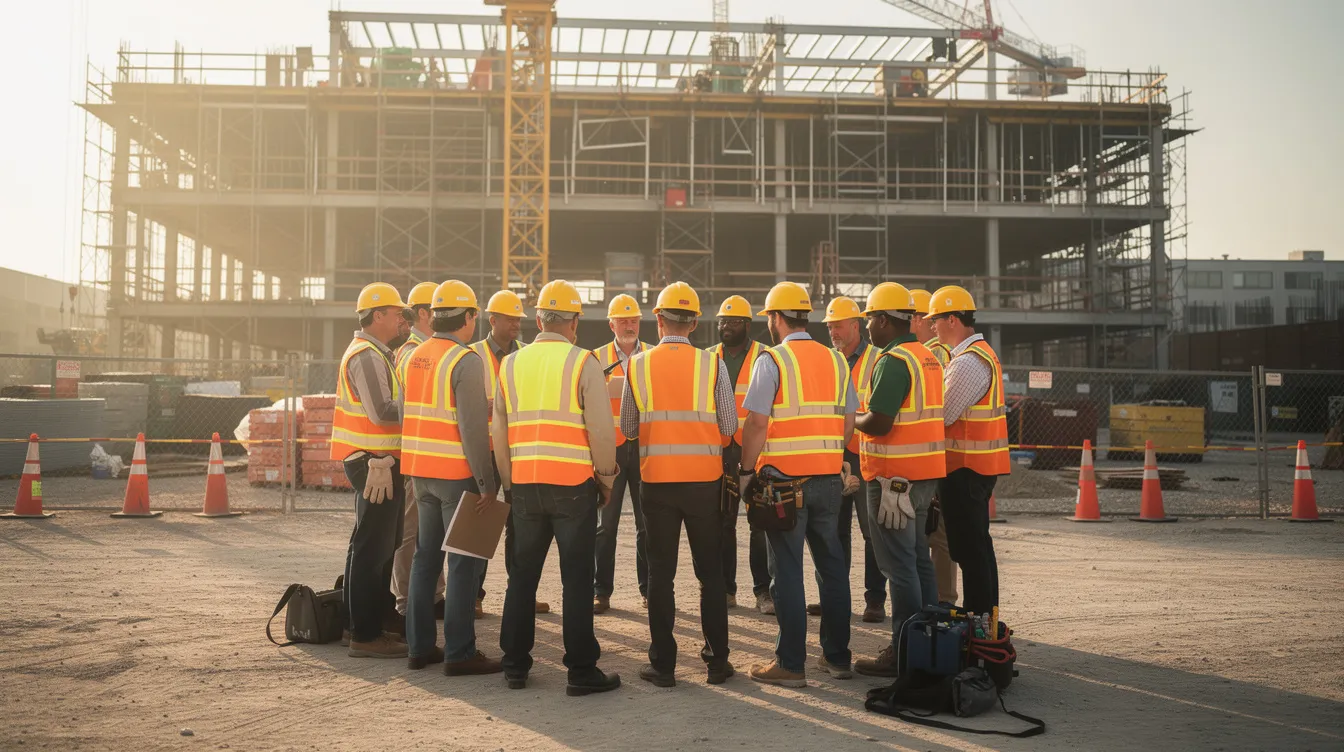
A near miss is an event that nearly caused harm but did not result in injury, illness, or property damage. An incident includes any unplanned event that results in harm, and an accident results in injury or property damage. The difference between a near miss and an accident is outcome, not hazard severity. Establishing clear definitions for near misses improves understanding and reporting across all trades on site.
Typical near miss examples on SoCal jobs include:
OSHA does not legally require companies to log near misses in their recordkeeping, but strongly recommends investigating them as part of a proactive health administration and safety program. In contrast, in the UK, organizations must report near misses under RIDDOR. Regardless of jurisdiction, in a strong safety culture, close calls are treated as early warnings and opportunities for corrective actions-not lucky breaks. ABC SoCal encourages members to use a consistent definition so that craft workers and foremen can quickly recognize and report a near miss.
The following scenario is an anonymous, composite training example based on recurring field observations and common Cal/OSHA citation patterns. It is not a documented real-world case.
On a 2025–2026 commercial project in Los Angeles County, a framing crew is sheathing a third-floor deck under schedule pressure. Over two weeks, multiple close calls happen near the leading edge: a worker trips over stacked material and stumbles toward the unguarded perimeter, another steps within inches of the edge while carrying a sheet of plywood. Nobody files an incident report. The hazard becomes normalized.
On a Tuesday morning, a carpenter carrying material steps on debris near the edge, loses footing, and falls to the deck below. The fall results in a recordable personal injury, an immediate work stoppage, Cal/OSHA attention, schedule slippage on the critical path, overtime costs, and heightened insurance scrutiny. A slight shift in any of those earlier close calls-slightly different footing, slightly different load-and this injury could have happened weeks sooner, or could have been prevented entirely.
Ask yourself: what clues were visible beforehand? Every one of those unreported near misses was a signal. A basic near miss reporting routine would have surfaced the edge hazard and triggered a fix before anyone got hurt.
OSHA’s incident investigation framework is clear: the goal is to find system and process failures, not to assign blame to one worker. The root causes behind this composite incident run deeper than individual error:
Multiple workers stepping over material at the edge without raising a concern indicates normalization of deviance, not a single mistake. Training programs empower employees to identify potential hazards, but only if the culture supports speaking up. Open communication encourages employees to report near misses; without it, the system fails silently.
After any miss occurs or an injury occurs, corrective actions should follow the hierarchy of controls:
| Control Level | Application to This Incident |
|---|---|
| Elimination | Remove trip hazards and excess material from the edge zone entirely |
| Substitution | Redesign material staging to keep workers away from the perimeter |
| Engineering | Install guardrails or temporary edge protection before work begins |
| Administrative | Tighten leading-edge work procedures, require pre-task planning for every shift, conduct regular safety audits |
| PPE | Confirm appropriate personal protective equipment including personal fall arrest systems are worn and inspected |
Employers should fulfill documentation obligations set by the Occupational Safety and Health Administration regarding potential dangers. Document every corrective action in writing, assign a responsible person and due date, and verify closure. Regular safety audits identify potential hazards in the workplace before they cause serious consequences.
Toolbox talk takeaways for foremen:
Reporting near misses helps identify patterns and hazards throughout a project’s life cycle. Near miss data are leading indicators-they give safety leaders an early read on where controls, training, or supervision may be failing before a serious injury happens. Multiple small close calls around the same hazard-backing equipment, trench stability, electrical exposures-usually precede a serious event if they are not caught.
On congested SoCal sites with mixed trades and high subcontractor turnover, even a single unreported close call around moving objects or temporary power can escalate. In 2026–2028, owners and GCs increasingly ask about near miss programs in prequalification packets. Strong near miss reporting is a competitive differentiator for ABC SoCal members.
Creating a blame-free culture improves near miss reporting rates. Leadership must message clearly: close calls are learning opportunities, not grounds for discipline. When an employee decides to report, that decision should be met with thanks, not suspicion.
Simplifying the reporting process encourages greater participation in near-miss reporting. Make it easy: one-page forms in English and Spanish, QR code links for mobile submissions, anonymous options, and verbal reporting that foremen log after the huddle. Communication of corrective actions post-incident reinforces the reporting system-workers need to see that their reports led to real changes. Field leaders should model the behavior by sharing their own close calls and walking crews through what changed as a result.
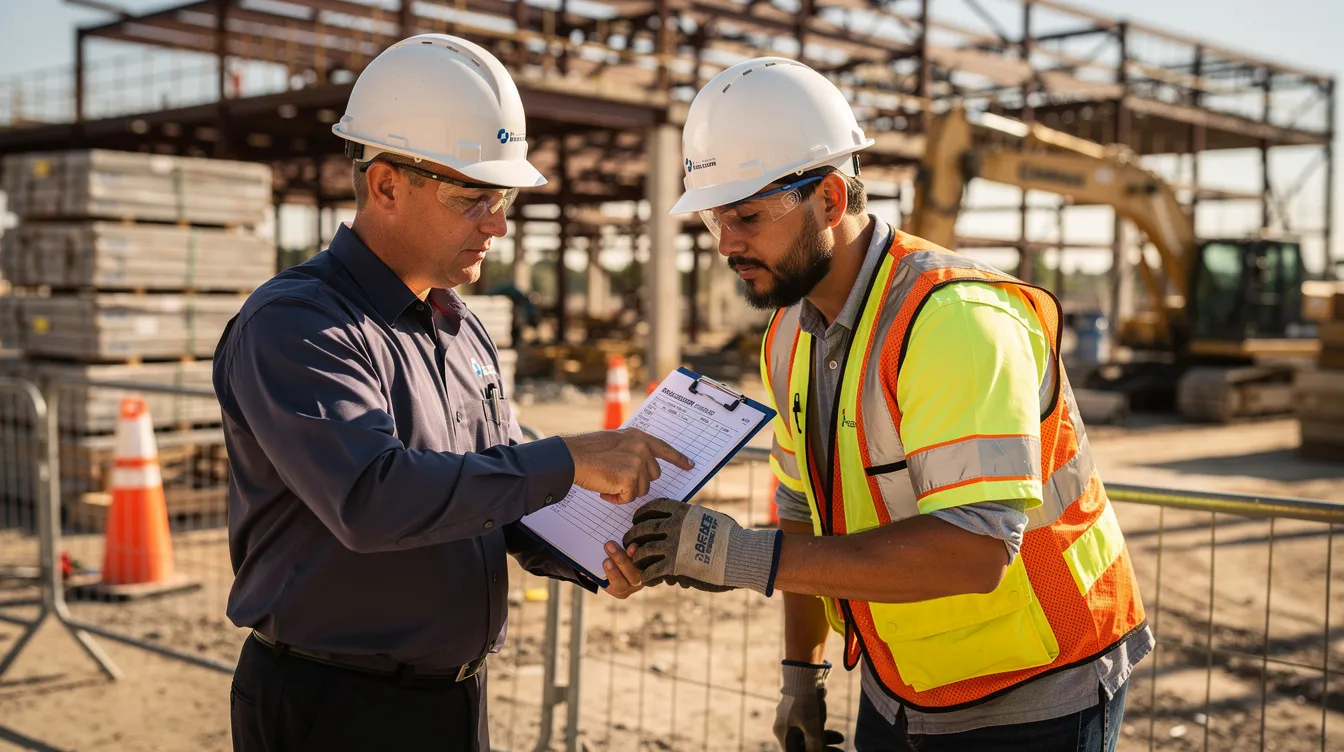
A typical near-miss report includes the date, time, location, and a description of the event. Near miss reporting forms should be easy to understand and fill out. Here is a straightforward process any crew can follow:
Categorize each event by type-slip, trip, struck by, caught-between, vehicle, electrical, trenching-and rate potential severity to help prioritize follow-up. Weave near miss reviews into weekly safety meetings rather than creating a separate process. Track near misses alongside recordable injuries for future reference and STEP submissions.
On a 2024 warehouse conversion project in Riverside County, a laborer reports a close call: a telehandler nearly backs into a pipefitter while turning in a congested laydown area. The conditions included blind spots, no designated pedestrian lanes, no required spotter for certain maneuvers, and mixed subcontractor crews unfamiliar with the traffic plan.
The near miss report triggered a focused root cause review. Corrective actions included an updated traffic control map, mandatory spotters for all backing moves, painted walkways, and a retraining session at the next all-hands meeting. Two weeks later, a spotter halted the same telehandler before a co-worker stepped into the path. Tracking near misses helps identify patterns and prevent future incidents-this single report likely prevented a struck by injury.
How many unreported close calls around mobile equipment are happening on your projects right now? What one simple reporting change could surface them?
A near-miss program should integrate with the safety culture, not be an isolated exercise. Categorize near miss data by project, phase, trade, time of day, and hazard type. Look for clusters-repeated slips on the same ramp, recurring electrical close calls during rough-in-that indicate systemic issues rather than one-off events.
Use near-miss findings as leading indicators: track counts, potential severity, and corrective action closure rates. Adjust your program based on trends through targeted training, revised procedures, additional engineering controls, or tighter subcontractor prequalification. Risk assessment improves when you have real data from the field. Accurate reporting over time reveals whether your safety protocols are working or need recalibration. ABC SoCal can assist members with interpreting this data, benchmarking against STEP performance, and identifying additional resources to address recurring hazards.
ABC SoCal offers safety education classes, incident investigation and root cause analysis training, and apprenticeship safety modules for the electrical, plumbing, sheet metal, and low-voltage trades. The Safety Academy, STEP program, and safety-focused peer roundtables give members practical forums to share near-miss lessons and real-life examples of successful corrective actions with other regional contractors.
Reach out to ABC SoCal staff to review your current near miss program, tailor toolbox talks for your projects, and connect field leaders with upcoming training dates. If you are not yet a member, consider joining to strengthen your safety culture and incident prevention performance across Southern California.
Start with one pilot project. Capture near misses daily, review them in supervisor calls, assign corrective actions, and share one or two key lessons in your next toolbox talk. Integrate near-miss metrics into regular business reviews alongside schedule, cost, and quality. Prevention is a core business function, not an add-on.
A basic weekly cycle: daily capture, midweek supervisor review, corrective action assignment and tracking, and a weekly safety meeting debrief. Refine your forms and messaging on the pilot, then scale. By 2028, contractors who normalize near-miss reporting, investigation, and follow-through will not only see lower incident rates but also stronger bid positions and reputations across Southern California. The importance of reporting cannot be overstated-it is how you reduce risks, prevent future incidents, and build a safer workplace for every worker on your projects.

Higher near miss counts usually indicate healthy reporting, not an unsafe jobsite. The safety triangle tells us many close calls exist beneath each serious event. On a mid-size commercial project, several documented near misses per week is a reasonable target. Track the trend direction over time rather than fixating on a single number. If a site reports almost no near misses for months, investigate: fear of blame, complex forms, or lack of feedback to workers are common culprits. The goal is to surface potential risks early enough to act.
Make near miss expectations part of subcontractor orientation, site-specific safety plans, and preconstruction meetings. Use shared reporting forms, joint toolbox talks featuring close call examples, and recognize subcontractor crews that consistently report useful observations and help drive corrective actions. Consistent expectations across all trades on mixed-prime and multi-employer SoCal sites reduce confusion and help build one unified workplace safety culture. Other considerations include language accessibility-provide forms in English and Spanish-and making clear that reporting applies to all employers on site.
While documentation practices should be discussed with legal counsel, regulators generally view good-faith near-miss programs and documented corrective actions as positive evidence of proactive occupational safety and compliance efforts. Honest, accurate reporting and timely follow-up present far less regulatory and legal risk than concealing or ignoring identified hazards, which can lead to repeat citations and serious consequences. In the UK, near misses must be reported under RIDDOR, illustrating that many jurisdictions view transparency as fundamental. Coordinate with company leadership, safety professionals, and legal advisors to craft a balanced recordkeeping approach aligned with California requirements.
Offer very simple forms that take under five minutes to complete. Allow verbal reporting that foremen document later. Integrate reporting into existing huddles and end-of-shift check-ins. The time tradeoff is clear: a few minutes capturing a near miss now versus hours or days lost to an illness, injury investigation, schedule disruption, or rework later. Share specific examples in which a near-miss report prevented a costly incident to reinforce the importance of the time investment. When workers see that happen even once, resistance drops.
Compare incident rates and types before and after implementing near miss reporting. Track corrective action closure rates and note where repeat hazards disappear after being identified through near miss reporting. Collect informal feedback from foremen and craft workers on whether they see real changes on site, as reported by their colleagues. ABC SoCal can help members benchmark performance over time using STEP and other safety program assessment tools, tie near-miss efforts to broader incident-prevention results, and show measurable progress toward a safer workplace.







