
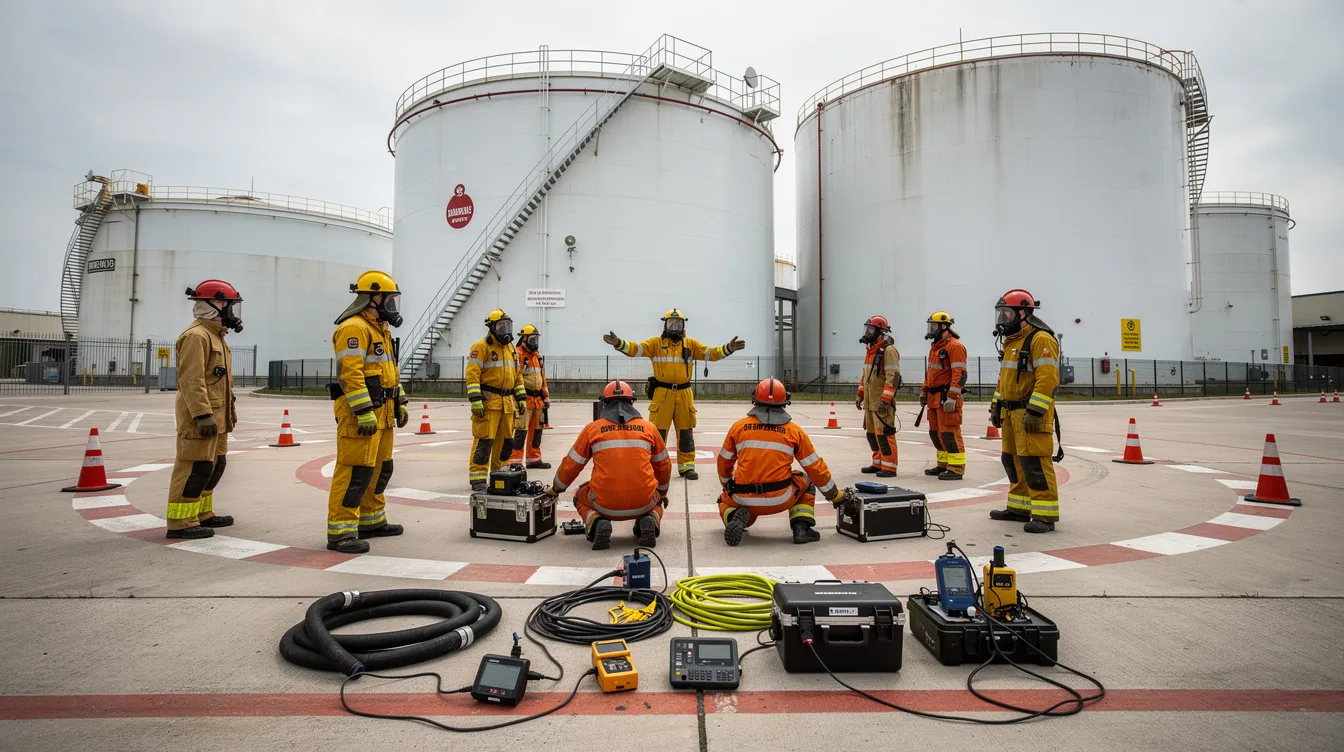
Firefighters run toward danger. That fact alone means they deserve accurate information, practiced coordination, and a clear plan before the Burris Road plant in Casa Grande begins operations. A joint emergency drill facility, where the plant itself becomes a shared training ground for responders and operators, is the practical way to make that happen. This article explains why, drawing on real lessons and specific asks the community can push for today.
The core question is simple: who will respond if something goes wrong at the Burris Road plant, and will those responders be ready the first day the plant operates?
Casa Grande Fire Department engines, ladder trucks, and hazmat-capable units would be the first formal emergency response. The department serves over 63,700 residents across roughly 112 square miles from four stations, and hazmat response is already among its listed services. Regional partners and mutual-aid agencies would support them, but CGFD arrives first.
A joint emergency drill facility is a practical commitment. It means the plant grounds and any dedicated training spaces become a shared venue where firefighters, plant staff, and Pinal County agencies repeatedly drill realistic scenarios together. Simulated environments at these facilities replicate complex, high-risk emergencies so that everyone learns the layout, the chemistry, and the command structure before a real incident forces them to.
This is not a criticism of firefighters. It is a community request that the plant owners, local leaders, and the Pinal County Local Emergency Planning Committee give responders the information, access, and practice they need.
On the evening of April 17, 2013, a fire broke out at the West Fertilizer Company in West, Texas, and later created a building breach before the explosion. The fire was reported at approximately 7:29 p.m. About 22 minutes later, at roughly 7:51 p.m., a massive explosion tore through the facility. Firefighters had minutes, not hours, to understand a complex chemical fire, and the preparation gap behind them was enormous.
The outcomes were devastating:
State investigators later found no pre-incident plan that accounted for the fertilizer-grade ammonium nitrate stored at the facility, no functioning incident command system on scene, no local hazardous materials program equipped for that kind of event, and a volunteer department not trained or equipped for a hazardous materials fire of that scale. Responders on scene were told the ammonium nitrate could not get hot enough to explode.
Post-incident reports and findings provided investigators and the public with critical information about the planning failures.
The firefighters were not the problem. The system failed them by sending them into a high-hazard facility without accurate chemical inventory, site diagrams, or prior joint drills.
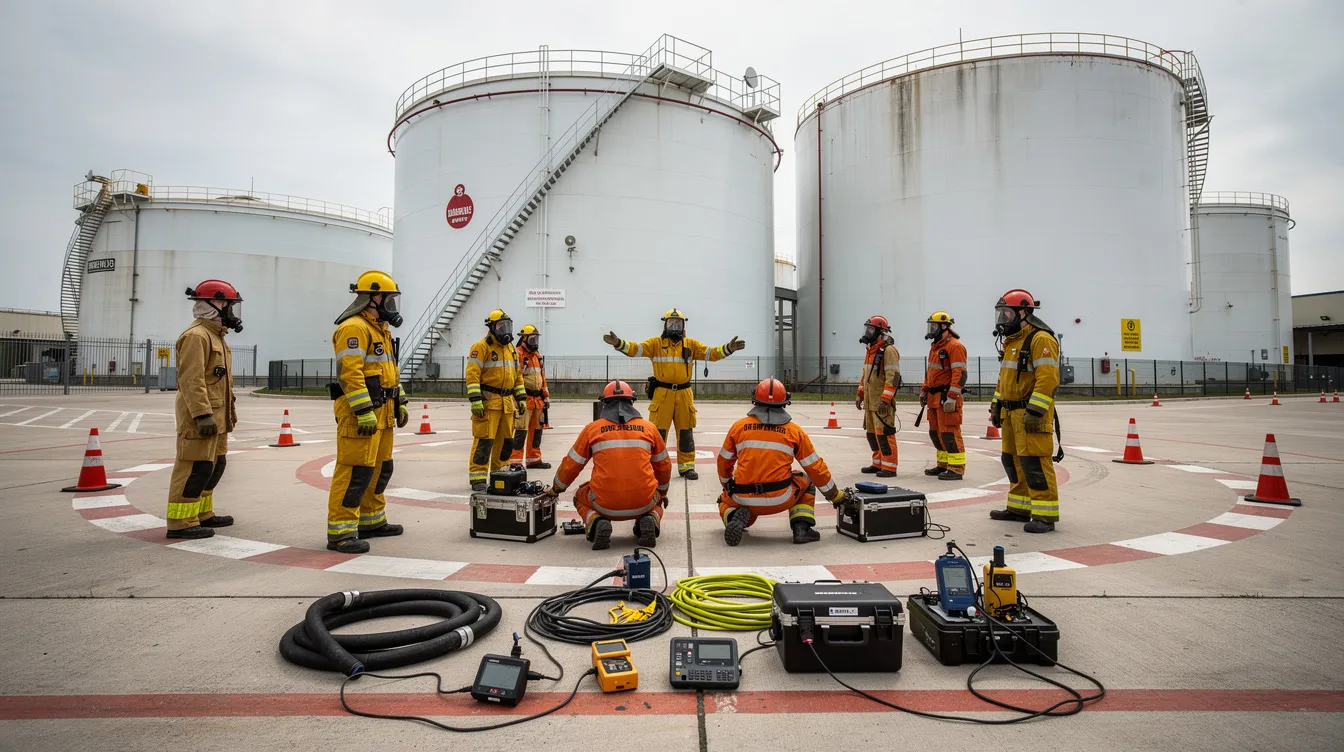
The proposed Burris Road plant in Casa Grande would not store fertilizer-grade ammonium nitrate. Its risk profile is different from West, Texas. This distinction matters, and residents should understand it clearly.
According to the publicly available draft air permit for Chlorum Arizona LLC, the plant would manufacture up to 48 metric tons per day of chlorine, along with co-products:
Chlorine and acid safety lessons from other industrial facilities show that mixing certain acids and bases, whether through process failure or improper handling, can create dangerous secondary reactions. Burris Road should build on those lessons, not repeat them from scratch.
Although the chemistry differs from West, the shared requirement is the same: accurate information, clear roles, and repeated practice long before the first tanker, process line, or storage vessel goes into service.
In this context, a joint emergency drill facility means the Burris Road site itself, plus any dedicated training yard or classroom, formally set aside for regular, structured emergency exercises with the Casa Grande Fire Department and other partners. A joint emergency drill facility is designed for multi-agency disaster-preparedness training and directly addresses the preparation gap that proved fatal in West, Texas.
Physical elements would include:
Joint drills would involve multiple organizations, including fire departments, plant emergency coordinators, security staff, EMS, law enforcement, and Pinal County LEPC representatives working as one combined team. These drills help agencies practice their standard operating procedures together in a controlled setting.
At minimum once per year, and preferably more often in the first three years of operation, the plant should host full-scale drills that simulate realistic chemical leaks, fires, or power failures. Drills should include scenarios like chemical releases, a chlorine line breach, and equipment failures at likely locations within the facility. Realistic training scenarios improve the speed and effectiveness of emergency responses because responders build muscle memory for decisions they may need to make under extreme pressure.
These drills should also test off-site coordination: road closures, detours for nearby logistics and construction transportation traffic, and communication with schools, businesses, and residents in downwind areas. They should also examine how information, decisions, and public messaging move between agencies in the first minutes of the incident.
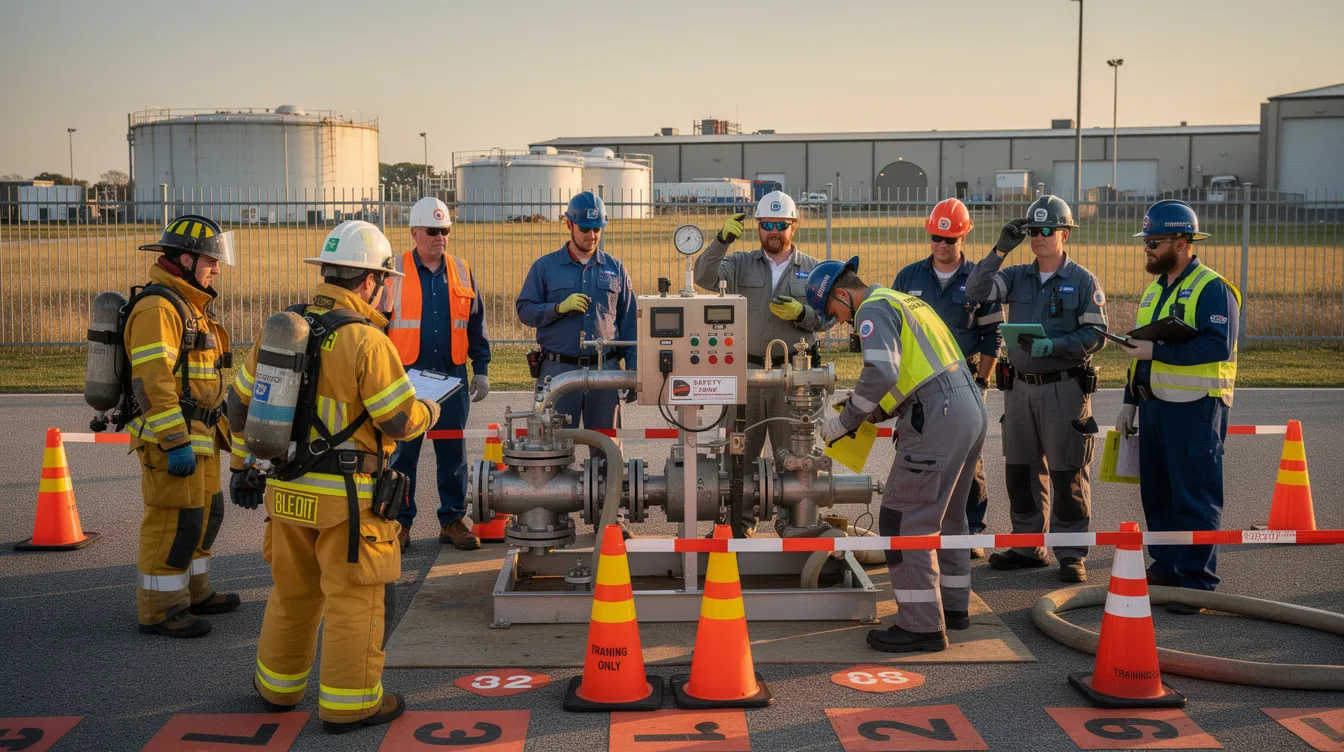
A written joint emergency response plan is the backbone of any joint emergency drill facility, because it sets expectations and responsibilities before sirens ever sound. Industrial emergency drills test facility response to potential incidents, but without a written plan, those tests have no benchmark.
The plan should include:
Roles must be identified in advance:
Communication protocols are essential: internal alarms at the plant, 911 call procedures, direct radio or phone contacts between plant control rooms and responding units, and backup methods if power or networks fail. These elements tie directly into chemical inventory and response planning concepts that every dispatch center should have access to before an event.
Plant management, Casa Grande Fire Department leadership, and the Pinal County LEPC should create this plan collaboratively. Review and update it at least annually or after any significant drill or incident.
OSHA’s Hazardous Waste Operations and Emergency Response standard, 29 CFR 1910.120, is the main federal rule that outlines how employers must prepare workers who respond to hazardous substance releases, including an on-scene incident commander. Understanding its training tiers in plain language matters for everyone involved:
| Training Level | Who | What They Can Do |
|---|---|---|
| Awareness | Any employee who might witness a release | Recognize a problem, notify authorities, evacuate |
| Operations (minimum 8 hours beyond awareness) | Responders taking defensive action | Contain or prevent spread of a release without stopping it |
| Technician (minimum 24 hours beyond operations) | Responders taking offensive action | Plug, patch, or stop a release |
| On-Scene Incident Commander (24 hours operations-level equivalent + IC competencies) | Senior emergency response official | Implement incident command system, coordinate all agencies |
The standard also calls for an incident command system in which the senior emergency response official on scene leads a coordinated, multi-agency response, aligning fire, plant, law enforcement, and medical actions under one plan. To maintain these qualifications, annual refresher training or demonstrated competency is required.
A chlorine-ready response at Burris Road would build on this framework: plant responders with technician-level training, Casa Grande Fire Department hazmat specialists, and mutual-aid partners all trained to compatible standards and practicing together at the joint emergency drill facility.
While OSHA 1910.120 governs employers whose employees respond to releases, Casa Grande community members are asking the plant to go beyond bare compliance by investing in deeper joint training and regular drills tailored to chlorine, hydrochloric acid, and related products.
Seconds count in a chemical release. The people already on site at the Burris Road plant will always be the first to see, smell, or detect a problem, even before the first 911 call. That is why the plant needs its own hazmat-capable team, not as a replacement for firefighters, but as the critical first layer of defense.
An on-site emergency response team, staffed on every operating shift, should include:
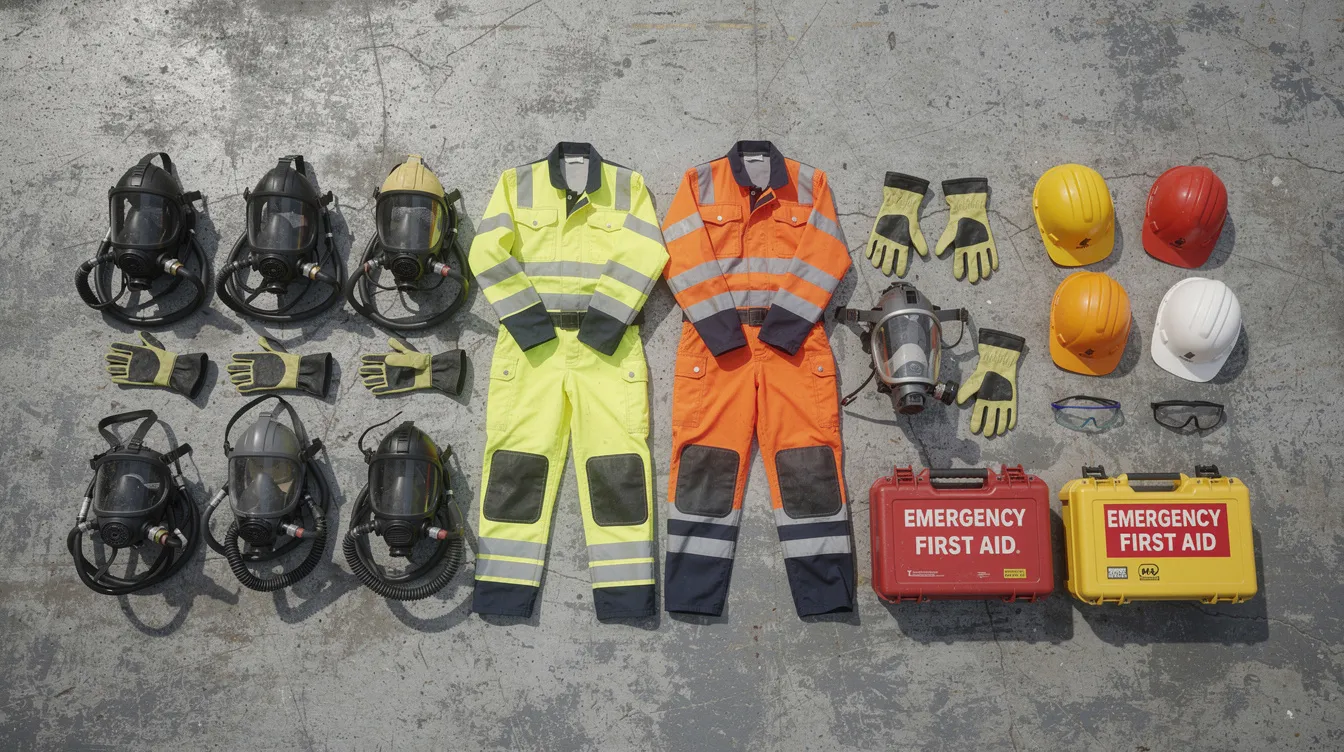
This team would use specialized equipment: fixed gas detectors, emergency shutdown systems, personal protective equipment rated for chlorine and acid exposures, and a Chlorine Institute emergency kit matched to the container type on site. In the first minutes, their job is to take immediate defensive or offensive actions when safe—shutting valves, starting scrubbers, isolating process lines, and evacuating affected areas—in line with manufacturer instructions and team training materials.
Having a plant-based hazmat team buys valuable minutes. It also provides precise, real-time information to arriving first responders so that Casa Grande Fire Department units do not walk into a hazard blind, the exact failure that proved fatal in West, Texas.
The plant’s team should regularly train at the joint emergency drill facility alongside local emergency responders, so that everyone understands each other’s equipment, terminology, and standard operating procedures before a real emergency.
The Chlorine Institute emergency kit family includes standardized tool sets for controlling leaks from chlorine cylinders, ton containers, and some railcars. They are among the most essential specialized resources a chlorine-handling facility can keep on site.
The three main kit types:
Each kit contains fittings, gaskets, clamps, and patching devices specific to the container type it addresses. Chlorine emergency kits require annual inspections to determine readiness. Components like Viton® gaskets have a four-year shelf life, meaning they must be tracked and replaced on schedule. The Chlorine Institute offers sample inspection checklists. Instruction booklets and training videos also help ensure proper kit use.
Additionally, broader hazmat equipment should include chemical protective suits, self-contained breathing apparatus, ambient gas detectors for chlorine and hydrogen, acid-neutralization kits, spill containment resources, and mobile decontamination stations.
Equipment alone is never enough. Every drill at the joint emergency drill facility should test and verify that chlorine kits, personal protective equipment, air-monitoring devices, and decontamination stations are ready, accessible, and used correctly by trained people. After drills, teams should record recommendations on kit readiness, gasket replacement, storage, and access.
Clear incident command and communication save lives in the hectic first minutes of a chemical emergency, especially near residential areas, schools, or busy highways.
When the Casa Grande Fire Department incident commander arrives, the team should establish a unified command post immediately. Plant representatives and other agencies join under one structure, using plain-language radio channels and pre-planned contact trees. Joint facilities improve communication and coordination among distinct emergency response agencies precisely because these channels are tested in advance, not invented on the fly.
Specific communication needs in those first minutes:
Drills at the joint emergency drill facility should rehearse public warning decisions: when to shelter in place, when to begin evacuating, how to use reverse-911 systems, outdoor sirens, social media feeds, and how to avoid confusing or conflicting messages directed at the public. Drills evaluate communication procedures during emergencies so that when a real event happens, no one is scrambling for a phone number or second-guessing who issues the order.
Every dispatch center and responding unit should have access to current Safety Data Sheets, updated site maps, and protective action decision tools. This level of emergency preparedness is not gold-plated; it is baseline for a facility handling chlorine gas near a populated area.
The value of a joint emergency drill facility comes not just from running scenarios, but from honest after-action reviews that turn each exercise into specific improvement.
A constructive post-drill debrief should include:
Post-drill evaluations identify opportunities for improving procedures that might otherwise remain invisible until a real incident exposes them. Joint emergency drills expose gaps in emergency response plans before actual disasters occur, which is their entire purpose.
Plant management, Casa Grande Fire Department, and Pinal County LEPC should jointly document findings, assign responsibilities, and set deadlines for corrective actions. That might mean updating the emergency plan, revising radio procedures, or purchasing additional chlorine institute emergency kits.
Regular joint exercises build trust and familiarity between different agency personnel. Over years, a drill history log allows community members and volunteers to see tangible gains in response time, coordination, and confidence. Lessons from other communities, including West, Texas, and industrial areas that already conduct regular collaboration exercises, should be examined and adapted for Burris Road, recognizing regional differences in population density and infrastructure and, where useful, turning those comparisons into practical recommendations for decision-makers.
Before the first day of normal operations at the Burris Road plant, residents and responders want four commitments in place:
Local leaders, plant owners, and regional emergency managers should publicly confirm progress on each commitment using community meetings, official websites, or LEPC sessions, with updates or materials provided there so residents know where to follow progress. These efforts are not about slowing progress; they are about making sure that when the plant opens, the people who protect this community have what they need.
Emergency preparedness is a shared responsibility. Firefighters, plant workers, and neighbors all want Burris Road to operate safely. That path runs through a written plan, recurring drills, trained teams, and honest reviews. Visit your local LEPC meeting, ask questions, and support the kind of readiness that honors the people who run toward danger on our behalf.
Below are answers to common questions about this topic.
Casa Grande Fire Department would be the primary first responder for fires, leaks, or explosions at the facility, supported by law enforcement and EMS. Trained plant personnel would handle immediate shutdowns, use on-site equipment, and begin initial containment until outside units arrive and a unified command is established.
OSHA 29 CFR 1910.120 sets training and planning requirements for employers whose workers respond to hazardous substance releases, but it does not automatically mandate a full plant-based hazmat team in every case. The community is urging the plant to voluntarily create a robust on-site team because chlorine and acid releases are time-sensitive, and minutes determine whether an incident stays contained or spreads off-site.
At least one full-scale joint drill per year is a reasonable minimum for a high-hazard chemical facility. Schedule additional tabletop exercises, communication tests, and smaller functional drills throughout the year to keep skills and plans current. More frequent exercises are recommended during the first three years of operation.
A Chlorine Institute emergency kit provides specialized tools and gaskets that allow trained responders to cap or contain leaks from chlorine cylinders or larger containers. They must be inspected annually, with components like Viton® gaskets replaced within their four-year shelf life, stored correctly, and used only by personnel who have completed appropriate hazmat and equipment training. Between drills, responders can also use official instruction materials and videos for refresher training.
Residents should attend LEPC or community briefings, review official shelter-in-place and evacuation guidance for their area, sign up for local alert systems, and keep a simple family emergency plan and supply kit so they can follow instructions quickly if an incident occurs. Asking questions at public meetings about the status of joint drills and the written emergency plan is one of the most direct ways to stay engaged.







