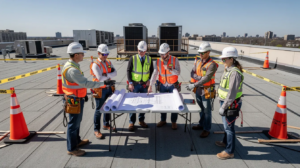
Federal permitting reform remains one of the most important policy debates for contractors that pursue infrastructure, energy, utility, and other projects with a federal nexus in Southern California. If your firm bids work involving federal lands, federal funding, or federal permits, the pace and predictability of federal approvals can affect schedule assumptions, staffing plans, procurement timing, and overall bid confidence.
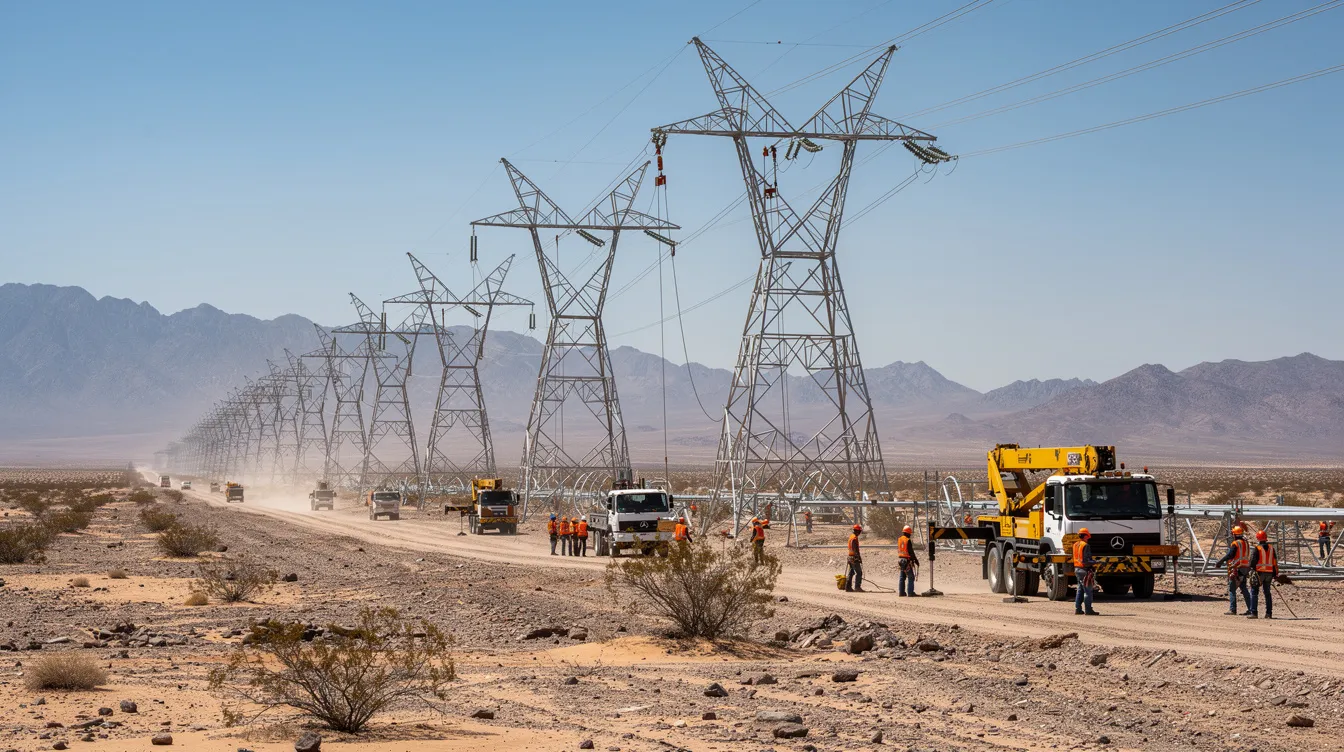
Contractors do not need to be lawyers or policy specialists to feel the effects of a slow permitting system. When a project cannot move forward because federal review is still pending, the business consequences are familiar: uncertain start dates, harder procurement decisions, shifting mobilization plans, and more risk in every estimate.
That matters in Southern California because many regionally important project categories can trigger federal review. Transmission work crossing federal land, energy facilities tied to federal approvals, certain broadband projects, Army Corps-related water work, and wildfire-mitigation projects near federal land managers can all involve timelines outside a contractor’s direct control.
For owners and developers, permitting uncertainty can delay financing and award decisions. For contractors, it can make it harder to lock in crews, sequence subcontractors, and decide how much contingency to carry. That is why the current federal permitting debate is more than a Washington talking point. It is an operational issue for firms bidding complex work in this region.
In practical terms, federal permitting reform is mostly about how agencies conduct environmental review and coordinate approvals for major projects. The central federal statute is the National Environmental Policy Act, not because NEPA itself approves construction, but because it often governs the review process for significant federal actions.
Depending on the proposal or administrative change, reform efforts may focus on:
The policy goal differs by bill or administrative action, but the common theme is predictability. Contractors care less about the political label than about whether federal approvals become more legible, more coordinated, and less likely to stall an otherwise buildable project.
The White House said in a June 30, 2026 release that the administration’s NEPA reforms were intended to streamline federal environmental review and permitting, including greater use of categorical exclusions and other procedural changes meant to move projects more quickly. That release reflects the current executive-branch direction, even though project-level results still depend on agency practice and the facts of each job.
The approved source for this article was ABC National’s October 14, 2026 news release, ABC Welcomes Permitting Reform Bill, Urges Senate Passage. Based on the verified review record, that release said ABC supported S. 5653, the Bipartisan American Affordability and Jobs Act of 2026, and urged the Senate to move permitting legislation forward.
That fits ABC’s broader recent advocacy. ABC has also publicly supported other federal permitting measures and urged lawmakers to reduce redundant delays that complicate project delivery and investment planning.
For ABC SoCal members, the key point is not to memorize bill numbers. It is to recognize that permitting reform remains active federal policy, that ABC National is treating it as a live construction issue, and that any enacted changes could affect how quickly certain federally influenced projects reach the field.
NEPA requires federal agencies to evaluate environmental effects before taking certain major federal actions. In construction, that often means a project cannot fully advance until the responsible agency completes the required level of review and issues its decision.
Contractors often experience that delay indirectly. A solicitation may move forward while approvals are still pending. A client may discuss an aggressive schedule before the review path is fully stable. Long-lead materials may need to be priced before the permit picture is settled. Even when the contractor is not the permit applicant, the contractor still absorbs the consequences if a federal review takes longer than expected.
That is especially relevant on projects involving multiple agencies or parallel reviews. Environmental review, resource-agency consultation, utility coordination, and owner financing decisions do not always move at the same speed. When they drift apart, schedules become softer than they appear on paper.
For that reason, Southern California contractors should treat federal permit status as a core preconstruction issue, not a background legal detail.
Federal permitting reform does not rewrite California’s separate approval systems. That distinction matters.
A project can trigger both federal review under NEPA and state review under the California Environmental Quality Act, or CEQA. The two systems may be coordinated in some cases, but a faster federal process does not automatically eliminate state or local review steps.
The CPUC explains that certain utility permit applications can involve two concurrent tracks: CEQA environmental review and separate review of project need and cost under the Public Utilities Code and General Order 131-E. That means Southern California contractors working on utility or transmission-related jobs may still face multiple layers of review even if federal procedures become more efficient.
California voters are also considering separate state-level CEQA policy questions. For example, Proposition 45 on the November 3, 2026 ballot would amend CEQA to expedite environmental review for specified categories including housing, transportation, water, health facilities, wildfire mitigation, educational facilities, internet access, and clean energy projects. That is a California policy track, separate from federal permitting reform.
The practical lesson is simple: do not treat a federal reform headline as a complete permitting solution for California work. A project can still face meaningful schedule risk at the state, utility, or local level.

Not every project in the region turns on federal permitting. But several categories are more exposed than others.
In Southern California, these categories matter because they overlap with regional demand drivers: grid reliability, water resilience, wildfire response, industrial growth, and infrastructure modernization. For contractors, the question is less whether a sector is promising and more whether the schedule assumptions in a given opportunity match the actual permitting posture.
Before pursuing work with a possible federal trigger, estimators, operations leaders, and business development teams should pressure-test the schedule and permit assumptions early.
These are not abstract legal questions. They affect labor loading, long-lead purchasing, subcontractor commitments, liquidated-damages exposure, and the reliability of your internal go/no-go process.
Even before any specific federal reform package is enacted, contractors can take a more disciplined approach to federally influenced opportunities.
That last point is especially important for ABC SoCal members. A project can move from private to publicly influenced, or from purely local to multi-jurisdictional, faster than teams expect. When that happens, schedule risk and labor-compliance risk can arrive together.
ABC National has made clear that it sees federal permitting reform as a meaningful construction issue. For ABC SoCal, the local value is helping Southern California merit shop contractors translate that debate into practical decisions: which opportunities deserve more scrutiny, where federal changes may improve certainty, and where California-specific review layers still control the schedule.
That also aligns with the broader merit shop case for open competition and predictable project delivery. Clearer approval pathways can expand opportunity, reduce avoidable delay costs, and help qualified contractors compete on performance, planning, safety, and value.
If your company wants to stay ahead of policy shifts that affect bidding, scheduling, and compliance exposure, a practical next step is to follow ABC SoCal’s broader merit shop and advocacy coverage through its existing resource library.
Below are answers to common questions about this topic.
No. Federal reform affects federal procedures. Local zoning, building permits, and California-specific environmental review remain separate unless a law directly changes those processes.
For most contractors, it is NEPA, the National Environmental Policy Act, because it often governs the environmental review path for major federal actions connected to construction projects.
Yes. A project with both federal and state or local triggers may have to move through both systems, even if some work is coordinated.
Because permit delays can still affect bid timing, mobilization, material purchasing, crew scheduling, and contract risk allocation down the chain.
Confirm the exact federal trigger, identify the lead agency, and ask whether the schedule being presented reflects completed approvals or only expected approvals. That early clarification can prevent expensive planning mistakes later.