

Plumbing continuing education represents structured learning designed to keep licensed plumbers, foremen, and contractors current with evolving codes, technologies, and safety standards. For plumbing professionals working across Southern California, staying ahead of these changes isn’t optional—it’s the difference between winning contracts and watching competitors take the work.
The plumbing industry faces constant evolution. When the 2022 California Plumbing Code took effect on January 1, 2023, based on the 2021 Uniform Plumbing Code, contractors who had already invested in code update training hit the ground running. Those who hadn’t scrambled to catch up while inspectors flagged installations based on outdated practices. Beyond code changes, owner and general contractor prequalification requirements increasingly demand documented training in areas ranging from medical gas installation to trenching safety.
From ABC SoCal’s perspective, continuing education helps members maintain a strong reputation with municipalities and major clients while reducing costly rework. This article covers specific requirements and expectations, course types, scheduling strategies, and how ABC SoCal supports both individual plumbers and contractor firms throughout Southern California.
In California, license compliance falls under the Contractors’ State License Board (CSLB). Unlike states such as Texas, Florida, or Utah that mandate specific continuing education hours for license renewal, California does not currently impose universal CE requirements for every C-36 plumbing contractor license. Plumbers can renew their license biennially by paying the fee and submitting documentation without CE proof.
However, this doesn’t mean CE is optional in practice. Local building departments and inspection authorities throughout Los Angeles, Orange, Riverside, and San Bernardino Counties expect plumbers to demonstrate current knowledge of the California Plumbing Code, mechanical code, and cross-connection standards. Inspectors notice when crews work from outdated practices, and failed inspections cost money and reputation.
Private owners, general contractors, and institutional clients often include documented CE as contract language. Hospitals, school districts, and major commercial developers routinely require proof of training in specialized areas before contractors can bid or mobilize.
Typical CE expectations from clients include:
Main categories of CE requirements:
| Category | Description | Typical Frequency |
|---|---|---|
| Code Knowledge | UPC/CPC updates, International Plumbing Code changes | Every 3 years |
| Safety Training | Cal/OSHA compliance, hazard-specific courses | Annually |
| Manufacturer Certifications | Product-specific installation training | As needed |
| Client-Specific Training | Project or facility requirements | Per contract |
Southern California plumbers and contractors have access to several categories of continuing education, each serving different professional development needs.
These classes cover changes to the Uniform Plumbing Code as adopted into California’s building standards. With the 2021 UPC serving as the basis for the 2022 California Plumbing Code, plumbers need to understand amendments affecting pipe sizing, fixture requirements, and water-efficiency standards. Course providers typically offer these in conjunction with code cycle changes, making them essential every three years at a minimum.
Cal/OSHA standards for trenching, fall protection, silica exposure, and confined space entry require specific training. These self-paced or instructor-led courses satisfy regulatory requirements and client expectations simultaneously. Foremen and superintendents particularly benefit from OSHA 30 certification, while field crews should maintain current OSHA 10 credentials.
Hands-on courses covering soldering, brazing, pipe joining, and system testing help journeyman plumbers maintain proficiency and learn new techniques. These classes work best as in-person training where instructors can observe and correct technique.
For plumbing contractors and project managers, courses covering estimating, project management, and labor compliance help improve business operations. ABC SoCal offers supervisor development programs that combine technical knowledge with leadership skills.
Advanced certifications from bodies like ASSE or IAPMO enhance marketability in fields like backflow prevention, medical gas systems, and commercial plumbing design. Industry surveys suggest these credentials can increase employability by 20-30% in competitive Southern California markets.
Plumbing CE comes in several delivery formats, each with distinct advantages depending on your team’s needs and schedules.
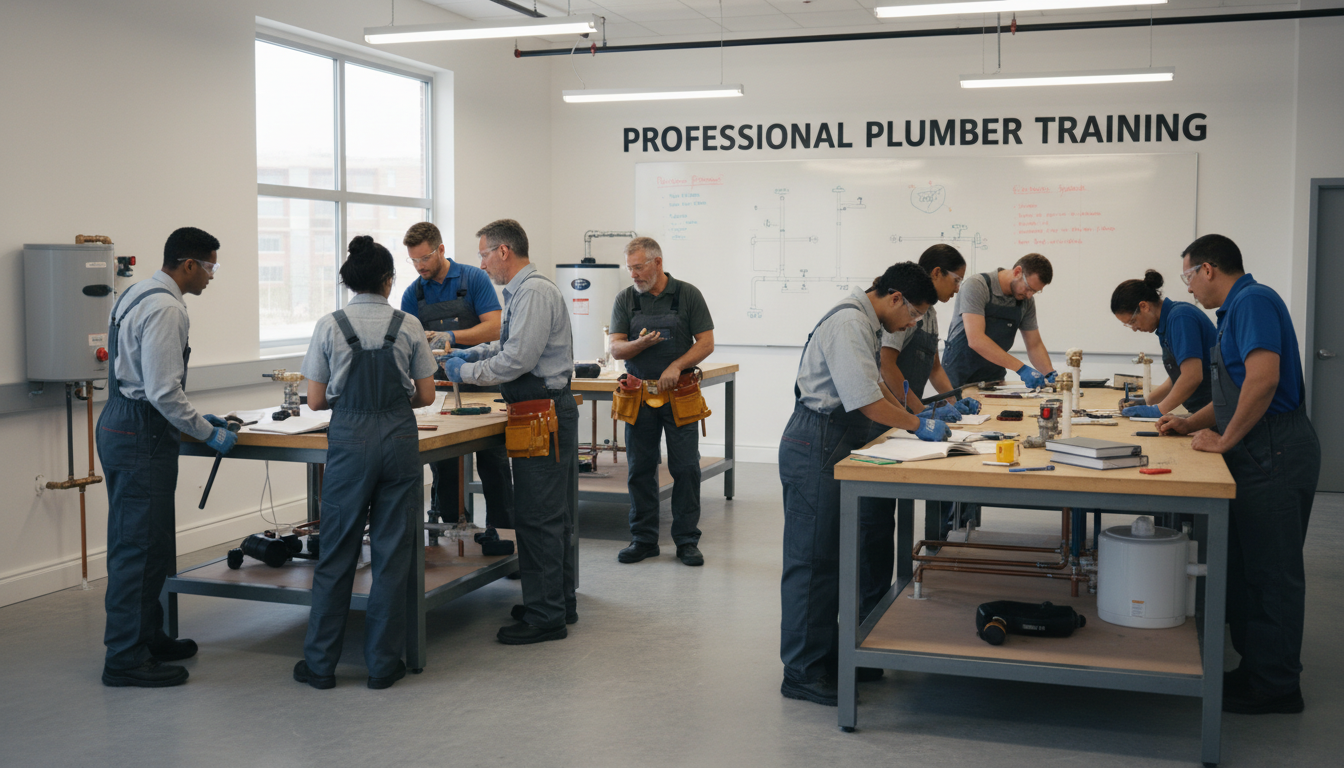
Hands-on plumbing skills require in-person instruction, allowing attendees to practice techniques under instructor supervision. ABC SoCal delivers practical plumbing and safety classes at training facilities in the Los Angeles and Orange County areas. This format works best for:
Live online classes via video conferencing offer real-time interaction with instructors while eliminating travel time. These work well for code update courses, business management topics, and planning-focused content where hands-on practice isn’t required.
On-demand online courses provide maximum scheduling flexibility for busy crews working night shifts or traveling between jobsites. Plumbers can complete modules during downtime and access materials on their own schedules.
Format Comparison:
| Format | Best For | Considerations |
|---|---|---|
| In-Person | Hands-on skills, safety drills, code interpretation | Requires scheduling, travel time |
| Live Virtual | Code updates, management topics | Real-time interaction, flexible location |
| Self-Paced | Flexible schedules, night crews | Verify client acceptance, less interaction |
Important note: Some clients and public agencies specifically require live or proctored training for certain credentials. Contractors should verify acceptable formats before enrolling crews to ensure the training will satisfy contract requirements.
Managing CE for multiple employees requires systematic planning. Plumbing contractors and service companies that approach training proactively avoid last-minute scrambles that disrupt jobsite productivity.
Align your CE schedule with known events that drive training needs:
You don’t need expensive software to maintain compliance. A well-organized spreadsheet or basic LMS tool can log:
ABC SoCal helps members with course planning, group registration, and documentation storage, reducing administrative burden for company owners and office managers who already have enough on their plates.
ABC SoCal serves Southern California contractors as a non-profit merit shop trade association providing apprenticeship, CE, safety training, and workforce development specifically tailored to plumbing and related trades. Unlike national online-only CE providers, ABC SoCal combines local expertise with hands-on training and advocacy for contractors working in this region.

Contractor members receive advantages beyond course access:
ABC SoCal’s training differs from generic online CE by emphasizing practical application in Southern California’s specific regulatory environment. Instructors understand local inspection practices, regional code amendments, and the realities of working across LA, Orange, Riverside, and San Bernardino Counties.
Ready to explore plumbing CE options? Contact ABC SoCal to learn about upcoming class dates, membership information, and options to host training at your own facility. The team can help you build a CE plan that keeps your plumbers current and your company competitive for the work you want to pursue.
Unlike states such as Colorado, Utah, or Texas that mandate specific continuing education hours for license renewal, California does not currently impose a universal CE requirement for every plumbing license. The CSLB allows plumbers to renew biennially by paying the $400 fee and submitting documentation without CE proof.
However, this doesn’t mean CE is unnecessary. Many general contractors, public agencies, and institutional clients effectively require ongoing training as part of their contract or prequalification processes. Plumbers must still comply with the latest California Plumbing Code and Cal/OSHA rules, and completing continuing education courses remains the most practical way to stay current and competitive.
Plumbers should attend a formal code update course at least every three years, timed with the Uniform Plumbing Code and California Plumbing Code revision cycles. If your local jurisdiction adopts amendments affecting design or installation methods mid-cycle, consider additional training sooner.
Tie code refreshers to your major project types. Healthcare, education, and multifamily projects face especially high inspection scrutiny, so plumbers working these sectors benefit from staying ahead of code changes rather than learning them on the job site.
Yes, many trade associations, including ABC SoCal, arrange dedicated or on-site training for individual companies. This approach works particularly well for safety refreshers, foreman training, and project-specific topics where you want your entire team aligned.
Contact ABC SoCal directly to discuss group size, preferred dates, and whether training works better at an ABC SoCal facility or at your contractor’s shop or jobsite. Private classes can often be scheduled on dates that minimize disruption to your project schedules.
Maintain comprehensive records for each employee, including:
Store records in both digital and hard-copy formats for redundancy. Keep documentation for at least five years, as owners, general contractors, insurance carriers, and regulatory agencies may request proof of training during prequalification reviews or after workplace incidents.
Formal apprenticeship training in plumbing includes classroom and hands-on components that function as structured continuing education as apprentices progress toward journeyman level. ABC SoCal’s Plumbing Apprenticeship Program ensures graduates enter the workforce with up-to-date code knowledge and safety training already complete.
Many contractors use ongoing apprenticeship classes as the foundation of their broader CE strategy, with apprentices maintaining current knowledge through their program requirements while journeymen and foremen attend periodic refresher courses to stay aligned with the latest standards.







