

Fall protection in the construction sector is not just about safety—it’s about preserving lives, securing livelihoods, and upholding a company’s reputation. The gravity of this concern is underscored by the fact that falls contribute to nearly a third of all construction site fatalities. By diligently adopting effective fall protection strategies, we can substantially mitigate the risks of fatal falls and injuries.
Disregarding the need for proper fall protection protocols has far-reaching consequences beyond compliance issues. It can lead to severe or even fatal injuries among workers, legal repercussions, and financial losses due to lawsuits and penalties.
To mitigate these risks, companies must adopt comprehensive strategies, including training programs focusing on hazard recognition and the practical use of protective equipment such as harnesses or guardrails. Let’s break down what this looks like:
| Action Steps | Description |
|---|---|
| Safety Training Programs: | Educate employees about recognizing hazards associated with heights and how best to use personal protective equipment (PPE). |
| Harnesses & Guardrails Use: | Make sure you’re using safety gear, like harnesses, when doing risky stuff where you could fall. Put up guardrails on high platforms or open edges to stop accidental slips. |
Fall hazards on construction sites pose a significant risk, often resulting in injuries and even fatalities. Taking proactive steps to reduce these dangers and establish a safer work atmosphere is essential. Let’s explore some key strategies and guidelines.
“When it comes to ladder safety measures, the right selection is crucial. The size, type, and weight capacity of the ladder should align with job requirements.”
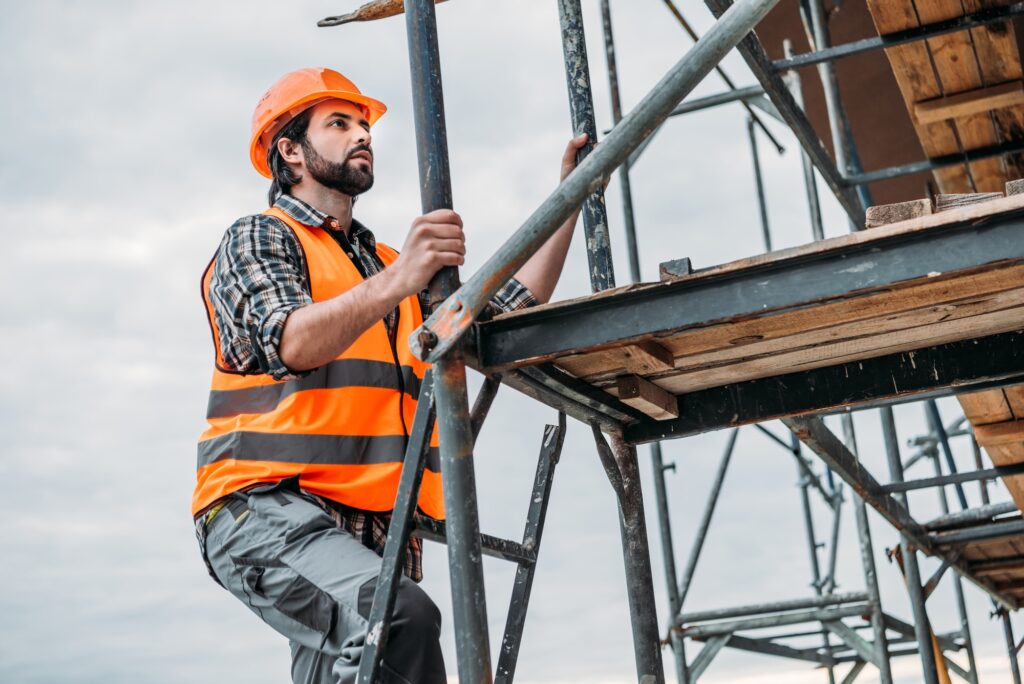
However, it’s not just about choosing a sturdy ladder; proper usage is equally important. Maintaining three points of contact while on the ladder, i.e., two hands and one foot (or vice versa), is essential to prevent falls, a major source of injury in construction sites.
Unprotected floors present another significant risk at construction sites. Openings in walls or floors without guardrails can lead to dangerous falls if not properly marked with warning signs until they are secured.
Safety training courses focusing on mitigating these risks are increasingly necessary due to the high-risk nature of construction work environments. These courses equip workers with the knowledge and skills to effectively identify and address potential fall hazards.
Working safely requires continuous awareness of potential fall hazards on-site and strict adherence to the abovementioned preventive measures. By prioritizing job site safety and staying informed, we can prevent construction falls and create a safer working environment.
Keeping your workforce safe reduces accidents, eliminates OSHA fines, and reduces your workers’ compensation costs, making your business more productive.
Learn MoreFall-related incidents can be significantly reduced by implementing an effective fall protection plan. This involves providing proper safety training and ensuring the correct usage of equipment.
Safety is of utmost importance in the construction industry. To ensure that every worker understands their role in maintaining site safety, it is crucial to implement regular and thorough safety training programs.
It is essential to prioritize creating a comprehensive safety training strategy that equips workers with knowledge about potential hazards, avoidance techniques, and the necessary steps to take in case of an incident. This strategy should be simple yet comprehensive, allowing the team to refer back to it for continuous learning.
The right tools are vital in preventing falls on construction sites. Equally essential is guaranteeing that personnel understand how to utilize these tools correctly. So, what’s the best approach?
Maintaining high safety standards at all times is crucial for your organization’s reputation and the quality of work delivered.
A well-designed fall protection plan should not stop at implementation. It requires constant evaluation and improvement. But why is this important?
This iterative approach helps ABC SoCal members consistently deliver work safely by staying up-to-date with best practices for preventing construction-related falls.
Fall prevention might seem daunting in the construction industry, but it is quite manageable. Let’s explore how toolbox talks and protection training can help you effectively prevent falls and ensure job site safety.
You may wonder How we navigate safety hazards and raise awareness about fall risks among workers. The answer lies in toolbox talks – concise discussions on specific safety topics.
The beauty of these sessions is that they are tailored to address key aspects such as correctly using personal protective equipment (PPE), recognizing warning signs, and identifying potential fall hazards. This simple yet effective strategy ensures that your crew stays safe when working at heights, whether it’s roofing or scaffolding tasks.
You are making regular toolbox talks an integral part of your routine can significantly improve site safety.
To guarantee the highest level of security, it’s not just how much training is given that counts; the caliber of instruction is equally essential. That’s where structured protection training courses come into play.
These sessions go beyond daily briefings by delving deeper into best practices and regulatory standards surrounding fall protection systems such as harnesses, lifelines, and anchor points.
A culture that prioritizes worker safety doesn’t develop overnight; consistency is key. By integrating continuous learning through toolbox talks and periodic refresher training into everyday routines, you can keep fall prevention strategies fresh in the minds of your crew members.
With these steps, ABC SoCal sets up its members to not just land jobs but also to carry them out safely in our community.
Fall protection equipment is essential in construction safety, playing a vital role in preventing falls on site. It’s not just about having the gear; it’s also about choosing appropriate personal fall arrest systems that fit and function well.
The ability to pick out suitable protection equipment can drastically improve your safety measures. Although AI technology has revolutionized many industries, human judgment remains irreplaceable when assessing the quality and compatibility of such critical devices.
A harness is more than just a piece of fabric you strap onto your body – it stands between you and potential fall injuries. Just like Express Writers provides numerous services beyond SEO blog writing for small businesses, an ideal harness offers comfort without compromising strength or adjustability.
Picking out one with an adequate weight capacity that matches or exceeds the combined weight of workers and tools should be prioritized as part of this selection process.

Lanyards are not simply connectors; they ensure mobility while keeping workers secure at their anchorage points. They’re akin to content trends – constantly adapting to movements up or down by automatically adjusting their lifelines.
This reduces trip hazards while providing flexibility across various work heights – a hidden gem within any personal fall arrest system.
Fall protection in construction is a crucial concern, especially considering that falls are one of the leading causes of worker fatalities. To combat this, OSHA requires rigorous adherence to its regulations on fall prevention.
What are the benefits of sticking to these guidelines? High safety standards at job sites, fewer fatal falls, and a safer working environment for all involved. Indeed, these measures are something we can all agree on.
You might be wondering what exactly these measures entail. It’s not just about donning a harness or installing guardrails – though those certainly play a part.
In addition to physical barriers like railings and toe-boards around any edge that could lead to a fall, there’s also an emphasis on continuous employee training. Hence, they’re aware of potential dangers associated with their tasks.

Surely it’s enough just following rules. Maintaining site safety goes beyond merely ticking off compliance boxes; regular inspections for potential hazards help identify risks before accidents occur.
This proactive approach is vital because it helps catch problems early instead of waiting until after an accident. After all, prevention is better than cure, as they say.
Beyond legal obligations lie ethical considerations; protecting human life should always be paramount over any other business interest. Strictly following OSHA regulations ensures contractors conduct their operations ethically while contributing positively towards community betterment by ensuring worker well-being. The moral responsibility thus extends beyond just abiding by law enforcement directives.
Falls can be prevented in construction through proper training, personal protective equipment (PPE), adherence to safety regulations, and routine site inspections.
There are five effective ways to prevent falls in construction:
The Occupational Safety and Health Administration (OSHA) has established guidelines and standards to prevent falls in the workplace. While the specific requirements may vary depending on the type of work being performed and the environment, here are some general guidelines and standards that OSHA has put in place to prevent falls:
General Duty Clause: Under the General Duty Clause, Section 5(a)(1) of the Occupational Safety and Health Act of 1970, employers are required to provide a workplace free from recognized hazards that are causing or are likely to cause death or serious physical harm to employees. This includes hazards associated with falls.
Guardrail Systems: OSHA requires that when workers are exposed to a vertical drop of 6 feet or more, the employer must provide a guardrail system, safety net system, or personal fall arrest system to protect workers.
Hole Protection: Employers must protect workers from falling through holes (including skylights) more than 6 feet above a lower level by using covers, guardrail systems, or a personal fall arrest system.
Personal Fall Arrest Systems: These are systems used to stop a worker from falling. They typically include a body harness, anchor point, and a connector such as a lanyard or lifeline.
Safety Net Systems: Safety nets must be installed as close as practicable under the walking/working surface on which employees are working and never more than 30 feet below such levels.
Training: Employers must provide training for each worker who might be exposed to fall hazards. The training should enable each worker to recognize the hazards of falling and train them in the procedures to minimize these hazards.
Stairways and Ladders: Any stairway or ladder that is a point of access to and from places of work must meet OSHA’s requirements unless not feasible. This includes specifications about riser height, tread depth, and other design specifics.
Rooftop Work: Workers on rooftops with unprotected sides and edges 6 feet or more above a lower level must be protected from falling by guardrails, safety nets, or personal fall arrest systems. If the roof is sloped, there might be additional requirements.
Scaffolding: Scaffolds must be designed safely and have guardrails, midrails, and toeboards to prevent falls. They must also be inspected regularly.
Dockboards (Bridge Plates): Dockboards must be designed and constructed to prevent moving vehicles from running off the edge.
Walking-Working Surfaces: Employers are required to ensure that walking-working surfaces have the strength and structural integrity to support workers safely.
Fall Protection Plans: For certain types of work, if the use of conventional fall protection methods is infeasible or creates a greater hazard, employers must develop and implement a written fall protection plan.
It’s important to note that the specific OSHA requirements can vary based on the industry, type of job, and other factors. Employers should always refer to the appropriate OSHA standard or regulation that applies to their specific situation and consult with safety professionals when in doubt.
Lastly, OSHA regulations and standards can be subject to updates and revisions, so it’s essential to stay current with the latest requirements.
Preventing construction falls is crucial in the industry. Understanding fall hazards and implementing comprehensive protection plans can significantly reduce incidents. Ladder safety measures, toolbox talks, and regular training sessions are vital to ensuring worker safety. Selecting appropriate personal protective equipment, such as harnesses and lanyards, can also make a huge difference. Routine inspections play an underrated but significant role in fall prevention. Compliance with OSHA regulations maintains high job site standards and saves lives.
If you’re committed to enhancing your construction practices for better community development, consider partnering with ABC SoCal. We equip our members with the best resources and tools to develop people who work safely, ethically, and profitably. Join us today at ABC SoCal, where we lay the groundwork for California contractors aiming for excellence in their field. Together, let’s build safer environments that benefit everyone involved!
ABC SoCal lays the groundwork for California contractors and equips them with the best resources and tools for success.
Join Now






