If you build, maintain, or pursue work at pharmaceutical, biotech, or life science facilities anywhere in Southern California, SB 1185 is now the most consequential bill moving through the California legislature this session. This update is intended for contractors, project managers, and stakeholders in the Southern California construction industry who may be affected by new workforce mandates. Here is what it does, where it stands, and what you need to do before June 10.
Key Takeaways
SB 1185 is a California bill that would extend the state’s skilled and trained workforce mandate to privately owned facilities engaged in the research, development, or production of pharmaceutical products, directly reshaping the competitive landscape for merit shop contractors across Southern California.
- SB 1185 has cleared every Senate hurdle. Authored by Senator Dave Cortese, the bill passed the Senate Labor, Public Employment and Retirement Committee on a 4–1 vote, cleared Senate Appropriations after the May 4 hearing, passed the full Senate, and is now before the Assembly with an Assembly Labor and Employment Committee hearing set for June 10.
- The mandate covers the entire facility life cycle. The bill would require a skilled and trained workforce, registered apprentices, and graduates of state-approved apprenticeship programs, for construction, alteration, demolition, installation, repair, and ongoing maintenance work at pharmaceutical facilities.
- ABC SoCal opposes SB 1185. The mandate increases project costs and risk, delays the delivery of critical pharmaceutical facilities, and pushes work and investment out of California, without documented evidence of systemic safety failures to justify a statewide mandate of this scale.
- The window to act is narrow. Southern California contractors performing or pursuing pharmaceutical and life science projects must engage immediately through ABC SoCal’s advocacy channels, ABC PAC, and the Free Enterprise Alliance before the June 10 Assembly Labor hearing.
What SB 1185 Actually Does – Plain-English Overview
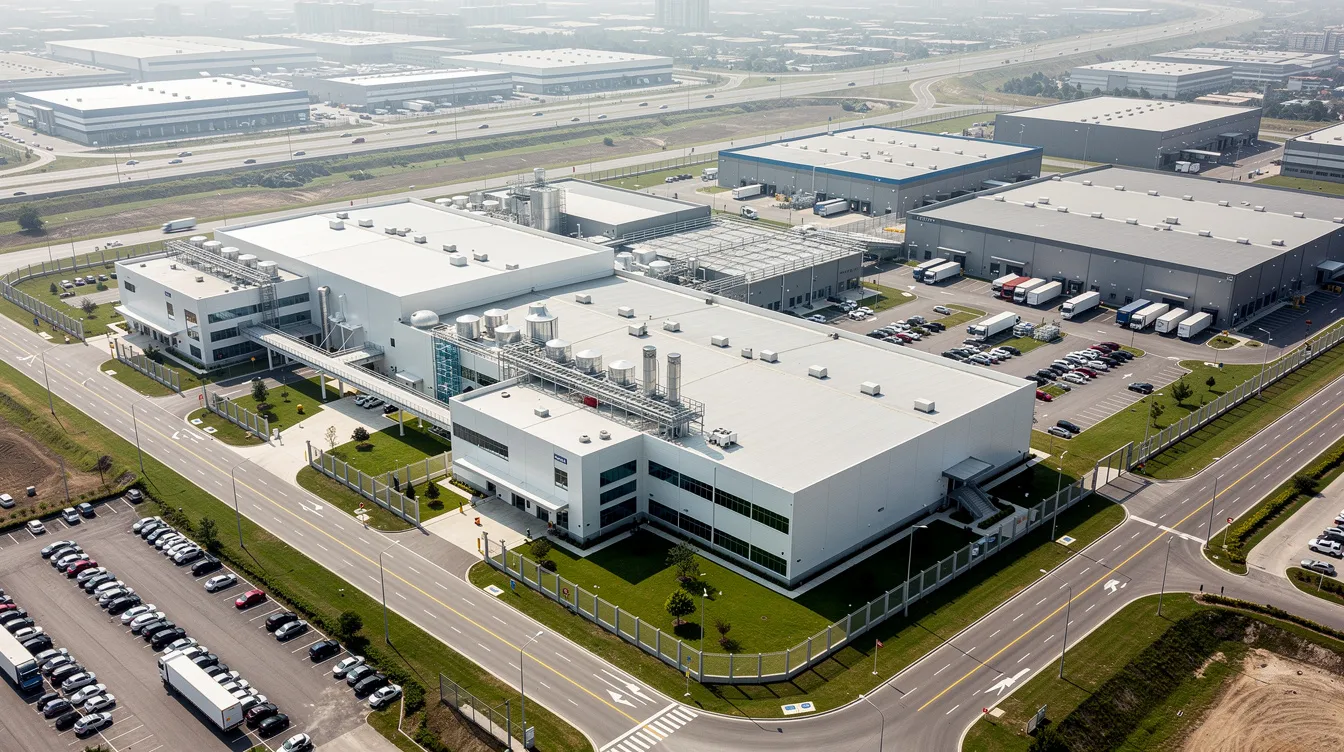
SB 1185, introduced in the 2025–26 session, proposes a new chapter in the California Health and Safety Code-referred to as Chapter 6.98-that would extend the state’s skilled and trained workforce framework to any facility used for the research, development, or production of pharmaceutical products. The bill targets facilities classified under NAICS codes 325411 and 325412 (pharmaceutical and medicinal manufacturing) as of January 1, 2025. This is not a narrow pilot. It is a sweeping mandate designed to govern how every contractor and subcontractor staffs onsite work at covered sites.
- The bill covers construction, alteration, demolition, installation, repair, and maintenance work over the entire life cycle of pharmaceutical facilities, not just initial build-outs.
- The requirement applies to owners, operators, and developers, who must ensure that their contractors and subcontractors performing on-site work deploy a skilled, trained workforce across all apprenticeable building and construction trades.
- Under the framework, a trained workforce means workers are either registered apprentices or skilled journeypersons, and among those journeypersons, at least 60% must be graduates of state-approved apprenticeship programs, meeting specific apprenticeship graduation percentage requirements.
- The bill imposes a monthly report demonstrating compliance to the labor commissioner, along with civil penalty exposure: up to $5,000 per month for a first violation, and up to $10,000 per month for a second or subsequent violation within three years.
- Key sectors affected include pharmaceutical manufacturing plants, biotech research labs, cleanrooms, validated processing suites, and other life science facilities that anchor Southern California’s medical supply chain.
Where SB 1185 Stands in the Legislature Right Now
Timing is everything. The bill is moving fast, and the next decision point is days away.
- SB 1185 was introduced by Senator Dave Cortese of San Jose and referred to the Senate Labor, Public Employment and Retirement Committee, which approved it on a 4–1 vote.
- The bill advanced to the Senate Appropriations Committee, cleared that committee after its May 4 hearing, and then passed the full Senate.
- SB 1185 is now in the California Assembly and has been assigned to the Assembly Labor and Employment Committee, chaired by Assemblymember Liz Ortega.
- The next decision point: the Assembly Labor Committee hearing scheduled for June 10, a narrow window for Southern California contractors to be heard.
- If the bill passes Assembly Labor, it moves through Assembly Appropriations and then to the full Assembly floor. If enacted, the act would begin shaping project requirements for 2026 and beyond.
Why SB 1185 Matters for Southern California Merit Shop Contractors
Southern California is a national hub for pharmaceutical, biotech, and life science facility work. From validated cleanroom suites in Irvine to biotech campuses in Thousand Oaks, manufacturing expansions in the Inland Empire, and research facilities across greater Los Angeles, this region’s construction industry is deeply intertwined with the life science supply chain. That exposure makes local merit shop contractors uniquely subject to SB 1185’s reach.
- Counties at risk: Los Angeles, Orange, Riverside, San Bernardino, and Ventura-the core of ABC SoCal’s membership footprint-contain heavy concentrations of pharmaceutical and biotech facility work.
- Trades and scopes most exposed: Electrical and low-voltage (validated power and controls), plumbing and process piping, HVAC and sheet metal for cleanroom environments, and structural and architectural trades for high-spec facility construction.
- Capital and ongoing work are both covered: The bill applies to both capital projects (new construction, major renovations) and long-term maintenance work (routine shutdowns, equipment changeouts, tenant improvements), affecting revenue pipelines and staffing models across the project life cycle.
- Private market, public-style mandate: This is not about public employment or public works. The bill directly targets privately owned facilities, pulling a private market segment into a compliance framework historically reserved for government-funded projects.
- Bid list reshuffling: Owners seeking to avoid penalty exposure will request contractors who can certify compliance. That could re-sort bid lists, squeeze mid-sized merit shop firms, and advantage entities aligned with union apprenticeship pipelines, regardless of actual project performance.
The Skilled and Trained Workforce Requirement Explained
California’s skilled and trained workforce statutes are not new. Existing law requires STW compliance for certain public works, refineries, facilities that manufacture hydrogen, operations involving carbon dioxide capture, certain petroleum-related activities, and other high-hazard sites involving specified chemicals. SB 1185 would extend that same framework into private pharmaceutical facility construction and maintenance, a significant expansion in scope under the safety code.
A “skilled and trained workforce” means that contractors and subcontractors must use workers who are either registered apprentices or skilled journeypersons, and at least 60% of the skilled journeypersons must be graduates of state-approved apprenticeship programs.
- STW rules require that a defined percentage of journey-level workers on each contractor or subcontractor’s crew be graduates of state-approved apprenticeship programs. Each worker relied upon to meet that threshold must hold a certificate of completion. The balance of the crew must be registered apprentices or workers paid at least a rate equivalent to the prevailing journeyperson wage with comparable on-the-job hours and other criteria.
Contractors must report their compliance with these requirements to the labor commissioner monthly.
- The monthly reporting obligation requires owners and prime contractors to submit identifying information for each worker counted toward the apprenticeship-graduate threshold, including the worker’s full name, apprenticeship program name, location, and graduation date. These reports become public records under the California Public Records Act.
- Enforcement includes a civil penalty per month of non-compliance: the labor commissioner determines penalties up to $5,000 for a first violation and $10,000 for a subsequent violation, though the labor commissioner may reduce or waive penalties under specified circumstances. Violations are also subject to civil wage and penalty assessments under Labor Code section 1741.
Violators of the new workforce requirements face significant civil penalties, up to $10,000 for workforce violations.
- For contractors, this means HR, payroll, and project management teams need systems to track each worker’s apprenticeable occupation status, maintain documentation, and respond to department audits-overhead that hits small and mid-sized firms hardest.
- While the bill’s author frames the STW expansion as a safety measure to guarantee a trained workforce, it effectively redefines “qualified” by compliance credentials and paper criteria rather than by site-specific experience delivering complex validated pharmaceutical work.
Proponents’ Case: Safety and Public Health in Pharmaceutical Facilities
Senator Cortese and supporters of SB 1185 present the bill as a public health and safety measure. Their arguments deserve a fair hearing before we explain why they fall short.
- Proponents describe pharmaceutical facilities as high-hazard environments in which contamination control, biohazard exposure, the security of controlled substances, and continuous operations demand elevated workforce standards.
- Supporters argue that applying the same skilled and trained workforce rules used in other sensitive industries-refineries, facilities handling petroleum-related activities, and certain public works-will reduce contamination risks, protect public health, and improve emergency preparedness.
- The Senate Labor, Public Employment, and Retirement committee’s approval is framed by proponents as an endorsement of higher safety and labor standards at pharmaceutical sites, among other things, a recognition that these environments carry unique risks.
- Backers claim that standardized apprenticeship-based training ensures every worker on site has the necessary skills and safety awareness before they enter sterile or validated environments, and that existing apprenticeship programs can meet the demand.
These arguments carry surface appeal. The question is whether a statewide legislative mandate is the right mechanism or creates more problems than it solves.
The Merit Shop Perspective: Cost, Speed, and Competitiveness Risks
ABC SoCal’s merit shop philosophy is straightforward: competition based on performance, safety, and value; open access to work for all qualified contractors; and genuine workforce development through choice-driven apprenticeship and training. SB 1185 undermines each of these principles.
- Cost escalation: Extending STW requirements to private pharmaceutical facilities will raise construction and maintenance costs in an already fragile cost environment. Contractors who must obtain apprenticeship-graduate ratios will face higher labor costs, and those costs flow directly into project budgets for research labs, cleanrooms, and manufacturing suites.
- Delivery delays: New reporting, disclosure, and penalty bureaucracy will slow project delivery, particularly during commissioning, validation, and shutdown-sensitive maintenance work, where every day of delay has downstream consequences for the medical supply chain.
- Competitiveness risk: Life science and pharmaceutical companies make site-selection decisions based on speed, cost, and certainty. A California-only mandate of this extent creates a strong incentive to place future facility expansions in Arizona, Texas, North Carolina, or other states without STW mandates, taking jobs and investment with them.
- Paper credentials over proven performance: Redefining a qualified workforce around compliance metrics-ratio targets, graduation certificates-rather than demonstrated experience delivering complex GMP and FDA-regulated facilities, undermines owner choice and contracting flexibility.
- Project-level impact: Consider a Southern California contractor bidding a cleanroom build-out. Under SB 1185, that firm faces higher bid prices to staff to the 60% threshold, longer schedules if qualified workers are unavailable locally, and a narrower subcontractor pool-all while competing against firms in states where no such mandate exists.
What Really Drives Safety and Quality in Pharmaceutical Environments
Real safety and quality in pharmaceutical construction and maintenance come from culture, leadership, and operational discipline, not workforce classifications alone.
- High-performing pharmaceutical project safety starts with leadership commitment from the owner and construction manager, rigorous pre-task planning and method statements, daily job hazard analyses, and active supervision on the floor.
- Mentoring, structured on-the-job training, and clear accountability build a genuinely skilled workforce. This includes integration with manufacturer training on process equipment, cleanroom protocols, and validated system work that no generic apprenticeship curriculum fully covers.
- Owner-driven standards, validation protocols, and standard operating procedures for working in controlled environments set the bar for behavior, cleanliness, and documentation. These systems perform regardless of whether a worker’s credentials say “apprentice” or “experienced journeyperson.”
- Sponsors of SB 1185 have not demonstrated a pattern of systemic safety or quality failures specifically tied to non-STW contractors in pharmaceutical facilities. Without that evidence, the bill amounts to a solution in search of a problem.
- Many of the region’s most technically demanding pharma projects have been delivered by merit shop teams meeting or exceeding safety benchmarks through internal programs and culture, not statutory STW labels.
Addressing the Real Workforce Need: ABC SoCal’s Training and Apprenticeship Pipeline
The pharmaceutical and life science sectors absolutely need a highly trained workforce. The right answer is investment in training and development, not rigid mandates that limit who can perform the work.
- ABC Southern California operates state and federally approved apprenticeship programs in electrical, plumbing, sheet metal, and low voltage-the core construction trades for pharmaceutical facilities.
- ABC SoCal’s apprenticeship and continuing education programs build a genuinely skilled and trained workforce through classroom instruction, on-the-job training, safety education, and mentorship, preparing workers to perform at the highest level on validated pharmaceutical projects.
- These programs can be tailored to address workforce development needs specific to pharmaceutical contractors: cleanroom construction, process piping, instrumentation, and facility maintenance work aligned with life science standards.
- ABC SoCal’s merit shop training model allows both large and mid-sized firms to grow a trained workforce without being locked into a single labor model, supporting flexibility and competitiveness in the private pharmaceutical market.
- This is the constructive path to a genuinely skilled workforce-one that respects contractor choice, invests in people, and delivers results, rather than SB 1185’s compliance-driven approach that measures workforce quality by a ratio on a monthly report.

Business Planning: How Contractors Should Prepare if SB 1185 Advances
Even while opposing SB 1185 through every available channel, prudent firms should begin evaluating the operational impact if the bill is enacted. Preparation is not surrender-it is responsible management.
- Map your exposure. Identify your current and projected portfolio of pharmaceutical, biotech, and life science work across Orange, Riverside, San Bernardino, Los Angeles, and Ventura counties.
- Audit your workforce. Review current workforce composition against STW expectations: what percentage of your journey-level workers are apprenticeship graduates? How many registered apprentices do you carry? Where are the gaps by trade?
- Upgrade internal systems. If a subcontractor fails to document worker status on a covered project, penalties accrue to that subcontractor, and the reputational risk falls on the prime. Ensure HR and project controls can track apprenticeship status, certifications, and project-by-project compliance documentation.
- Invest in training now. Engage with ABC SoCal’s apprenticeship and training programs to build a stronger pipeline that supports both compliance and project performance goals, regardless of legislative action.
- Protect client relationships. Early planning positions your firm to maintain key client relationships in the pharmaceutical and life sciences markets, even amid a changing regulatory landscape. Owners will request proof of workforce readiness and be able to deliver it.
ABC SoCal’s Advocacy Strategy and How to Engage Before June 10
The Assembly Labor and Employment Committee hearing on June 10 is the immediate focus. This is the moment to act, not after the vote.
- ABC SoCal’s advocacy framework: Educating lawmakers on the impacts of cost, schedule, and competitiveness; providing real project case studies; and collaborating with statewide merit shop partners and industry allies to present a unified front.
- Member tools: Visit ABC SoCal’s political advocacy hub for alert sign-ups, the ABC Action App, and step-by-step guidance on contacting legislators. Everything you need to submit your position is there.
- Specific actions you can take this week:
- Submit position letters to Assemblymember Liz Ortega and Assembly Labor Committee members
- Participate in coordinated phone and email campaigns
- Share project-level cost, schedule, and workforce impact data with ABC SoCal’s government affairs team
- Amplify your voice: The ABC PAC and the Free Enterprise Alliance play a critical role in supporting pro-construction policy champions and funding broader public awareness efforts around mandates like SB 1185. Your participation matters.
- Prioritize engagement now. Contractors with significant pharmaceutical or life science portfolios cannot afford to sit this out. Decisions made this session in the legislature will shape the cost, feasibility, and competitiveness of your future projects in California.
Key Takeaways for Southern California Construction Leaders
SB 1185 represents a fundamental shift: extending STW mandates from public works and heavy industrial settings into privately owned facilities engaged in pharmaceutical production, research, and development. The bill is at a critical hearing before the Assembly Labor Committee on June 10. The stakes are cost, speed, and competitiveness for Southern California’s construction community.
ABC SoCal offers both sides of the solution: a robust, approved apprenticeship and training pipeline that produces a genuinely skilled and trained workforce, and a focused advocacy operation to oppose unnecessary and harmful mandates before they become law.
Assign internal responsibility for monitoring SB 1185. Plug into ABC SoCal updates. Make sure your company’s perspective is represented before the legislature acts. If this industry speaks with a clear, unified voice now, lawmakers can support both worker safety and California’s standing as a life science leader, without imposing rigid one-size-fits-all workforce mandates that drive work, investment, and opportunity out of the state.
Frequently Asked Questions
Does SB 1185 apply only to new construction or also to maintenance work?
SB 1185 is written to cover the full project life cycle: construction, alteration, demolition, installation, repair, and ongoing maintenance at facilities used for the research, development, or production of pharmaceutical products. That means routine shutdowns, equipment swaps, tenant improvements, and service work performed at existing pharmaceutical facilities could all be subject to the skilled and trained workforce requirement, not just ground-up construction projects.
Are public projects the primary target of SB 1185, or does it also apply to private facilities?
Unlike traditional public works mandates, SB 1185 extends to private pharmaceutical, biotech, and life science facilities by imposing obligations directly on private owners, operators, and developers. This expansion into private markets is a key reason ABC SoCal views the bill as a significant shift that affects private contracting strategies and client relationships across Southern California.
What types of contractors are most affected by the Skilled and Trained Workforce requirement under SB 1185?
Any contractor or subcontractor performing work in an apprenticeable occupation at pharmaceutical facilities could be affected. The heaviest impact falls on electrical, low-voltage, plumbing, process piping, HVAC, sheet metal, and general building contractors. Specialty contractors supporting cleanrooms, validated utilities, controls, and mechanical systems in pharmaceutical environments should pay especially close attention to the bill’s progress and begin evaluating their workforce composition now.
How can my company build a compliant yet flexible trained workforce without relying solely on union programs?
ABC SoCal’s state- and federally approved apprenticeship programs and continuing education offer a primary pathway for merit shop contractors to develop a skilled, trained workforce that meets owner expectations and regulatory standards. Participating in ABC SoCal training allows firms to maintain open-shop flexibility while investing in structured education, safety, and career development for their teams, without being forced into a single labor model.
What is the most important step my company should take before the June 10 Assembly Labor Committee hearing?
Connect immediately with ABC SoCal’s political advocacy resources to submit opposition, share project impact stories, and coordinate outreach to legislators on the Assembly Labor and Employment Committee. Designate an internal point person to track SB 1185 updates, work with ABC SoCal’s government affairs team, and brief company leadership on both advocacy opportunities and potential operational implications if the bill advances.