

Construction security is often treated as something to tighten later, once the site is active and valuable equipment is already on the ground. For isolated or lightly staffed projects, that is backward.
The highest-value decisions usually come before full mobilization: where the real boundary will be, which gate will stay active, where materials can be stored, how lighting and temporary power will support visibility, and who responds after hours if something goes wrong.
This narrower focus matters because ABC SoCal already publishes broader safety and site-security content. This article is designed to do something different: give Southern California contractors a short pre-mobilization security planning checklist they can use before the site gets busy.
That makes it most useful for general contractors, superintendents, project managers, and safety leaders managing remote pads, corridor work, or constrained urban sites across Los Angeles, Orange, Riverside, San Bernardino, and Ventura Counties.
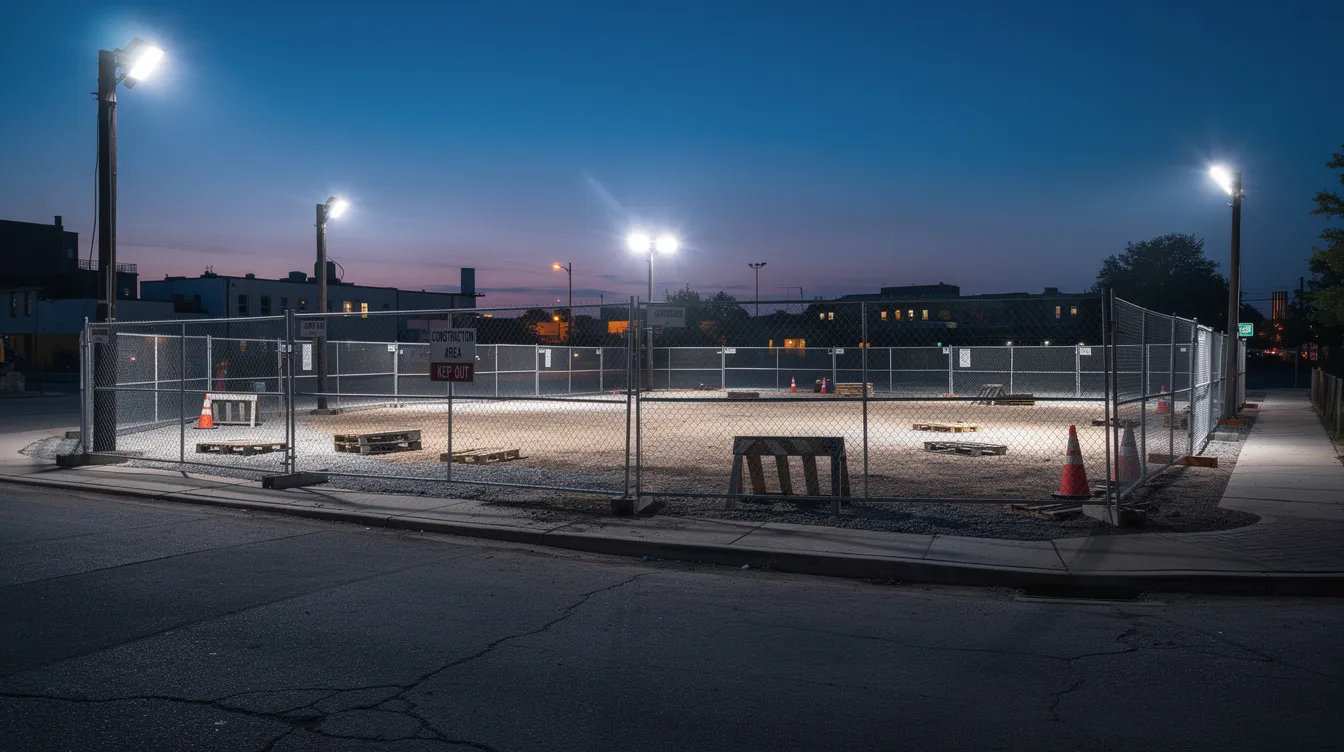
A security plan is not the same as a jobsite safety plan.
Safety planning addresses hazards facing authorized workers during construction activity. Security planning focuses on site control: who can enter, where they enter, what is exposed near the perimeter, and what happens when the project is unattended.
Those systems overlap. They are not interchangeable.
That distinction matters in California because Cal/OSHA guidance for construction employers points readers to the Construction Safety Orders, Electrical Safety Orders, and General Industry Safety Orders as core parts of the regulatory framework. The Cal/OSHA Pocket Guide for the Construction Industry also states that most construction sites are multi-employer worksites, meaning more than one employer can share responsibility for safety at the same project.
In practice, that means security decisions should be coordinated early with the field safety process, especially when they affect:
For broader day-to-day worker-hazard guidance, contractors can review ABC SoCal’s construction safety tips for every job site. This article stays focused on what to decide before that larger safety routine begins.
Use this as a planning tool before the first major delivery or crew mobilization. It is general operational guidance, not legal advice, and not a substitute for project-specific insurer, fire-code, owner, or local-jurisdiction requirements.
Do not assume the property line and the controllable boundary are the same thing.
Before mobilization, walk the edges of the site and identify:
Southern California example: a remote Inland Empire site may have long setbacks and limited visibility, while a Los Angeles infill site may have short edges but more neighboring activity and more shared access pressure.
Many site-control problems start with too many convenience entrances.
Before mobilization, decide:
A smaller site may need nothing more complex than one controlled gate, clear signage, and disciplined key control. A larger or shifting site may justify keypad or monitored entry. The useful decision is not which technology sounds best. It is whether the team can manage the procedure consistently.
Plan storage before the first attractive delivery arrives.
Ask:
This is often where a simple pre-mobilization conversation prevents a week-one problem. Teams do not need a long policy document to improve this step. They need a named owner and a decided location.
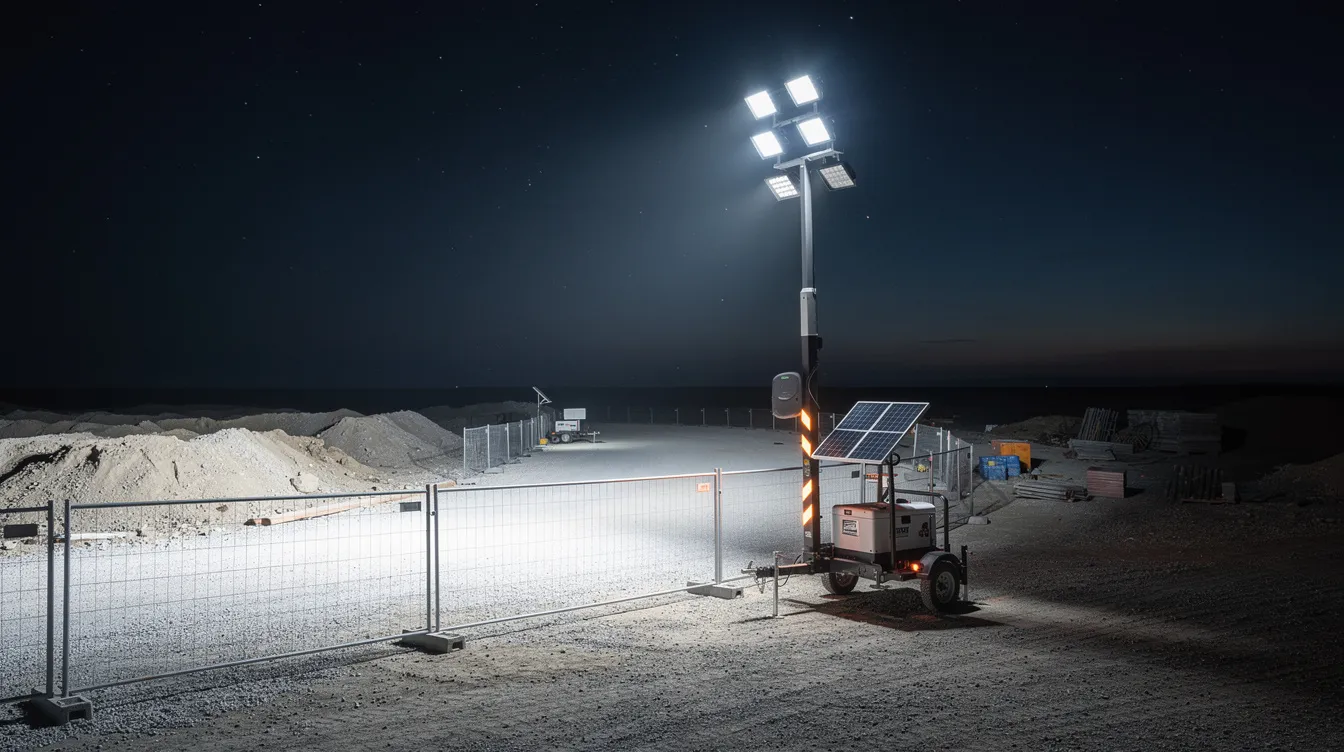
Lighting is not just a convenience item. It affects access control, visibility, and whether any monitoring plan is workable.
Before mobilization, confirm:
California compliance still matters here. Title 8, section 2405.4 requires ground-fault protection or an assured equipment grounding conductor program on construction sites for covered temporary electrical setups. If the project depends on temporary power for lighting or monitoring, plan reliability and compliance together.
An after-hours plan is only real if the response chain is real.
Before mobilization, document:
This does not require advanced hardware on every project. On some lower-risk sites, a stronger lockup routine and limited access points may be the main control. On other sites, the team may choose additional monitoring. The critical question is whether the response process is believable for the way the site is actually staffed.
If the plan has no owner, it usually becomes informal fast.
A practical pre-mobilization review can stay short if responsibilities are clear:
That role split fits the Cal/OSHA reality of multi-employer worksites better than treating site security as an unwritten side issue.
ABC SoCal supports Southern California merit shop contractors with safety education, workforce training, and apprenticeship pathways in Electrical, Plumbing, Low Voltage, and Sheet Metal. Those broader systems help firms build repeatable field habits, including site-control expectations and communication between trades.
If your team wants a wider safety-management lens after completing this pre-mobilization review, start with ABC SoCal’s construction safety management resources. For broader background on the topic itself, ABC SoCal also has a separate construction site security overview. This article complements that page by focusing on the decisions you should make before mobilization.
For your next project, schedule a 20-minute pre-mobilization review with the project manager, superintendent, and safety lead.
Use the five decisions in this article to document:
Effective security in construction is usually less about buying more equipment and more about making those decisions early enough to matter.







