
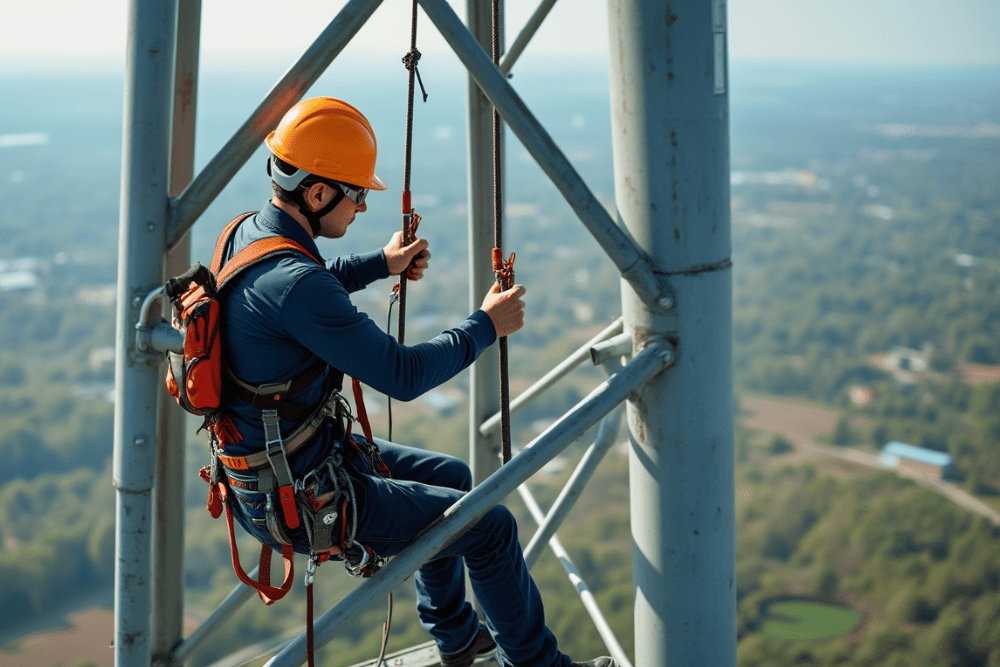
Tower climbing is dangerous work. But the world relies on the infrastructure you build and maintain. So, how do you balance getting the job done with tower climbing safety? This post covers best practices and critical gear to offer seasoned pros fresh perspectives and a look at the resources keeping our industry safe.
This isn’t just a beginner’s guide. We aim to give even experienced climbers, including authorized and competent climber rescuers, valuable insights into tower climbing fall protection.
Falls, bad weather, faulty gear, and even structural collapses are dangers. Add electrical hazards, dropped objects, and fatigue, making the job site risky.
Remember, complacency can be dangerous. Stay focused and use your safety glasses and other protective equipment (PPE).
Weather plays a huge role in tower climbing safety. High winds, lightning storms, and excessive heat or freezing conditions are serious concerns. Consider wind speed, visibility, and temperature before each climb up a communications tower, training tower, or climbing tower.
If thunder, lightning, or high winds, get down immediately. OSHA emphasizes having emergency action plans. Job hazard analyses are another way to mitigate risks.
Review weather reports, use available technology like weather apps, and have clear communication protocols in place.
Your climbing gear is your lifeline. Regularly check for wear, corrosion, or damage on everything. GME Supply emphasizes high-quality climbing harnesses, lanyards, and cable grabs. It is essential to check each of your bolt bags to make sure they have not worn down as well. Thorough and frequent inspection of every climbing equipment is crucial for fall arrest and restraint.
Stay informed about equipment updates and recalls, like the 2016 3M DBI-SALA Lad-Saf Sleeve recall and current certifications. Use a cable safety sleeve whenever you can.
Having a suitable shock absorber and positioning lanyards as a tower worker can prevent serious injuries in case of falls, protecting your body with shock-absorbing capabilities.
Keeping your workforce safe reduces accidents, eliminates OSHA fines, and reduces your workers’ compensation costs, making your business more productive.
Learn MoreHabits are as crucial as gear for a safe climb.
100% tie-off is drilled into us from day one. Unfortunately, shortcuts still happen, so following OSHA regulations is essential. Make sure everyone understands that not having a 100% tie-off is never okay, even during quick adjustments.
Resources like Vertical Safety Solutions stress this rule. The difference between a near miss and a tragedy can be inches, even with foot lengths of rope keeping you tied off—securely fastened chest straps and a properly attached chest D-ring offer enhanced safety.
Communicate with your team, supervisor, and ground crew. This prevents accidents by maintaining shared safety awareness. It discusses potential hazards, job progress, and safety concerns.
Regular site assessments before and during a climb are also vital. Ensure all authorized climbers are aware of potential issues or changes in the climbing environment. Always utilize a positioning lanyard or fall arrest device, such as a shock-absorbing lanyard, before starting the climb.
Speed is part of the job. However, precise, deliberate movements and the proper use of body harnesses, including those offered by DBI-Sala, matter more when safely climbing communications towers. Use your legs and conserve energy for crucial tasks, not just hauling yourself up the tower.
Taking regular breaks and having good climbing techniques helps. Maintaining rhythm and proper form prevents fatigue and minimizes errors during a safe climb. A cable attached lanyard is always recommended. This ensures a safe climbing procedure and minimizes potential risks.
The tower climbing and cell tower industry changes constantly. Refresher courses and workshops are critical for keeping your skills current and following evolving industry standards. Safety awareness training also reinforces a strong safety culture among climbers.
The National Association of Tower Erectors (NATE) offers valuable resources and certifications for competent climbers, competent climber rescuers, and general workplace safety training, including awareness training. These are designed to prevent tower climbing falls and emphasize climbing fall protection.
Sharing these resources, particularly the NATE Exchange/PERKS page, with your crew and anyone needing this knowledge is critical.
Join ABC SoCal and be part of our exclusive quarterly meetings for safety personnel at the ABC Anaheim office. Engage in presentations and roundtable discussions on key topics, connect with top Safety Professionals, exchange innovative ideas, and embrace best practices. Enjoy a complimentary lunch and network with industry leaders.
Learn MoreRules and resources directly improve tower climbing safety.
OSHA sets necessary workplace safety standards for the entire telecommunications industry. This includes tower work and occupational safety guidelines. OSHA standards mandate safety gear such as hard hats and fall protection equipment for tower climbers four feet or more off the ground.
Staying updated on the latest OSHA regulations and guidelines through the Federal Register and the Regulatory Agenda ensures climber rescue plans and procedures are in place. Understanding and complying with these regulations protects workers, prevents climbing falls and promotes professionalism. This knowledge base allows any tower climber or climber rescuer to provide essential tower climbing fall protection.
The Federal Communications Commission (FCC) also plays a role in tower climbing safety. Adhering to FCC compliance protocols for RF safety ensures climber safety near communications equipment.
Following established procedures from official sources and utilizing the available protective equipment minimizes health risks. These standards protect everyone involved in communication tower maintenance. For potential hazards and risk factors related to communications towers, review official guidelines and stay current on relevant safety measures.
Tower climbing safety is an ongoing process, not a one-time event. Daily effort, commitment to safe practices, proper use of personal protective equipment (PPE), and wise choices are essential for getting home safely.
Combining excellent gear with industry best practices, attending regular training, utilizing a safety sleeve, and communicating clearly about potential hazards all contribute to safer working conditions on communication towers. Tower times should not be shortened for any reason when a worker utilizes a cable safe or takes a necessary break to help ensure worker safety.
This mindset and using resources like NATE and OSHA create a safe working environment. It also protects workers and demonstrates professionalism.
The primary risks include falls, bad weather, faulty gear, structural collapses, electrical hazards, dropped objects, and fatigue. It’s essential to stay vigilant and follow safety protocols to mitigate these dangers.
Weather conditions like high winds, lightning storms, and extreme temperatures can pose serious threats. Climbers should always assess wind speed, visibility, and temperature before beginning a climb. If adverse weather occurs, such as thunder or lightning, it is crucial to descend immediately.
The integrity of climbing gear is vital for safety. Regular inspections for wear, corrosion, or damage ensure that equipment functions correctly during climbs. Properly maintained gear can significantly reduce the risk of falls and injuries.
“100% tie-off” refers to the practice of always being secured to the tower with a safety harness and lanyard while climbing. This non-negotiable rule prevents falls, making it critical for every climber to adhere to this safety standard at all times.
Effective communication among team members helps maintain safety awareness and prevents accidents. It’s essential to discuss potential hazards, job progress, and any safety concerns throughout the climb.
Climbers should prioritize precision over speed by using deliberate movements and proper body harnesses. Maintaining good form and conserving energy during climbs can reduce fatigue and minimize errors.
The tower climbing industry is constantly evolving, making refresher courses and workshops essential for keeping skills updated. Continued training promotes a strong safety culture and ensures compliance with current industry standards.
OSHA establishes workplace safety standards for the telecommunications industry, including specific guidelines for tower work. Compliance with OSHA regulations ensures that climbers use appropriate safety gear and follow established procedures to prevent falls and accidents.
The FCC sets protocols for RF safety that climbers must follow when working near communications equipment. Adhering to these protocols helps minimize health risks associated with exposure to radiofrequency radiation.
Resources include OSHA guidelines, the National Association of Tower Erectors (NATE), and various training programs focused on climbing safety and fall protection. Sharing these resources with your crew can significantly enhance workplace safety.







