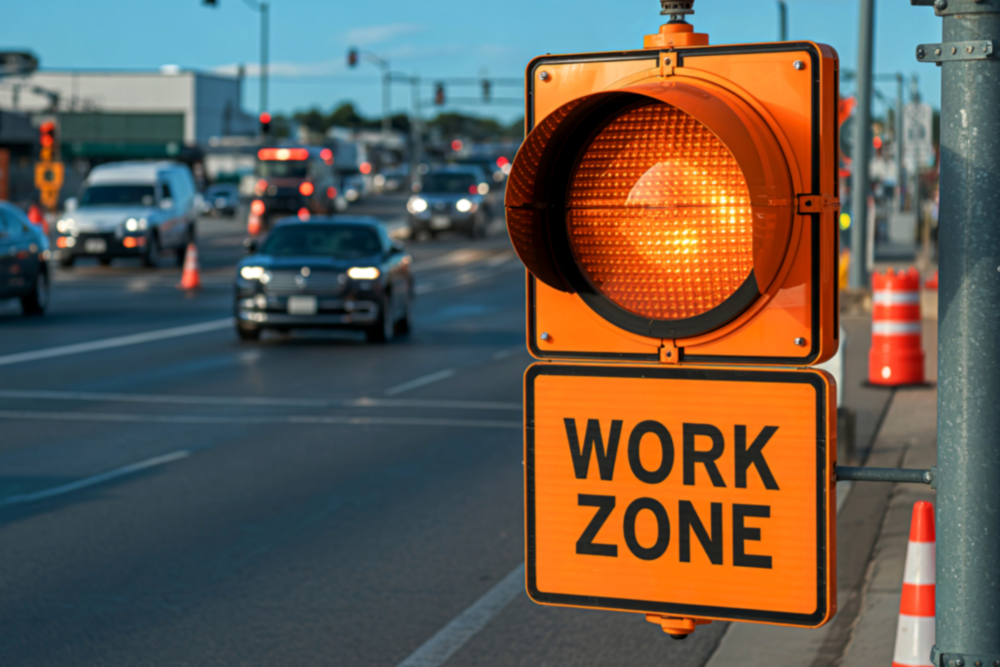
National Work Zone Awareness Week 2026 (April 20-24) arrives with urgent stakes for Southern California contractors. In 2023, 899 people died in U.S. work zone crashes—a 50% increase in fatalities from 2013 to 2023. Four in five victims are drivers and passengers, not workers. On SoCal freeways, your traffic control decisions literally determine who goes home safe.
This guide is intended for Southern California contractors, safety managers, and project supervisors responsible for work zone safety. It covers current risks, regulatory changes, and actionable safety practices for 2026.
The numbers don’t lie: 899 deaths in U.S. work zone crashes in 2023. A 50% rise over the past decade. And roughly 80% of those killed were road users—drivers and passengers—not construction workers. This makes traffic control decisions a life-or-death public safety imperative.
National Work Zone Awareness Week 2026, themed “Safe Actions Save Lives” and hosted by Connecticut DOT, sets the national stage. But Southern California’s dense freeway network makes these issues especially acute. The 2025 AGC survey revealed that 60% of highway contractors experienced vehicles crashing into their work zones in the past year, and 43% reported worker injuries.

On corridors like I-5, I-405, SR-91, I-10, and SR-60, this isn’t anomalous—it’s everyday reality. Los Angeles, Orange, Riverside, and San Bernardino counties now operate under intense scrutiny from DIR and Cal/OSHA. Title 8 violations trigger fines up to $156,259 per willful serious violation, potential criminal referrals under Labor Code Section 6425, and workers’ comp premium hikes averaging 20-50% post-incident.
Regional drivers compound risk: LA 2028 Olympics transportation pipeline; Caltrans Districts 7 and 8 pavement and bridge rehabilitation; wildfire-rebuild access roads in Ventura and San Bernardino counties; and high-volume weekend lane closures.
DIR and Cal/OSHA enforcement is strict, and compliance failures can result in significant financial and legal consequences for contractors. This includes escalating fines, criminal referrals, and increased insurance premiums.
Southern California work zones face unique hazards:
Speeding contributed to about 34% of fatal work zone crashes nationally. On SoCal highways posted at 65-70 mph, reduced speed limits are set at 45 mph, with short taper lengths and limited shoulders. Drivers accustomed to traveling at high speeds struggle with sudden stops and narrow lanes.
Maintaining extra space between vehicles in work zones is crucial, as sudden stops are common and rear-end collisions are the leading cause of work zone crashes.
Cal/OSHA inspectors routinely request traffic control plans, flagger certifications, and PPE documentation during site visits. Contractor exposure includes:
Large corridor projects, such as I-5 improvements in North LA County, involve extended detours lasting months, triggering stricter positive protection requirements.
While contractors can’t control driver behavior, you can control how predictable, protected, and disciplined your work zones are. The following fundamentals reflect MUTCD requirements, Caltrans standards, and Cal/OSHA expectations:
Implementing a traffic control plan is crucial for ensuring the safe movement of vehicles around and within construction zones, thereby protecting workers. A traffic control plan is a detailed, site-specific document that outlines how traffic will be safely routed through or around a work zone. Its importance lies in minimizing confusion for drivers, reducing the risk of crashes, and ensuring the safety of both workers and motorists.
Every Caltrans project requires a site-specific traffic control plan aligned with the latest MUTCD and Caltrans Standard Plans (2024 edition). Include:
On segments like I-5 in Santa Fe Springs, calculate tapers based on posted speed × 1.5-2.
Revise and re-approve plans whenever staging changes. Field validation matters: walk the zone at shift start, confirm signs are visible, and document checks for Cal/OSHA records.
Speed contributed to 34% of fatal work zone crashes. SoCal professional drivers and commuters routinely exceed posted limits unless engineering slows them down. Use:
Partner early with CHP for targeted enforcement during high-risk operations. Avoid overusing extremely long work zones—drivers become impatient and speeds creep up 8-12 mph. Track speed-related near-misses in internal safety reporting.
California requires flaggers to be trained and certified in accordance with Cal/OSHA Title 8, Section 1599. Position flaggers with escape routes, never directly in live traffic lanes, with adequate sight distance. Brief flaggers on:
High-visibility apparel must meet ANSI/ISEA 107 Class 2 or Class 3 (Class 3 for night freeway work). Rotate flaggers frequently to combat fatigue. Empower them to stop work if drivers aren’t obeying instructions.
Cal/OSHA expects compliance with ANSI/ISEA 107 standards. Reflective vests must be maintained—no faded, torn, or oil-soaked gear. Minimum PPE for SoCal road work includes:
For night work:

Temporary concrete barriers (K-rail), truck-mounted attenuators (TMAs), and crash cushions create physical separation between workers and live traffic. These reduce struck-by incidents by 70-90% per FHWA studies.
Key considerations include:
Evaluate when additional TMAs or shadow vehicles are justified beyond minimum requirements—especially on curves, downhill grades, or locations with crash histories.
Every shift should begin with a 10-15 minute tailgate meeting covering:
Involve all trades—general, paving, striping, electrical, and utility. Document briefings with sign-in sheets for Cal/OSHA compliance and claim defense.
The December 2024 FHWA update to 23 CFR 630 Subpart J mandates positive protection devices (temporary barriers, TMAs) when speeds are 45 mph or higher or durations exceed two weeks. California agencies are already incorporating these requirements into 2025-2026 contracts.
For SoCal contractors, this directly affects multi-month pavement rehab on I-5 in the Santa Clarita Valley, bridge work on I-405 in Orange County, and long-duration utility installations. Budget 20-30% more for barriers and TMAs, reevaluate traffic control designs, and update internal checklists.
The business case is clear: while upfront costs increase, the rule reduces severe crashes, protects crews and road users, and lowers long-term insurance and claims costs. ABC SoCal training addresses the new rule’s implications for Southern California projects.
California Vehicle Code Section 21809 requires drivers to move over or slow down when approaching stationary emergency, Caltrans, or service vehicles with flashing lights. While directed at motorists, contractors benefit when work zones are clearly signed so drivers recognize them as protected areas.
Include Move Over law reminders in project-level outreach, variable-message signs, and social media campaigns. Cal/OSHA expects contractors to do more than rely on driver compliance; emphasize engineering controls such as extended tapers, buffer spaces, and TMAs. Maintain extra space between workers and live lanes.
When serious crashes occur, investigators examine whether the work zone met standards. Good compliance protects against citations and litigation.
National Work Zone Awareness Week 2026 runs April 20-24 with the theme “Safe Actions Save Lives.” ABC SoCal encourages members to use the week as a catalyst for targeted activities that raise awareness and save lives.
Dedicate Monday to focused training: toolbox talks on speed management, flagger safety refreshers, and overviews of the new FHWA rule. Host short sessions using ABC SoCal materials covering Cal/OSHA requirements. Review recent near-misses and identify supervisors to enroll in Safety Academy or STSC prep.
Mirror the national kickoff led by Connecticut work zone safety officials by holding site-level gatherings. Leaders should visit active SoCal work zones to speak directly with crews. Review traffic control plans on high-risk projects and send company-wide communications reinforcing zone safety expectations.
Ask office staff and field teams to wear orange high-visibility gear to honor those injured or killed in work zones. Create safety moments by sharing the 899 fatality figure. Take group photos at District 7 and 8 projects and post with appropriate messaging.
Coordinate posting to amplify work zone safety messages using hashtags like #NWZAW. Share tips for drivers: slow down, obey signage, avoid driving distracted, and stay alert. Include content for commercial motor vehicles and large vehicles on freight routes like I-15. Promote upcoming ABC SoCal safety trainings.
Stop work briefly at 11:00 a.m. to honor workers and passengers who died in work zone crashes. Share reflections to humanize statistics. Use the moment to re-commit to better pre-shift briefings and faster correction of unsafe conditions. End the week by identifying one improvement initiative per major project.
ABC Southern California is a merit shop trade association committed to helping members build safety cultures that meet the expectations of Cal/OSHA, Caltrans, and FHWA.
Connect with ABC SoCal staff to align training calendars with National Work Zone Awareness Week and integrate apprentices from electrical, plumbing, sheet metal, and low-voltage programs into safe work environments.
With 899 work zone crash deaths in 2023 and a decade-long 50% rise in fatalities, Southern California contractors cannot treat work zone safety as a side issue. LA 2028 preparations, expanding Caltrans work, and intensified enforcement demand complete commitment.
The December 2024 FHWA rule and California’s Move Over law increase both expectations and stakes. But they also present opportunities for merit shop contractors to differentiate as dependable, low-risk partners for complex public works.
Your next step: Register key supervisors for ABC SoCal’s Safety Academy, pursue STSC certification, enroll in the STEP program, and explore joining the Safety Captive to turn strong safety into a strategic advantage.
“Safe Actions Save Lives” starts with your next pre-shift briefing—and continues through every decision you make on SoCal highways this construction season.
Prime contractors should require subs—including electrical, plumbing, sheet metal, and low-voltage crews—to follow the project traffic control plan, participate in pre-shift briefings, and meet the same high-visibility PPE and flagger requirements. Incorporate work zone safety expectations into subcontracts, conduct joint site walks before subs begin, and assign a single point of contact to coordinate all trades near live traffic. ABC SoCal training materials provide consistent messaging across all contractors.
Create a simple daily checklist that captures the date, time, configuration, device condition, and corrective actions. Store records digitally for at least the project duration plus statutory retention periods. Document near-misses with brief narratives, photos, and contributing factors like distracted driving or equipment issues. Good documentation demonstrates due diligence to Cal/OSHA and insurers and supports STEP and Safety Captive participation.
Night work requires elevated controls:
Limit crew sizes to what can be supervised in the dark, use clear radio protocols, and expect sudden stops from new drivers unfamiliar with the route. Conduct specific night-work hazard assessments before each phase and debrief after major weekend events to capture lessons learned.
Request CHP or local police support for operations with high crash potential: initial traffic switches, major lane reductions, and work on curves or grades with limited visibility. Coordinate during preconstruction meetings so law enforcement support is built into traffic management plans. Officers provide speed enforcement and visual deterrence, but don’t substitute for proper engineering controls—contractors remain responsible for compliant layouts and protecting pedestrians and workers alike.
Planning is the prerequisite: detailed staging, realistic production rates under reduced speeds, and early procurement of barriers and TMAs minimize last-minute shortcuts. Leadership must state clearly that schedule pressures never justify bypassing traffic control requirements. Use performance metrics that track both productivity and safety—such as lane-hours worked without incidents and compliance scores from internal audits so supervisors are recognized for safe production.